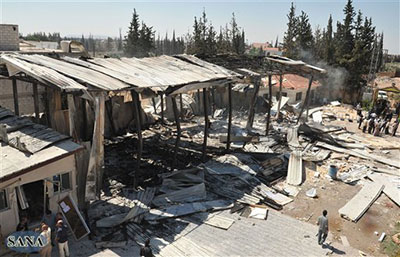
New York, June 27, 2012–A number of employees for the pro-government Syrian television station Al-Ikhbariya were killed when the station was attacked by gunmen this morning, according to the official news agency Sana. Other employees were reported wounded or kidnapped, the agency said.
Initial news reports, citing official accounts, placed the number of fatalities at anywhere between three and seven. Sana reported that journalists, security guards, and other employees were among the casualties. However, a full accounting of the casualties and details surrounding injuries and abductions were not immediately available. International news organizations noted that severe media restrictions in Syria make it difficult to independently verify details.
Armed men stormed the station in the town of Drousha, south of Damascus, the capital, ransacked the offices, and planted explosives, according to news reports citing the official account. An Associated Press photographer who visited the station after the attack reported that the TV offices and studios had collapsed, that some walls had bullet holes, and that there was blood on the floor. AP also spoke to an unnamed station employee who described injuries and abductions taking place in the 4 a.m. attack.
“We strongly condemn the attack against Al-Ikhbariya,” said CPJ Deputy Director Robert Mahoney. “Journalists covering conflict are civilians, and attacks against them and their offices constitute a serious violation of international humanitarian law. We call on all parties in Syria to respect the status of journalists and ensure their safety.”
The AP reported that Syrian Information Minister Omran al-Zoebi called the attack a “massacre” and told journalists it had been carried out by “terrorists,” which is language the government uses to describe Syrian rebels. But the rebels denied responsibility for the attack, and said the assailants were Republican guards who had changed sides and assaulted other guards who remained loyal, The New York Times reported.
Although Al-Ikhbariya is privately owned, it is a strong supporter of President Bashar al-Assad’s government, news reports said. While attacks against pro-government news outlets are rare, there have been several recent instances where reporters have been assaulted during Syria’s 15-month uprising, the AP reported.
CPJ research shows that at least 14 journalists have been killed since November while covering Syria, at least nine in circumstances that raise questions about government culpability, making it the most dangerous place for journalists in the world.