
CPJ joins calls for Congress to make human rights a focus of Uzbek president’s US visit
The Committee to Protect Journalists joined a coalition of 11 other international press freedom and human rights advocacy groups, in calling on U.S. Congress to require lasting human rights protection in Uzbekistan during President Shavkat Mirziyoyev’s first official visit to the U.S. on May 16 and 17.
CPJ joins call for Uzbekistan to investigate claims jailed journalists were tortured
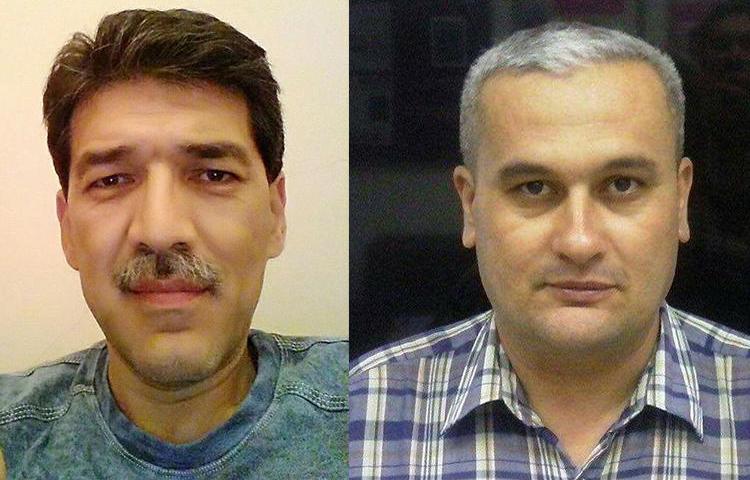
The Committee to Protect Journalists today joined a coalition of 11 other international press freedom and human rights advocacy groups, in calling on Uzbek authorities to conduct an investigation into allegations of torture and ill-treatment of jailed journalists Bobomurod Abdullaev and Hayot Nasriddinov. The coalition, led by Human Rights Watch, called for the journalists to…
Pressure by CPJ, other groups keeps Karimov out of Prague
The Committee to Protect Journalists this week joined a campaign spearheaded by Human Rights Watch and Uzbek human rights defenders urging Czech President Milos Zeman to cancel Uzbek dictator Islam Karimov’s visit to Prague. Zeman had invited Karimov to visit this month despite the Central Asian leader’s notorious intolerance to freedom of the press and…
In Uzbekistan, speculation swirls as Karimov out of sight
In the most tightly controlled countries, the media is told what they are allowed to report on and what topics are taboo. Anything related to the leader’s health or his family is generally in the latter category. The resulting information vacuum can lead to rumors and uncertainty.
In message from Uzbek jail, journalist hints of abuse
News is rare from Uzbek prisons, where authorities are holding at least four independent reporters in retaliation for critical journalism: Muhammad Bekjanov, Yusuf Ruzimuradov, Dilmurod Saiid, and Salidzhon Abdurakhmanov. All four are serving lengthy sentences. Uzbek authorities refuse even to update CPJ or other human rights organizations on the journalists’ whereabouts, status, or well-being.
Five years on, no resolution to Alisher Saipov’s murder
Five years ago today, press freedom in Kyrgyzstan received a deadly blow from which it has never recovered. Alisher Saipov, one of most promising and prominent regional reporters of his time, was murdered in his native city of Osh. Since that October night, authorities have promised to solve his killing, but impunity reigns to this…
CPJ calls for release of jailed reporters in Central Asia
World leaders must hold Central Asian regimes responsible for denying global access to information by throwing critical reporters behind bars, CPJ Eurasia researcher Muzaffar Suleymanov told the U.S. Commission on Security and Cooperation in Europe at a briefing Tuesday on political prisoners in Central Asia.
Most censored nations each distort the Net in own way
One big reason for the Internet’s success is its role as a universal standard, interoperable across the world. The data packets that leave your computer in Botswana are the same as those which arrive in Barbados. The same is increasingly true of modern mobile networks. Standards are converging: You can use your phone, access an…
What US can’t accept in Belarus, it supports in Uzbekistan
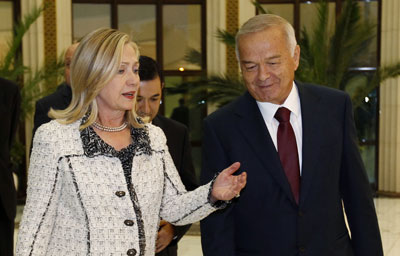
Last week, President Obama signed into law a bill that expands sanctions against Belarus, whose authoritarian leader Aleksandr Lukashenko continues to imprison his opponents and critics. Lukashenko unleashed the latest crackdown hours after the flawed December 2010 presidential vote, which declared him winner of a fourth term. Repression in Belarus is ongoing. Last week, authorities…
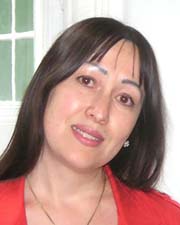
Surviving, thriving in exile: Q&A with Dina Yafasova
In September 2001, CPJ received a worrisome call. Uzbek journalist Dina Yafasova had been roughly interrogated by the Uzbek National Security Service, which threatened her with imminent arrest and physical abuse unless she revealed sources and names of articles she wrote for international publications. She left the agency deeply shaken and within days had left…