
Uganda’s anti-homosexuality law poses free speech fears for journalists
Kuchu Times was founded eight years ago to give voice to Uganda’s LGBTQ+ community. Now, a new anti-homosexuality law is threatening this mission at a time when LGBTQ+ Ugandans are facing beatings and evictions. “People will tell us their stories and ask us not to put them out there, not until it is safer,” Kuchu…
CPJ joins call for Uganda to maintain internet access during election
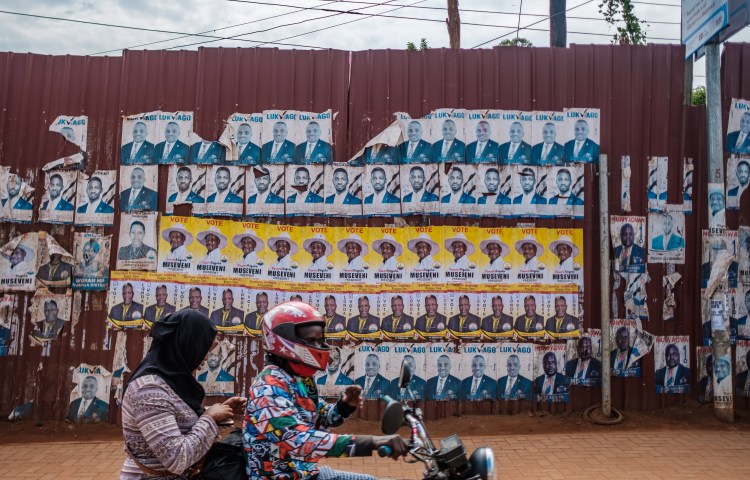
The Committee to Protect Journalists today joined 54 other organizations in a letter to Ugandan President Yoweri Museveni calling on him to ensure open and unrestricted internet access during and after the country’s presidential election, scheduled for January 14. The letter notes that disruptions to internet access would undermine journalists’ ability to report on the…

Covering LGBTQ issues brings risk of threats and retaliation for journalists and their sources
To mark the annual International Day Against Homophobia, Transphobia and Biphobia, CPJ spoke with journalists and news outlets based in Argentina, Iran, Indonesia, the U.S., Uganda, and Russia, about the challenges they face reporting on LGBTQ issues.

After disputed Uganda election, journalists fear prolonged crackdown
Twenty nine-year-old photographer Abubaker Lubowa was excited when he was assigned to cover the campaign of opposition leader Kizza Besigye. He told CPJ he did not anticipate that the assignment would mean he would make the news almost as often as he covered it.

Uganda elections approach amid hostile environment for media
Demonstrations against the government are a routine affair in the Ugandan capital Kampala, and Andrew Lwanga thought it would be just another day at work when he was assigned to cover a protest march by a few dozen unemployed youth on January 12, 2015.

First US-Africa summit short on press freedom, other human rights
Top African and U.S. leaders are meeting next week in Washington in a first-of-its-kind summit focused on African development. But critics argue the summit is flawed in design, overlooking human rights such as freedom of expression and barring civil society actors from bilateral discussions.
Filmmaker’s arrest signals limits to Uganda coverage
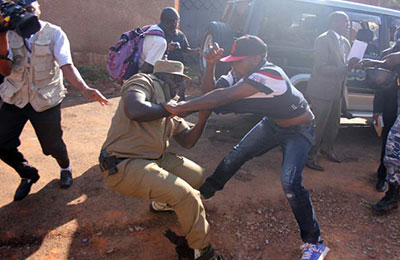
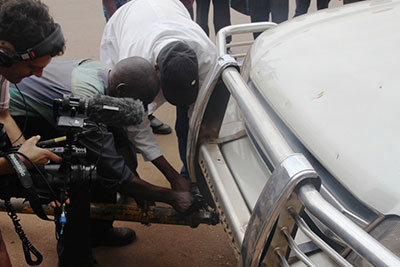
Taylor Krauss, an American journalist, freelance filmmaker, and founder of the testimonial website Voices of Rwanda, traveled to Uganda roughly two weeks ago to conduct some filming in hopes of pitching footage later to various media outlets. Krauss is no stranger to the region; he has been traveling back and forth to the country for…
Siege over, but damage to Ugandan press may last
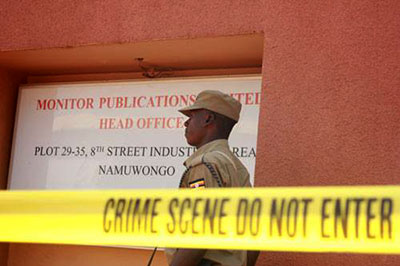
Journalists are back to work at Uganda’s leading privately owned daily, The Monitor, after a 10-day siege of their newsroom by police. But that does not mean it is business as usual for the nation’s press. The paper’s owners at the Nation Media Group evidently begged and negotiated for its reopening–signaling to other media houses…