Democratic Republic of the Congo
2011
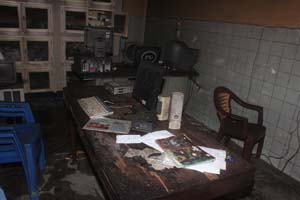
In pre-election violence, arsonists target DRC TV station
New York, September 6, 2011–Unidentified armed men today torched the studios of a private television station that aired programs favorable to Democratic Republic of Congo opposition leader Etienne Tshisekedi, local journalists and news reports said. At around 2 a.m., a dozen men threw tear gas into the studios of Radio Lisanga Télévision (RLTV), based in…
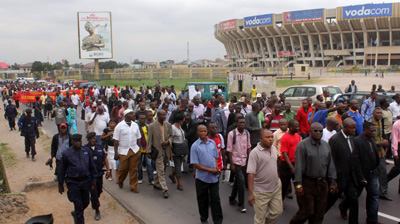
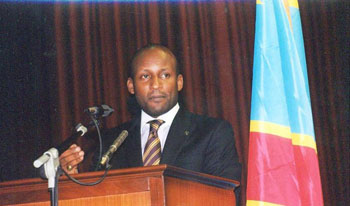
DRC politician taped threatening journalist
New York, August 25, 2011–The Committee to Protect Journalists calls on authorities in the Democratic Republic of Congo to investigate allegations of threats made earlier this month by a member of parliament against a journalist. The politician’s threats were caught on an audio recording of the phone call, which was widely posted on the Internet.
DRC’s Kabila government bans broadcaster favorable to rival
New York, July 13, 2011–The Committee to Protect Journalists condemns the Democratic Republic of Congo’s ban of a private broadcaster favorable to opposition presidential candidate Etienne Tshisekedi. The blocking and ban of the broadcaster since Saturday is in violation of the country’s press laws.
Journalist murdered in Democratic Republic of Congo
New York, June 22, 2011–Authorities in the eastern Democratic Republic of Congo town of Kirumba must thoroughly investigate the murder of radio journalist Witness-Patchelly Kambale Musonia, the Committee to Protect Journalists said today. The reporter’s bullet-ridden body was discovered early this morning in Congo’s North Kivu province.
Killer of DRC technician said to wear police uniform
Hardy Kazadi Ilunga was just 21. A technician with the private station Radio-Télévision Mosaïque in the southern Democratic Republic of Congo town of Likasi, he was murdered late Saturday by a gunman apparently wearing a police uniform, according to the Congolese press freedom group OLPA and local journalists.
Documenting sexual violence against journalists
The news of the sexual assault against CPJ board member and CBS correspondent Lara Logan hit us hard on Tuesday. At CPJ, we work daily to advocate on behalf of journalists under attack in all kinds of horrific situations around the world. Because of Lara’s untiring work with our Journalist Assistance program, she’s well known…
Attacks on the Press 2010: Africa Analysis
Across Continent, Governments Criminalize Investigative Reporting By Mohamed Keita Across the continent, the emergence of in-depth reporting and the absence of effective access-to-information laws have set a collision course in which public officials, intent on shielding their activities, are moving aggressively to unmask confidential sources, criminalize the possession of government documents, and retaliate against probing…
Attacks on the Press 2010: Democratic Republic of Congo
Top Developments • Government arrests several journalists on defamation charges. • Journalists fear repression as 2011 presidential election approaches. Key Statistic 2: Weeks that reporter Tumba Lumembu was held incommunicado by intelligence agents. On the defensive over criticism of its human rights record and its handling of the conflict with rebels in eastern Congo, President…