
Second blogger hacked to death in Bangladesh
March 30, 2015, New York–Bangladeshi authorities should investigate the murder of a blogger in the capital, Dhaka, and hold the perpetrators to account, the Committee to Protect Journalists said today. Washiqur Rahman Babu is the second blogger to be hacked to death in public in Bangladesh in the past five weeks.

A year after Raza Rumi attack, little change for Pakistan’s beleaguered press
One year ago Raza Rumi, a TV anchor and widely-respected analyst in Pakistan, narrowly escaped death when gunmen opened fire on his car in an attack that killed his driver, Mustafa. When I wrote about the March 28 attack, the fourth on the Express Group in eight months that had left four people dead, I…
Media outlets raided and banned as conflict spirals in Yemen
New York, March 27, 2015–The Committee to Protect Journalists is concerned for the safety of Yemeni journalists amid escalating violence in the country. Houthi forces have raided news outlets, detained journalists, and banned websites, while satellite TV operators ceased to broadcast stations that recently came under Houthi control, according to news reports.
Two Bolivian journalists threatened after reporting on police scandals
Bogotá, March 27, 2015–The Committee to Protect Journalists condemns death threats that, according to CPJ interviews and news reports, were made against two Bolivian TV journalists investigating police corruption in central Cochabamba state, and calls on authorities to bring those responsible to justice.
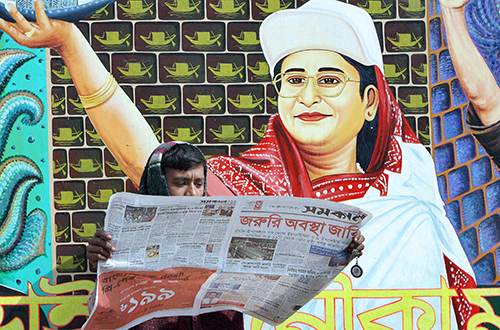
Mission Journal: Bangladeshi press reined in as Hasina exerts authority
Matiur Rahman Chowdhury has been the host of “Frontline,” a popular Bangla-language news show, for five years. Aired live three times a week, the show gained notoriety for bringing politicians, members of civil society, and journalists together to discuss current affairs. Chowdhury distinguished himself from many of his counterparts with his soft-spoken but firm demeanor…
Journalist jailed on extremism charges in Moldova’s Transdniester region
New York, March 26, 2015–The Committee to Protect Journalists condemns the detention of a journalist in the separatist Transdniester region of Moldova and calls on authorities to release him immediately. Sergei Ilchenko, a freelance contributor to local and regional media, has been held for more than a week and equipment seized from his and his…
Omani blogger Muawiyah Alrawahi detained for more than a month
New York, March 26, 2015–The Committee to Protect Journalists is concerned about the welfare of Omani blogger Muawiyah Alrawahi, who was detained while attempting to enter the United Arab Emirates by car from Oman. Alrawahi, who has criticized Omani authorities on his blog and YouTube channel, has long been persecuted for his work, according to…
Nigerian soldiers confine Al-Jazeera journalists to hotel
Abuja, Nigeria, March 26, 2015–Nigerian military authorities on Tuesday confined two Al-Jazeera journalists to their hotel room and have forbidden them from leaving, according to a statement published on Wednesday by the Nigerian Defense Headquarters and both journalists who spoke to CPJ. The journalists were covering a story on military activities in the area as…