Preventing video takedowns when reporting
Watching the stream of reporting from Egypt today, I’ve noticed some unconfirmed reports that videos of the events uploaded to YouTube have been taken down by the company. I haven’t been able to find any concrete examples, so I can’t say whether this is true. YouTube takedowns did happen for a few of the more…
Will Tunisia’s ‘Internet revolution’ endure?
There has been a great deal written online about how much of a positive role the Internet played in recent events in Tunisia (if you’d like to catch up, Alex Howard’s link round-up provides a good summary of the many sides, both for and against). At CPJ, our focus is on slightly different questions: How…
In China, Kristof’s blogs are shut down
Nicholas Kristof’s Sunday column in The New York Times documents the latest in a series of tests the journalist has performed in Chinese cyberspace. The conflicting results he achieved while setting up a Chinese-language blog and micro-blog demonstrate how difficult it is to judge what censors will permit in an online space.
EU should press Uzbekistan on news media crisis
Dear President Barroso: We’re writing in advance of your January 24 meeting in Brussels with Uzbek President Islam Karimov to urge you to raise Uzbekistan’s grave press freedom conditions and to make clear to Karimov that any improvement of the country’s relationship with Europe is dependent on him taking steps to fix the press freedom crisis. The European Union made clear it is committed to human rights in Central Asia in its 2009 plan, “The European Union and Central Asia: The New Partnership in Action.”
Internet censorship halts in Tunisia
So much has happened in Tunisia since I last blogged on the large-scale phishing attacks against activists and journalists in the country. With the fall of Zine El Abidine Ben Ali, and a new interim government in place, online censorship seems to be ending. Opposition media and human rights sites are viewable, and CPJ’s Tunisia…
In Tunisia, one journalist still jailed, another killed
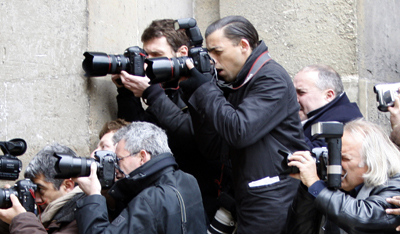
New York, January 18, 2011–Tunisia’s transitional government should immediately release Fahem Boukadous, a television reporter imprisoned last year in reprisal for his work, the Committee to Protect Journalists said today. CPJ also offered condolences to the family and colleagues of French photographer Lucas Mebrouk Dolega, who died of head injuries suffered while covering the civil…
As Ben Ali’s regime falls, 3 Tunisian journalists freed
New York, January 14, 2011–The Committee to Protect Journalists is heartened by news reports that three jailed Tunisian journalists have been freed as the repressive regime of Zine El Abidine Ben Ali has fallen. CPJ calls on the new interim Tunisian government to release one other journalist believed to be still in custody.
Saudi online media regulations alarmingly restrictive
Dear Minister al-Khuja: The Committee to Protect Journalists is deeply concerned about new regulations for online media you issued on January 1. The rules contain several provisions that can be used to restrict coverage. The provisions are vaguely worded, contain numerous loopholes, and grant the Ministry of Culture and Information blanket powers without providing online media protection against abuse. Most alarmingly, the new regulations would also subject online media to the kingdom’s already existing highly repressive press law.
Concern as Vietnam plays ‘national security’ censorship card
Bangkok, January 13, 2011–The Committee to Protect Journalists is concerned about a new executive decree issued on January 6 in Vietnam that will give authorities greater powers to penalize journalists, editors, and bloggers who report on issues deemed as sensitive to national security. The new media regulations were issued amid a mounting clampdown on dissent shortly before…