Palestinian journalist held without charge by Israel
Amin Abu Wardeh, director of the privately owned news website Asdaa Press, was arrested in an early morning raid on his home in the West Bank city of Nablus on April 15, 2015, by Israeli security forces, according to news reports and his employer. Abu Wardeh’s wife, Um Omar, told local press freedom group the…
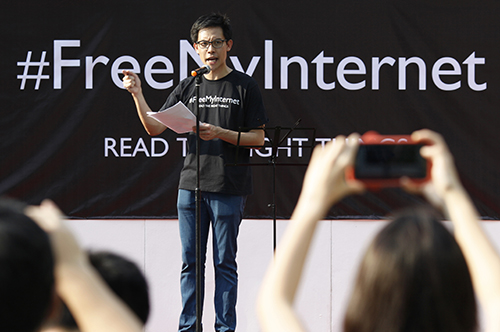
Blogger in Singapore faces financial ruin following defamation suit
“If we want our freedom, we have to fight for it,” wrote blogger Roy Ngerng last year after he was sued for defamation by Singapore’s prime minister. The case was sparked by a blog post in which Ngerng allegedly suggested Prime Minister Lee Hsien Loong had misappropriated funds in a state pension system. In November,…
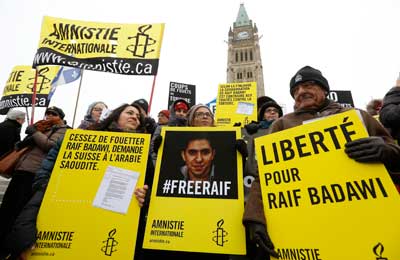
In censored Saudi Arabia, Raif Badawi filled a journalistic void
On the third anniversary of the arrest of liberal activist and writer Raif Badawi in Saudi Arabia, his supporters all over the world are working hard to prevent what may lay ahead: the completion of a 10-year, thousand-lash sentence. To be effective in changing Badawi’s future, it is important to take inspiration from his past,…
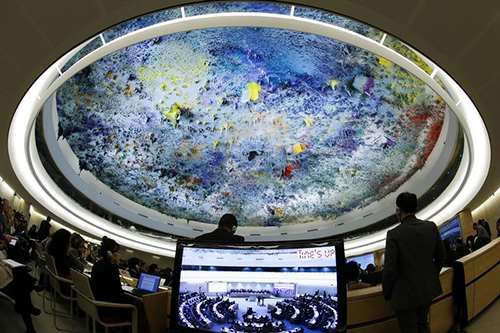
UN report promotes encryption as fundamental and protected right
On Wednesday, Special Rapporteur on freedom of opinion and expression David Kaye will present his report on international legal protection for encryption and anonymity to the United Nations Human Rights Council. The report is an important contribution to the security conversation at a time when some Western leaders are calling for ill-informed and impossible loopholes…

In Venezuela, online news helps journalists get their voices back
When Venezuelan President Hugo Chávez was rumored to be gravely ill four years ago, his socialist government was tightlipped about the diagnosis. Then in June 2011 a source in Havana, Cuba, where Chávez was being treated, told Nelson Bocaranda, a veteran columnist for the Caracas daily El Universal, that the president had cancer.
CPJ welcomes Facebook move to add PGP encryption features
San Francisco, June 1, 2015–Facebook today announced that it would offer users a field to post PGP encryption keys on their profiles, and that it will use the encryption standard to protect the contents of notification emails. The improvements were announced on the social network’s security blog and will gradually be rolled out to all…
Brazilian blogger found decapitated in Minas Gerais state
New York, May 20, 2015–Brazilian authorities must fully investigate the murder of a Brazilian blogger, identify the motive, and bring the killers to justice, the Committee to Protect Journalists said today. The decapitated body of Evany José Metzker was found on Monday in the southeastern state of Minas Gerais, according to news reports.

CPJ joins call urging White House to protect encryption for journalists
Journalists are safest when their devices are secure by default. That is why the Committee to Protect Journalists today joined a coalition of nearly 150 civil society organizations, companies, trade associations, security experts, and policy specialists in sending a joint letter to U.S. President Barack Obama. The letter urges the president to support the broad…
Third blogger hacked to death in Bangladesh this year
New York, May 12, 2015–Four unidentified assailants wielding cleavers and machetes killed a blogger in Bangladesh today, marking the third time in less than three months that a blogger has been slain in the country, according to news reports. Ananta Bijoy Das was hacked to death while headed to work in the city of Sylhet,…
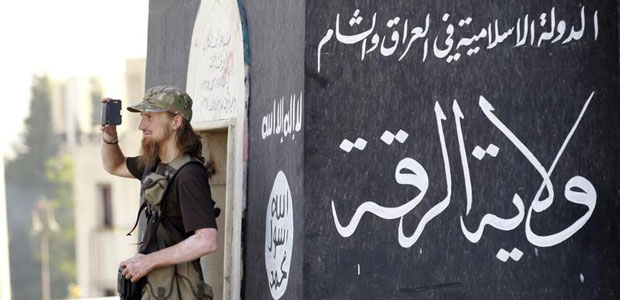
Broadcasting murder: Militants use media for deadly purpose
News of the August 19, 2014, murder of journalist James Foley broke not in the media but instead on Twitter. News organizations faced the agonizing questions of how to report on the killing and what portions of the video to show. If a group or individual commits an act of violence, and then films it,…