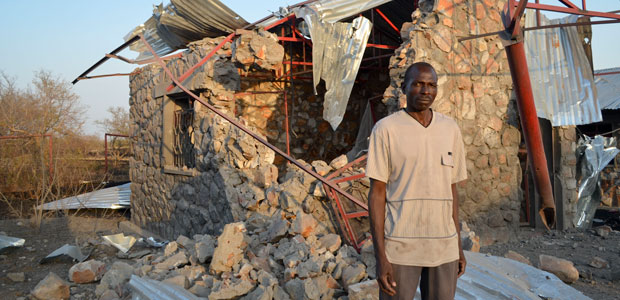
Journalists overcome obstacles through crowdfunding and determination
During South Africa’s Boer War, at the turn of the 20th century, a determined news organization relocated reporters, copy editors, and printing presses to the front line to ensure accurate reporting. In the Warsaw Ghetto, during World War II, a literal underground press, established to counter Nazi propaganda, required the nightly movement of cumbersome printing…

Five-day ban for Al-Jazeera in India, one year after map error
On Wednesday, Al-Jazeera was forced off the air in India after the government demanded the Qatar-based news broadcaster be suspended for five days for broadcasting images of maps between 2013 and 2014 that did not display Pakistan-controlled Kashmir as separate territory.
China’s Great Cannon: New weapon to suppress free speech online
China, rated as the eighth most censored country in the world, in a report released by CPJ today, has long had a strong line of defense against free speech online. Its Golden Shield Project, launched by the Ministry of Public Security in 1998, relies on a combination of technology and personnel to control what can…
International coalition calls on European Court to prioritize Azerbaijani press cases
Azerbaijan, one of the 10 Most Censored Countries in the world, according to new research by the Committee to Protect Journalists, is to host the first-ever European Games this June. As Baku prepares to bask in the spotlight by hosting an international mega-event yet again, eight of the country’s independent journalists, including award-winning investigative reporter…
10 Most Censored Countries
10 Most Censored Countries 1. Eritrea 2. North Korea 3. Saudi Arabia 4. Ethiopia 5. Azerbaijan 6. Vietnam 7. Iran 8. China 9. Myanmar 10. Cuba Methodology » See updated list of 10 Most Censored Countries at https://cpj.org/reports/2019/09/10-most-censored-eritrea-north-korea-turkmenistan-journalist.php. The 2015 list of 10 Most Censored Countries is part of CPJ’s annual publication, Attacks on the…
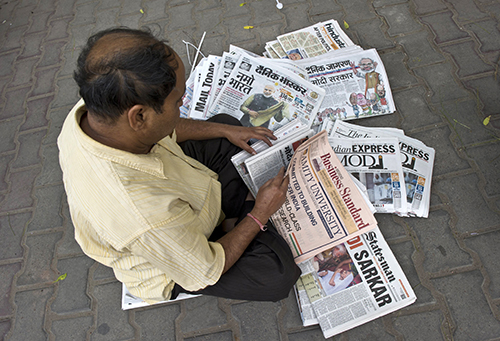
Mission Journal: Challenges for India’s press increase as Modi marks first year in office
“Modi has tightened the screws on information.” This statement from Bangalore-based journalist Subir Ghosh underscores a common challenge repeated to me by several of India’s journalists, who say the space for criticism is shrinking under Narendra Modi’s rule. Since a landslide victory made him leader of the world’s largest democracy nearly one year ago, the…

Mission Journal: Fewer arrests but fear still lingers for Somaliland’s press
Conditions for the press in the semi-autonomous republic of Somaliland may, on the surface, appear to be improving. But without a functioning media law to lend protection, and pending legislative elections, journalists remain wary of state harassment.
CPJ requests information about alleged detention of two journalists in Egypt
New York, April 17, 2015–The Committee to Protect Journalists wrote to the Egyptian Ministry of Justice on Thursday requesting information about two journalists who were allegedly arrested on Tuesday while attempting to cover the bombing of two electrical pylons that transmit power to the Media Production City in Cairo.
Chinese journalist Gao Yu sentenced to seven years
New York, April 17, 2015–A Beijing court today convicted Chinese journalist Gao Yu of leaking state secrets and handed her a seven-year sentence, according to news reports. Gao, a freelance journalist, has written about Chinese politics, the economy, and social trends for Chinese media in Hong Kong and overseas. She was arrested in April 2014,…
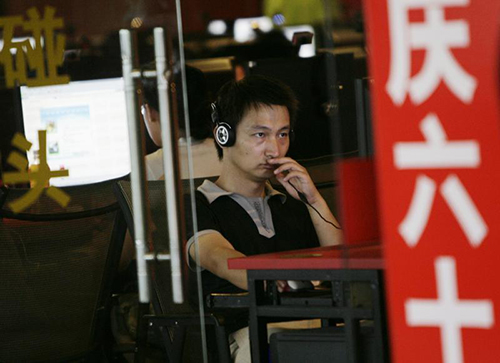
When it comes to Great Firewall attacks, HTTPS is greatest defense
The power of HTTPS to protect has been brought into sharp focus by a series of attacks against software collaboration site GitHub. These attacks consistently failed because of the site’s universal use of HTTPS. Most recently, GitHub reported a blistering series of distributed denial of service attacks in March, which it believes were an attempt…