Burkina Faso suspends live political broadcasts by media
Abuja, Nigeria, May 19, 2015–The Committee to Protect Journalists calls on Burkina Faso authorities to lift its suspension of live political broadcasts in the country. The three-month ban comes as Burkina Faso prepares to hold elections in October.
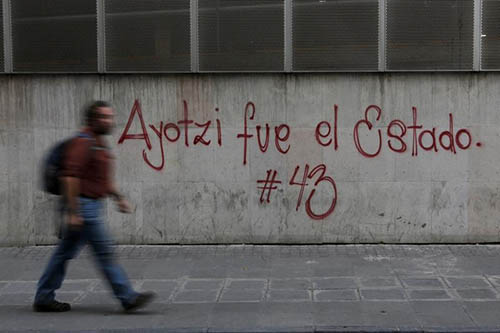
In Mexico, reporters struggle to cover unrest over missing students
Veteran reporter Sergio Ocampo was having a late dinner on September 26 when his editor called about a shooting in the city of Iguala in Guerrero state. Students from the Ayotzinapa teacher training college were apparently among the victims. But when Ocampo, a correspondent for the newspaper La Jornada, called the then-mayor of Iguala, José…
Qatar detains international journalists for the second time this year
New York, May 18, 2015–For the second time in two months, an international news crew was arrested and interrogated by Qatari security officials while they were reporting on the human rights situation in Qatar in the run-up to the 2022 World Cup, according to news reports. The Committee to Protect Journalists condemns the detention and…
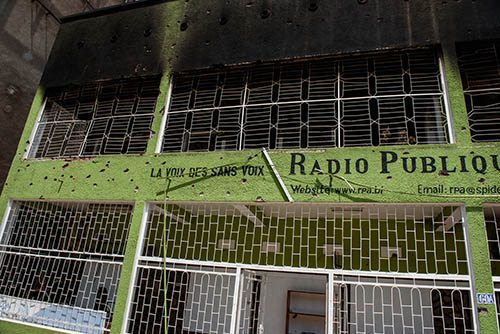
Amid violence in Burundi, radio stations attacked
New York May 15, 2015–The Committee to Protect Journalists condemns a series of attacks on Burundian news outlets and calls on all sides in the unrest to refrain from attacking or threatening journalists. In recent days, at least five radio stations were attacked during violence over an attempted coup in the capital, Bujumbura, and threats…
Widodo’s lifting of ban on foreign media in Papua is step in right direction
Indonesian President Joko Widodo announced over the weekend that his government would allow foreign journalists to report unrestricted from the country’s eastern Papuan provinces, breaking a virtual 50-year blackout of international news coverage of the restive region. The announcement raises the prospect of an independent media check on one of Asia’s most under-reported civil conflicts…
Singaporean authorities shut down The Real Singapore news website
Bangkok, May 5, 2015–Singaporean authorities on Sunday ordered an independent news website to be shut down, citing the website’s content as being objectionable to state interests, according to news reports. The Real Singapore is the first news website to be shut down under Singapore’s licensing regulations, introduced in 2013, according to CPJ research.
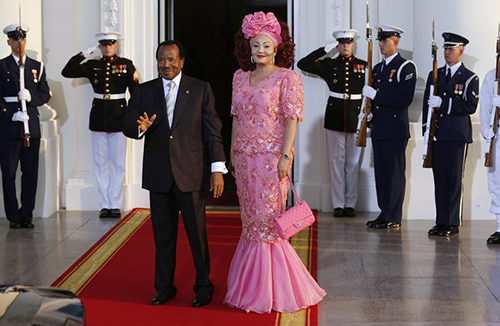
In Cameroon, press struggles with financial and official constraints
On March 16, Cameroon’s Minister of Communication, Issa Tchiroma Bakari, denounced French online news outlet Le Monde as unprofessional at a press conference after it reported on allegations that President Paul Biya was in hospital in Geneva. The incident is symbolic of the growing problem in Cameroon, which has a growing but poorly funded independent…
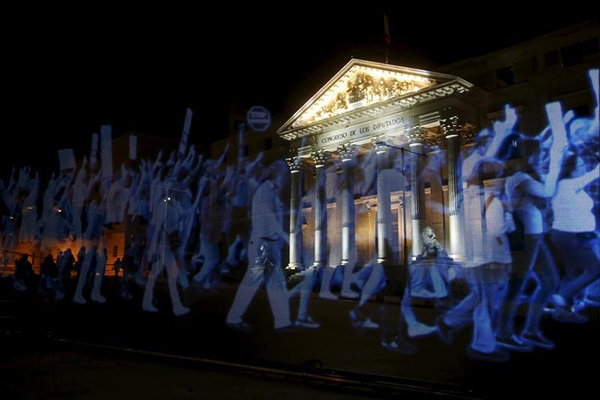
Why Spain’s new gag law is threat to free flow of information
On July 1 a public security law is due to come into force in Spain amid an increasingly vocal chorus of concern among the media and press freedom groups. The bill–dubbed the “ley mordaza,” or “gag law,” by opposition groups–would define protests in front of parliament and other government buildings as a “disturbance of public…
On World Press Freedom Day and journalists’ safety
Last week, I met a Cameroonian journalist who worked in the Congo until he fled following a series of threats and an attack on his home by armed men who assaulted his sister. Elie Smith, a TV host who documented alleged abuses by police and was outspoken in his criticism of the government, said he…
CPJ, HRW call on president of European Olympic Committees to engage with Azerbaijan on press freedom, human rights
A delegation of representatives from CPJ and Human Rights Watch met yesterday with Patrick Hickey, president of the European Olympic Committees, at the Dublin headquarters of the Olympic Council of Ireland. The delegation discussed the dismal state of press freedom and human rights in Azerbaijan, the host of the first-ever European Games in June and…