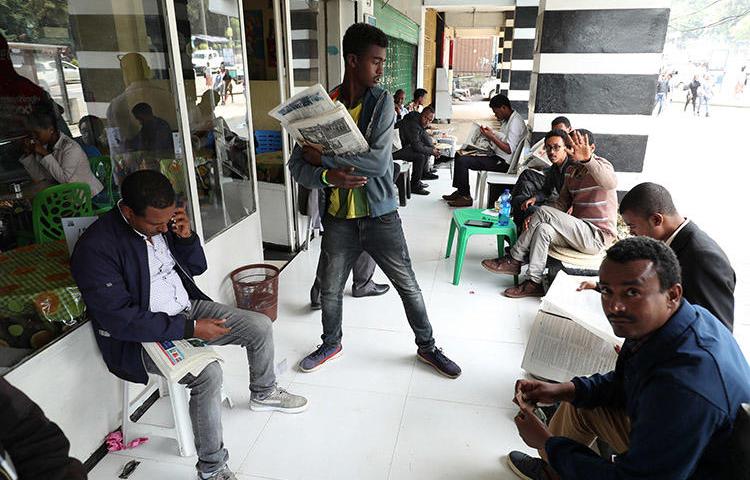
In era of reform, Ethiopia still reverts to old tactics to censor press
On June 22, Ethiopia was plunged into an internet blackout following what the government described as a failed attempted coup in the Amhara region. In the aftermath at least two journalists were detained under the country’s repressive anti-terror law, part of an uptick in arrests that CPJ has noted in the country since May.
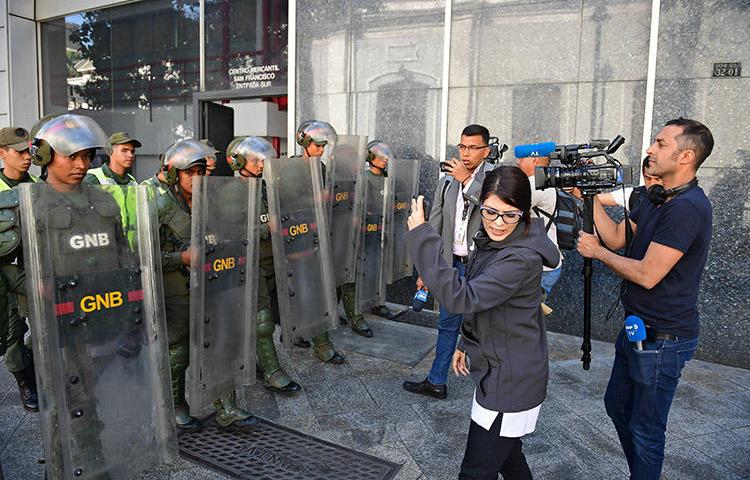
Caracas full of uncertainty for journalists covering Venezuela crisis
A year after disputed national elections in Venezuela, and with access to information growing ever-scarcer, the country remains in a political and economic crisis. Conditions for the press have deteriorated further since January, when Juan Guaidó, the head of the opposition-led national assembly, declared himself interim president.
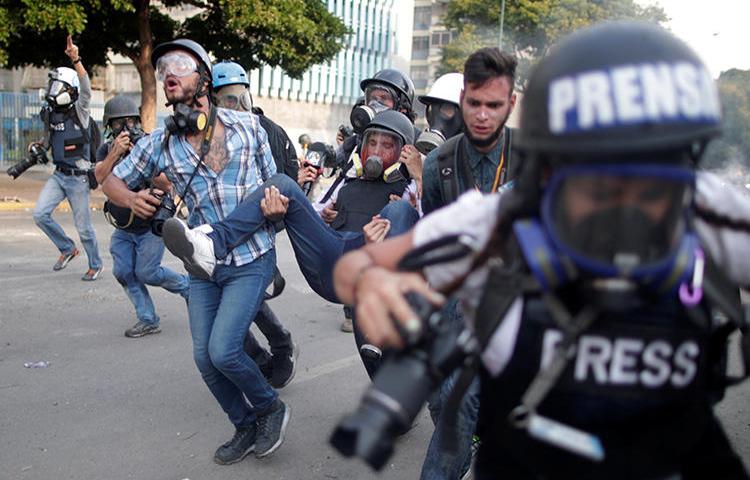
Challenges facing journalists trying to cover latest violence in Venezuela
The long-running political crisis in Venezuela escalated on April 30, 2019, after a civilian and military uprising was thwarted by the government of Nicolás Maduro, according to news reports. Opposition leaders Juan Guaidó and Leopoldo Lopez, accompanied by members of the armed forces, congregated on a highway in eastern Caracas and called upon the armed…
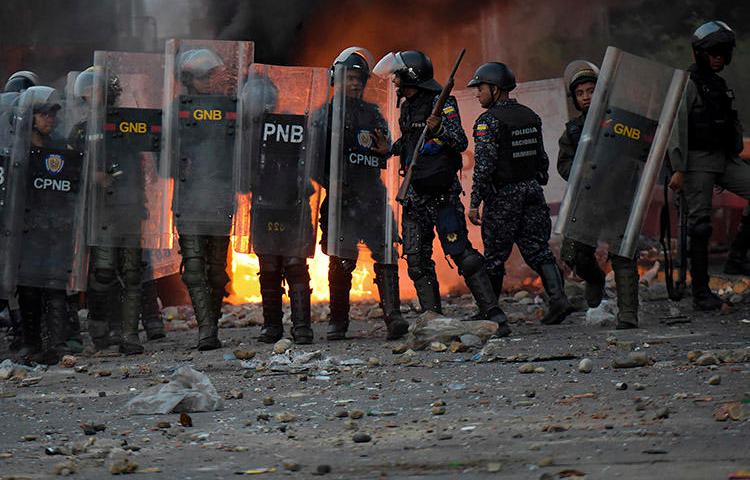
Uncertainty and risk for journalists stranded at Venezuelan border
As Venezuela’s political crisis deepens, and the country closes its border with Colombia following violent clashes in late February, CPJ’s emergencies director, María Salazar Ferro traveled to the Colombian border city Cúcuta, with Luisa Isaza, head of protection for the Colombian press freedom group FLIP, and CPJ’s Andes correspondent, John Otis. There, they met with…
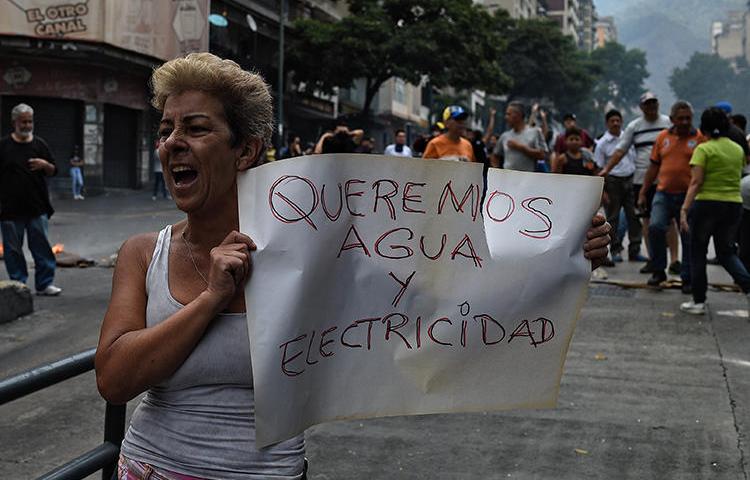
Venezuelan police detain reporter Danilo Gil while covering protests, charge him with resisting authority
On March 30, 2019, police from Lagunillas, a municipality in Zulia state, beat and detained journalist Danilo Alberto Gil, a reporter for Venezuelan news outlet NotiRedVe–which operates on Twitter and Facebook–at around 9:30 a.m., while he was covering an opposition protest in the town of Ciudad Ojeda, according to posts on Twitter by NotiRedVe, local…
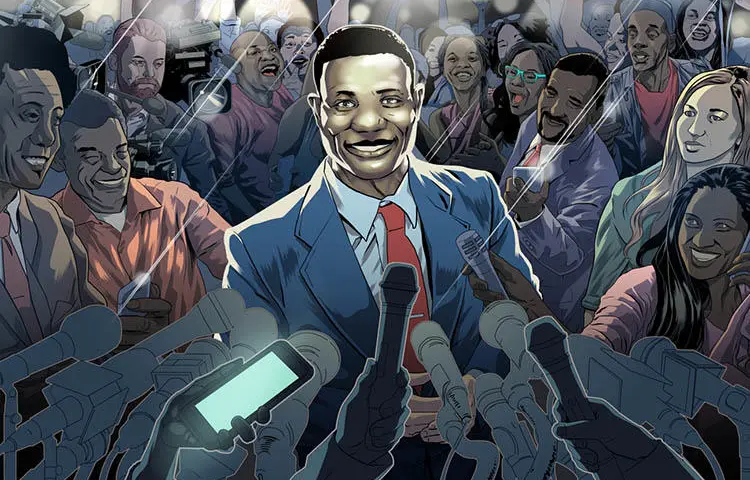
Covering elections: Journalist safety kit
During elections, journalists frequently cover rallies, campaign events, and protests, which can increase their risk of being attacked, harassed, and detained. CPJ’s Emergencies Response Team (ERT) has compiled a Safety Kit with information for editors, reporters, and photojournalists on how to prepare for elections and how to mitigate digital, physical and psychological risk.
The Best Defense
Threats to journalists’ safety demand fresh approach Reporting on wars and natural disasters is inherently dangerous, but the spread of insurgent and criminal groups globally poses an unprecedented risk to journalists. Since the videotaped killings of James Foley and Steven Sotloff in 2014, public awareness of the risks has increased exponentially, but the dangers persist.
News from the Committee to Protect Journalists, September 2014
Prominent support for #RightToReport in the Digital Age More than 2,800 people including prominent journalists Christiane Amanpour, Glenn Greenwald, and Alan Rusbridger have already signed on to CPJ’s new campaign Right to Report in the Digital Age.
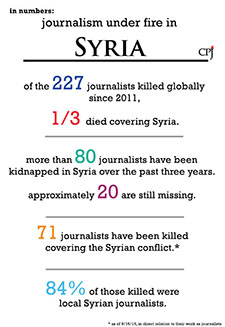
Journalist beheadings in Syria reignite debate over risk and safety for freelancers
Now that the initial wave of revulsion at the beheading of two young journalists has passed, the international media is wringing its hands and asking how it can spare others the heartbreak of the families of U.S. journalists James Foley and Steven Sotloff.
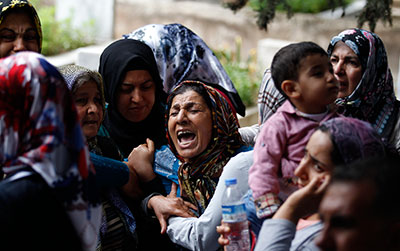
News blackout deepens Turkey press freedom doubts
When twin car bombs shook the district of Reyhanli in Turkey’s southeastern province of Hatay near the Syrian border last Saturday, killing at least 51 people and wounding dozens of others, a local court issued a gag order on all news coverage of the attack. The ban was unprecedented in scope and in the way…