Attacks on the Press in 2011: State Media As Anti-Media Tool
In some Latin American countries, state-owned media are used not only for propaganda but as platforms to smear critics, including journalists. Some elected leaders have even invested in large multimedia holdings to further their agendas. By Carlos Lauría
Attacks on the Press in 2011: In Mexico, Silence or Death Remains the Choice
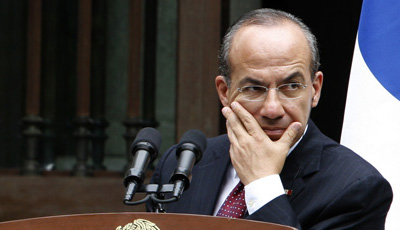
The Mexican president promised to protect a besieged press corps with a federal protection program, a special prosecutor and new legislation making anti-press violence a federal crime. But Felipe Calderón Hinojosa has failed at nearly every turn. By Mike O’Connor
Attacks on the Press in 2011: Mexico
Criminal groups exerted extraordinary pressure on the press as they extended their control over virtually every sector of society. Journalists were killed or disappeared, media outlets were bombed and threatened. Pervasive self-censorship was a devastating consequence of this environment. In an information vacuum, journalists and citizens increasingly used social media to inform their communities. The…
Attacks on the Press in 2011: Guatemala
Journalists increasingly practiced self-censorship as Mexican drug cartels expanded their presence in Guatemala. In May, criminals in four provinces hung banners in public places, threatening journalists with harm if gang activities were covered. A television journalist in southern Escuintla province was killed under unclear circumstances after receiving several threats. While the rise of criminal groups…
In Mexico mission, PEN speaks for a silenced press
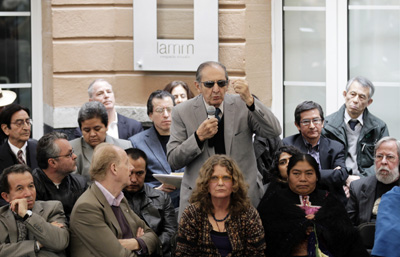
The leading American author Russell Banks set the tone on Sunday as he stood among international writers and their local colleagues in Mexico City: “A nation’s journalists and writers, like its poets and story-tellers, are the eyes, ears, and mouths of the people. When journalists cannot freely speak of what they see and hear of…
For journalists, cyber-security training slow to take hold
For centuries, journalists have been willing to go to prison to protect their sources. Back in 1848, New York Herald correspondent John Nugent spent a month in jail for refusing to tell a U.S. Senate committee his source for a leak exposing the secret approval of a treaty with Mexico. In a digital age, however,…
CPJ Impact
News from the Committee to Protect Journalists, December 2011 The year in press freedom This year was marked by a wave of anti-press violence as social unrest stirred millions into action. Journalists from Belarus to Egypt and Mexico to Beijing continued exposing the truth despite being attacked for their reporting. The Committee to Protect Journalists’…