Attacks on the Press in 2011: Middle East & North Africa
Analyses and data track press freedom conditions throughout the region. Mohamed Abdel Dayem examines five trends to watch from the Arab uprisings. María Salazar and Sheryl Mendez describe the fear and uncertainty facing doens of Iranian exiled journalists. And Robert Mahoney details Turkey’s assault on free expression.
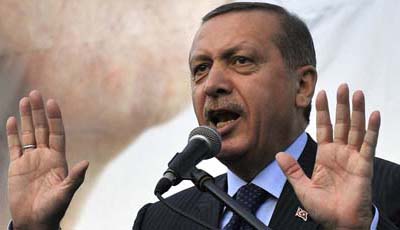
Attacks on the Press in 2011: Turkey’s Legal Problem
With the aid of anachronistic legislation and a rigid judiciary, Turkish officials and politicians have curbed free expression by subjecting journalists to endless court proceedings and legal costs. The EU and the U.S. are no help. By Robert Mahoney >> Türkçe
Attacks on the Press in 2011: Eritrea
No independent press has operated in this Red Sea nation since a September 2001 government crackdown on dissent that led to the imprisonment of 11 leading journalists without charge or trial and the enforced closure of their publications. President Isaias Afewerki’s administration consistently refused to account for the whereabouts, legal status, or health of the…
Attacks on the Press in 2011: Uzbekistan
Authoritarian leader Islam Karimov marked Media Workers Day by calling for an independent domestic press, the state news agency UzA reported, but his long-standing policies of repression belied such statements. The regime is a persistent jailer of journalists, often ranking among the worst in the region. Embattled reporter Abdumalik Boboyev faced official obstruction when he…
Attacks on the Press in 2011: Belarus
After a rigged December 2010 presidential vote, authoritarian leader Aleksandr Lukashenko unleashed two waves of repression against critics and political opponents, one in early year and one in summer. The KGB and police raided independent newsrooms and journalists’ homes, confiscated reporting equipment, and jailed independent reporters. Politicized courts handed suspended prison terms to prominent journalists…
Attacks on the Press in 2011: Mexico
Criminal groups exerted extraordinary pressure on the press as they extended their control over virtually every sector of society. Journalists were killed or disappeared, media outlets were bombed and threatened. Pervasive self-censorship was a devastating consequence of this environment. In an information vacuum, journalists and citizens increasingly used social media to inform their communities. The…
Attacks on the Press in 2011: Cuba
Official repression in Cuba remained the most intense in the hemisphere. Although the last of the 29 independent journalists imprisoned in the 2003 Black Spring crackdown was released in April, the government’s restrictive practices persisted. Official censorship was codified in law and closely enforced. The government persecuted critical journalists with arbitrary arrests, short-term detentions, beatings,…
Attacks on the Press in 2011: Colombia
While lethal anti-press violence has slowed considerably in recent years, the press freedom landscape remains troubled. Journalists continue to be attacked and threatened with such frequency that some are compelled to flee to safer locations within Colombia or into exile. A journalist in Arboletes was murdered in June, although the motive was unclear. In this…
Attacks on the Press in 2011: Zimbabwe
Although official anti-press harassment continued a gradual decline from its peak after the disputed 2008 elections, a highly restrictive legal framework kept domestic, independent news sources to a mere handful. The fractious coalition between Robert Mugabe’s ZANU-PF and Morgan Tsvangirai’s MDC failed to implement the media reforms they had pledged to undertake in their 2008…