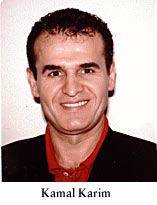
Writer sentenced to 18 months in Kurdistan
New York, N.Y., March 27, 2006—The Committee to Protect Journalists condemns the 18-month prison sentence handed down against an Austrian writer for defaming local officials in Iraq’s semiautonomous northern Kurdistan region. A court in the Iraqi city of Arbil sentenced Kamal Karim, whose name is also given as Kamal Sayid Qadir, on Sunday for articles…
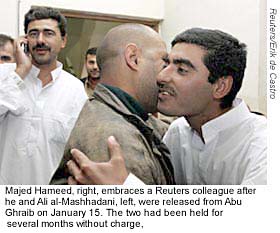
U.S. military pledges to expedite cases of detained journalists
New York, March 24, 2006—The Committee to Protect Journalists welcomes U.S. officials’ pledge this week to begin prompt, high-level reviews of cases in which journalists are detained by troops in Iraq. CPJ documented seven cases in 2005 alone in which U.S. forces detained Iraqi journalists for periods of many weeks or months without charge or…
Journalist’s abduction raises further alarm
Your Excellency: The Committee to Protect Journalists is alarmed by the March 11 abduction and assault of a Yemeni journalist who was warned to stop writing his weekly column because it offended state security forces. A recent series of attacks against journalists, coupled with the government’s indifference, is contributing to an ever more repressive climate for the press.
Iraq: Kurdish journalist detained, faces prosecution
New York, March 22, 2006—The Committee to Protect Journalists today condemned the detention and prosecution of a Kurdish journalist, who was seized by Kurdish security forces in northern Iraq. On March 17, security forces affiliated with the Patriotic Union of Kurdistan (PUK) arrested Hawez Hawezi, a 31-year-old high school teacher who also writes for the…
Trial of CBS cameraman postponed
New York, March 22, 2006—The trial of an Iraqi cameraman working for CBS News has been put off until next month, The Associated Press reported. Abdul Ameer Younis Hussein was scheduled to appear in court today, but an Iraqi judge postponed the trial until April 5, CBS News bureau chief in Baghdad, Larry Doyle, told…
Bouteflika should repeal decree limiting free expression
Your Excellency: I am writing to strongly protest Your Excellency’s recent promulgation of a draconian decree further restricting freedom of expression, including sharp new limits on discussion of the conflict that ravaged Algeria in the 1990s.
In Iraq, CBS cameraman faces trial Wednesday
New York, March 21, 2006—An Iraqi cameraman held by U.S. forces for nearly a year without charge will stand trial in Baghdad on Wednesday, CBS News and a U.S. military spokesman said late today. Abdul Ameer Younis Hussein, a freelance cameraman working for CBS News, will be prosecuted at the Central Criminal Court of Iraq…
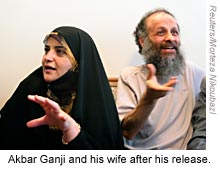
Iranian journalist Ganji freed after six years in prison
New York, March 20, 2006—The Committee to Protect Journalists welcomes the release from prison of prominent Iranian journalist Akbar Ganji, freed on Friday after six years behind bars, but the organization calls on authorities to release all Iranian journalists jailed for their work. At least nine journalists are now jailed in Iran, CPJ research shows.
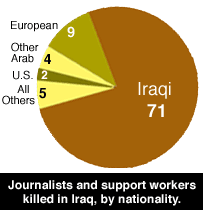
Local journalists increasingly targeted, CPJ finds In Iraq, murder top cause of journalist deaths
New York, March 17, 2006—Murder has overtaken crossfire and other acts of war as the leading cause of work-related deaths among journalists and media support workers in Iraq, and local journalists are far and away the most vulnerable to attack, a new analysis by the Committee to Protect Journalists has found. CPJ research, compiled for…
CPJ calls on Moroccan king to probe government-organized protests against magazine
Your Majesty: The Committee to Protect Journalists is deeply concerned by evidence that Moroccan authorities played a role in organizing demonstrations against the magazine Le Journal Hebdomadaire for publishing a photograph of a French newspaper showing some of the Danish cartoons of the Prophet Muhammad. These state-orchestrated protests placed the lives of the entire staff of the Casablanca-based weekly at risk, yet the government has failed to launch a credible investigation or call those responsible to account.