U.S. Senate passes ‘libel tourism’ bill
This week, the U.S. Senate unanimously passed a bill shielding journalists and publishers from “libel tourism.” The vote on Monday slipped past the Washington press corps largely unnoticed. Maybe it was the title that strove chunkily for a memorable acronym: the Securing the Protection of our Enduring and Established Constitutional Heritage (SPEECH) Act. Journalists and…
Using https to secure the Web for journalism
From today, you now have an alternative web address to visit the CPJ website. As well as our usual http://cpj.org/ address, you can visit our site securely at https://cpj.org/. We’ve turned on this feature to help protect our readers who are at risk of surveillance and censorship, and as part of a wider advocacy mission…
Iran arrests two more critical journalists
New York, July 22, 2010—The Committee to Protect Journalists has learned that Iran is continuing to arrest journalists, with two more detained in June. CPJ calls on the authorities to release all imprisoned journalists, and to allow reporters to conduct their work unimpeded.

Boukadous’ wife describes bribe attempt before arrest
Tunisian police arrested Fahem Boukadous, a widely respected critical journalist, on July 15. Before his arrest, Boukadous wrote an open letter from the hospital, where he was being treated for acute asthma. On the evening he was taken to Gafsa prison, his wife, Afaf Bennacer, wrote an article about what happened that has been circulated on multiple…
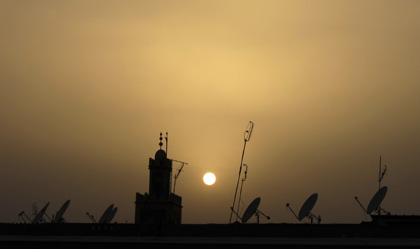
Morocco declares itself ‘democratic’ while restricting media
While high-ranking Arab officials are not held accountable for misinforming or misleading the public, critical journalists in their respective countries are increasingly dragged into courts and handed harsh jail sentences following unfair trials for “spreading false news.”

Opposition newspaper confiscated in Tunisia
New York, July 19, 2010—The Committee to Protect Journalists condemns the apparent censorship of Al-Mawkif, an opposition weekly belonging to the Progressive Democratic Party in Tunisia. Rachid Khechana, left, Al-Mawkif editor-in-chief, told CPJ that 10,000 copies of the newspaper’s Friday edition disappeared from newsstands, apparently confiscated by security agents.
In Yemen, press freedom worst in 20 years
One opinion was relayed to me repeatedly by numerous journalists, lawyers, and human rights defenders during the week I just spent in Yemen: The crackdown against independent and opposition media in the country has not been this concerted at any time since the unification of the southern and northern halves of the country in 1990.
In Sudan, court should overturn verdicts against journalists
New York, July 16, 2010–The Committee to Protect Journalists calls on Sudanese authorities to overturn convictions and prison sentences against three journalists working for Rai al-Shaab, a now-shuttered newspaper owned by the opposition Popular Congress Party. The court, ruling on Thursday in Khartoum, also ordered the confiscation of the newspaper’s property, according to CPJ interviews…
CPJ calls for immediate release of Tunisian journalist
New York, July 15, 2010—The Committee to Protect Journalists calls on the Tunisian authorities to immediately release Fahem Boukadous, a correspondent for the satellite television station Al-Hiwar al-Tunisi, and to overturn his four-year prison sentence.