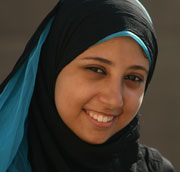
Blogging in Egypt: Virtual network, virtual oppression
I have been blogging in various platforms since 2006, focusing on human rights conditions and police abuses in Egypt. During this time, the Egyptian regime was widely described as one of the most “liberal-moderate” and sometimes “semi-democratic” regimes in the region, but meanwhile, hundreds of young people were hijacked, jailed, fined, and intimidated. Egypt has…
Chris Hondros: Images of life and death
Photojournalist Chris Hondros, who was killed in Libyaon April 20, captured humanity at its worst and its best, in times of war and despair and at moments of kindness and hope. Here are some of his photos, from some of the world’s most treacherous spots, courtesy of Getty Images. « Previous Image | Next Image…
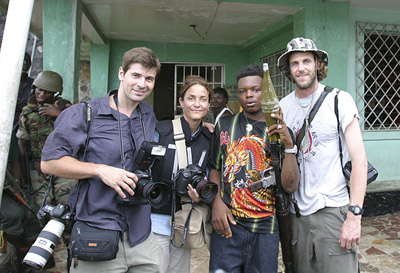
Tribute to Chris Hondros, who ventured far with his torch
My dear friend Chris. In the silence, I hear the symphony of memories that was your life as I knew it. I see your waving hand gestures and wry smile as you recount stories whilst we sit together in the tropical Liberian heat discussing everything from classical music to aperture priority. My heart and mind…

Anti-press violence in Iraqi Kurdistan, past and present
Kurdistan is different, as nearly every Iraqi Kurd I have ever met has said. Far less violent than the rest of Iraq since the U.S.-led invasion in 2003, the parts of the north controlled by the Kurdish Regional Government have escaped the kind of sectarian unrest that continues to flare in the south. But in…
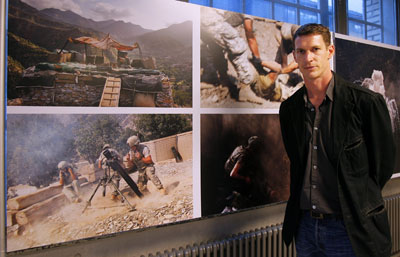
Tim Hetherington: A star inexorably, humbly rising
I first met Tim Hetherington in Monrovia in 2005, in the run-up to Liberia’s then historic elections, which officially drew the line under the country’s 14-year civil war. Tim had already reported from Liberia in the chaotic final stages of that war in 2003, marching for days on end through dense and unforgiving tropical bush…
Al-Jazeera journalist pans China’s Libya coverage
In reporting on the Libyan conflict, China’s media “emphasize only the humanitarian disasters caused by Western air bombardments, and [report] sparingly if at all on the violent suppression and massacre of the people by Qaddafi,” Al-Jazeera’s Beijing bureau chief, Ezzat Shahrour, writes on his blog. Chinese readers so far have been largely supportive of his…
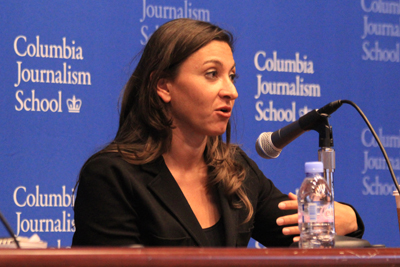
Q&A: NYT’s Lynsey Addario on Libya sexual assault
New York Times photographer Lynsey Addario is speaking publicly about sexual aggression she experienced while detained in Libya last month by forces loyal to Muammar Qaddafi. Addario was held for six days with Times colleagues Anthony Shadid, Stephen Farrell, and Tyler Hicks, all of whom were subjected to physical abuse. In this interview with CPJ,…
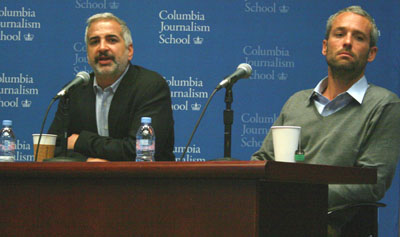
Taking risks to tell the story: NYT journalists discuss Libya
On March 15, four New York Times journalists were detained in Libya while crossing a checkpoint after they entered the country without visas. They were released six days later. The four–photojournalists Lynsey Addario and Tyler Hicks, and reporters Anthony Shadid and Stephen Farrell–came to Columbia University’s Graduate School of Journalism on Thursday for what will…
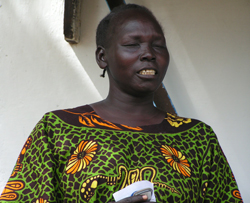
Remembering South Sudan’s pioneer female reporter
When The Juba Post’s star reporter, Apollonia Mathia, told me that so-called “tong tong” rebels had attacked again near Gumba, in southern Sudan, I looked at her warily. “Let me get the camera I’ll check it out,” she said. Apollonia planned to hop on our rickety motorbike to cover a story about the infamous Ugandan…
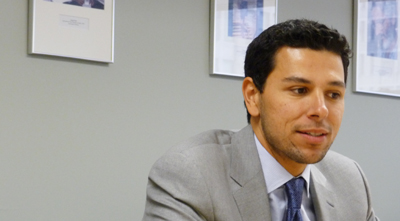
Q&A: Ayman Mohyeldin, Al-Jazeera English correspondent
For the millions of non-Arabic speakers around the world who followed Egypt’s revolution live one journalist stood out–Ayman Mohyeldin of Al-Jazeera English. Mohyeldin, 32, used his knowledge of the region and of the West to make sense of the events unfolding in Cairo’s Tahrir Square for an international audience. He also witnessed the unprecedented wave…