
Who Shot Ahmed?
On the night he was shot, Ahmed Ismail Hassan al Samadi was working. Protestors had gathered along a highway near his home in a small Bahraini village. With his handheld camcorder, Ahmed filmed as they marched. He filmed as security forces arrived in marked and unmarked cars. The citizen journalist had tens of hours of…
Endless surprises for Al-Jazeera
Mhamed Krichen/CPJ Board memberThere seems to be no end to American surprises when it comes to Al-Jazeera. The latest was revealed by Der Spiegel, the German weekly news magazine, which reported the U.S. National Security Agency hacked into our internal communications system, according to documents provided by Edward Snowden, the former NSA security analyst.

More hope in Syria as two more journalists freed
Just two weeks ago, I wrote that the recent escapes of American Matthew Schrier and French-American Jonathan Alpeyrie after months of captivity should give hope to all missing journalists in Syria. We now have two more reasons for hope. Sunday, the Italian and Belgian governments announced that missing Italian journalist Domenico Quirico and Belgian academic…
Egypt needs justice not politics in investigating deaths
Yesterday, the Committee to Protect Journalists launched a campaign calling for serious investigations into the deaths of eight journalists in Egypt since President Hosni Mubarak was ousted in 2011. CPJ hopes that the current military-led government will lead impartial and serious inquiries into the events surrounding the killings no matter who was in power at…

Escapees give hope in cases of journalists missing in Syria
It has now been an entire year since Al-Hurra correspondent Bashar Fahmi, a Jordanian of Palestinian origin, and freelancer Austin Tice, of the United States, went missing in Syria. But the recent liberation of two freelance journalists held for months gives us some reason to hope.

1,000 deaths: Journalists who gave their lives
When Mick Deane was killed in Egypt on Wednesday, he became the 1,000th journalist documented by CPJ as having died in direct relation to his work. The photos above, a sampling of those who have died over the past 21 years, serve as a powerful reminder of the cost of critical, independent journalism.
Attacks on Orient News illustrate Syria’s many threats
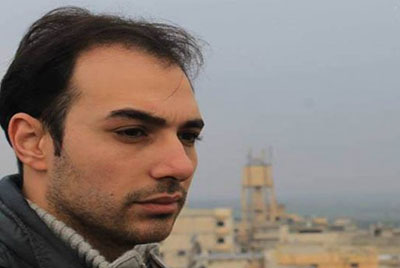
It is increasingly difficult to document violations against the press in Syria, let alone hold those responsible to account. It has always been hard to verify facts within the country. But now, the sheer number of violations and the expanding list of violators have become admittedly overwhelming.
After Security Council, what next for journalist safety?
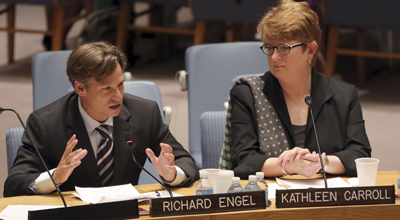
Speaking at a U.N. Security Council discussion about the protection of journalists, Associated Press Executive Editor and CPJ Vice Chair Kathleen Carroll remembered the 31 AP journalists who have died reporting the news and whose names grace the Wall of Honor that visitors pass as they enter the agency’s New York headquarters. Most were killed…

Surveillance detection for journalists in the field
Much has been made recently about the digital surveillance of journalists–and rightly so–but physical surveillance remains a key tactic of security forces, law enforcement, and private entities. These operatives are monitoring journalists, gathering intelligence on them, and potentially obstructing journalists’ work or putting them at risk.