
Press apathy over Macedonia wiretaps is symptom of failing democracy
Journalists and professional press organizations were given just one day’s warning on February 25 that Zoran Zaev, leader of Macedonia’s opposition party the Social Democrats, would be revealing what he described as a “bomb”–conversations of journalists allegedly wiretapped by the government–at his weekly press conference.
Ban of India’s Daughter and other films silences debate on key issues
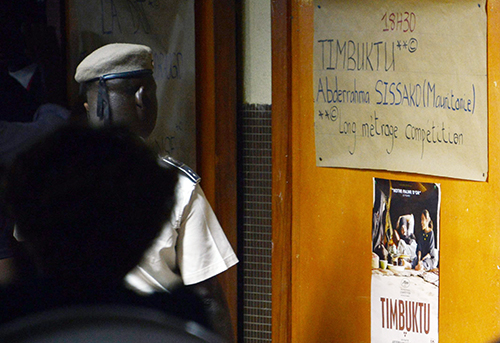
What do Delhi, Beijing, and Villiers-sur-Marne have in common, but Ouagadougou does not? The first three recently banned access to films their governments deemed inappropriate. But a film festival in the fourth, the capital of Burkina Faso in West Africa, is stepping up security to show an acclaimed but controversial movie about Islamic militancy in…

Murder of Boris Nemtsov highlights Russia’s impunity record
The brazen contract-style killing of Russian opposition leader Boris Nemtsov on Friday night–carried out within range of a dozen security cameras and yards from the Kremlin walls in Moscow–serves as a grim reminder of the risks government critics face in Russia.
In Russia, media regulator uses warnings to restrict the press
In January, Russia’s state media regulator Roskomnadzor issued warnings to six news outlets that published cartoons from French satirical weekly Charlie Hebdo. Roskomnadzor said the cartoons were “insulting the religious feelings of Muslims and inciting religious hatred,” and that the outlets had broken laws on media and extremism, Russian news agency Tass reported.
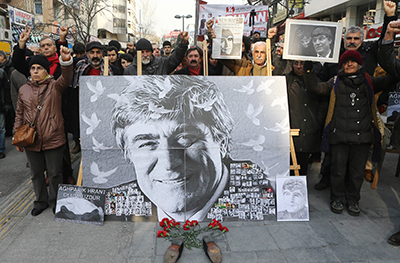
Hope for justice still frail in Hrant Dink’s 2007 murder case
The murder of Turkish-Armenian journalist Hrant Dink, founder and managing editor of the weekly Agos newspaper, is still under investigation in Turkey. But despite arrests last month in the eight-year-old case, Dink’s family and colleagues are worried justice will still not be served.

After Charlie Hebdo attack, vigils, protests and publishing bans
Protests against the French satirical weekly Charlie Hebdo were held in Afghanistan, Pakistan, the Middle East and parts of Africa over the weekend, as crowds demonstrated against the magazine’s portrayal of the Prophet Muhammad, according to news reports.
Classifying media and encryption as a threat is danger to press freedom
The U.K. prides itself on its commitment to free expression, but the latest revelations of surveillance of journalists and calls by Britain’s Prime Minister, David Cameron, to ban secure messaging belie the country’s drift toward a more restrictive environment for the press. The revelations further underscore the threat surveillance by Western democracies poses to journalism,…
Charlie Hebdo attack unites France on free expression, but will solidarity hold?
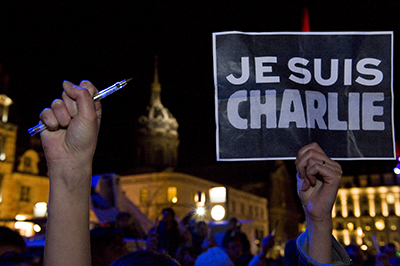
The attack on the French satirical weekly Charlie Hebdo has sent shock waves through France and beyond. Not only because 12 people have been killed in cold blood and many were wounded in what was the deadliest terrorist attack in France since 1961, when right wingers bombed a train killing 28 people. Not only because,…
Slideshow: Journalists killed in 2014
In 2014, at least 60 journalists and 11 media workers were killed in relation to their work, according to CPJ research. Local and international journalists died covering conflicts, including in Syria, Iraq, and Ukraine, while many others were murdered reporting on corruption and organized crime in their own countries. Here, CPJ remembers some of the…
Press in Ukraine still suffering one year after attacks on journalists
A year ago today, the Committee to Protect Journalists reported on the first mass assaults on press freedom in Ukraine, after police were ordered to disperse protesters in the capital, Kiev, and other cities. At least 51 journalists–including local and international reporters–were attacked by police and protesters while covering the early days of the standoff…