
Correa lambastes press in Columbia speech
“Sir, you are lying and a liar.” With these words, uttered before an audience of around 150 people, Ecuadoran President Rafael Correa dispelled any doubt as to whether he might cool his explosive rhetoric in the face of criticism. His harsh words came in response to a critical question posed by CPJ’s senior coordinator for…
Motive unclear, but murders become rallying point
The brutal, September 1 murders of two women from the world of mass communications drew international headlines as the latest attack against the Mexican news media. But the sensational case–the two were found strangled in a park in the heart of Mexico City–illustrates the complexities of determining motives amid the pervasive violence afflicting Mexico. Since…
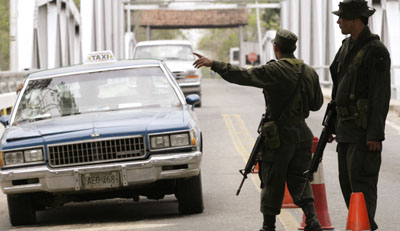
Colombian journalists in Arauca pressured from all sides
Although a long-running army offensive has improved security in much of Colombia, the oil-rich eastern province of Arauca remains a hot zone–for both combatants and journalists. This week, for example, the National Liberation Army (ELN), the smaller of the country’s two guerrilla groups, called a transportation strike, effectively shutting down traffic and commerce throughout the…
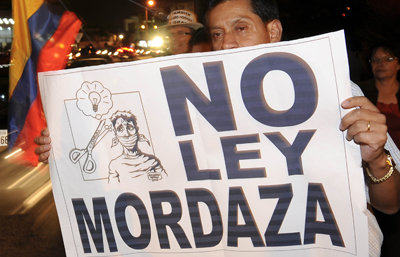
In response, Ecuadoran secretary misses the point
Back in April, before leaving on a research trip to Ecuador, I contacted Communications Secretary Fernando Alvarado by phone and email in hopes of meeting with him to discuss press freedom concerns that have emerged under President Rafael Correa. The secretary was among the high-ranking administration officials who did not respond to CPJ’s requests for…
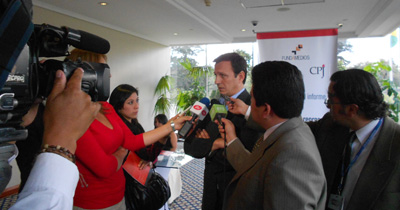
In Ecuador, CPJ highlights press freedom decline
The turning point in President Rafael Correa’s aggressive campaign against the private media, Ecuadoran journalists say, came in July with the criminal defamation convictions of four managers of the Guayaquil-based daily El Universo. Bad went to worse when the paper’s former opinion editor and three of its executives were sentenced to jail and fined, along…
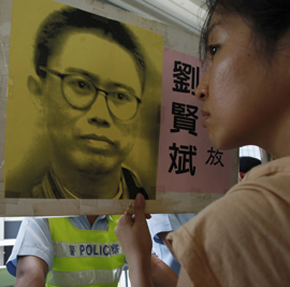
In lawsuit, Chinese writers allege Cisco aids government
Three Chinese writers who have spent time in prison for articles published online are suing California-based Cisco Systems Inc., according to international news reports. The suit accuses the company of providing information and technology to Chinese authorities that facilitated the writers’ detentions–allegations that Cisco flatly denies. Chinese security officials have already interrogated one of the…
Legal protection falls short for Zimbabwe’s Insider
The Insider is a political newsletter about Zimbabwe, edited by veteran journalist Charles Rukuni. Founded in 1990, it was printed as a 12-page leaflet until 2003, when Zimbabwe’s hyper-inflation made it impossible to publish with annual subscriptions. Rukuni made the move to the Web, where he continued to archive and publish stories at insiderzim.com. Rukuni’s…

Left for dead in Haiti: How CPJ helped one journalist
Ten years ago I joined the staff of the Committee to Protect Journalists to launch the Journalist Assistance program, an initiative, as CPJ board member Gene Roberts describes, developed to establish a standing direct response mechanism for journalists facing threats and attacks. When I left the position in 2009, many people asked me what case…

A global partnership to assist journalists in distress
One of the most rewarding parts of my job at Canadian Journalists for Free Expression (CJFE) for the last eight years has been my work on our Journalists in Distress program. Through this program I have had quick glimpses into the lives of hundreds of courageous journalists from countries all over the world. Most of…