Journalist Barrett Brown faces prison for posting hyperlink
Tomorrow, a federal judge will weigh a prosecutor’s motion for a gag order in connection with the U.S. government’s prosecution of journalist Barrett Brown. The motion represents a troubling turn in an already-troubling case for press freedom–a case that could criminalize the routine journalistic practice of linking to documents publicly available on the Internet, which…
1,000 deaths: Journalists who gave their lives
When Mick Deane was killed in Egypt on Wednesday, he became the 1,000th journalist documented by CPJ as having died in direct relation to his work. The photos above, a sampling of those who have died over the past 21 years, serve as a powerful reminder of the cost of critical, independent journalism.
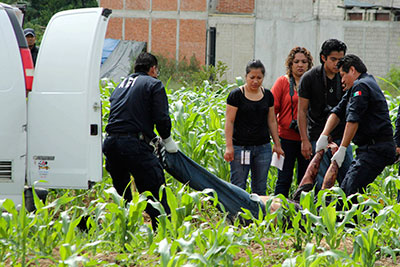
Mexico’s special prosecutor hesitates over early cases
Organized crime capos and corrupt politicians have been getting away with murdering journalists in Mexico for so long that there isn’t a reliable count on the number of the dead or a useful way to measure the crushing effects on a democracy when a country’s press is afraid to tell the truth. CPJ research shows…
New Zealand, US may have spied on McClatchy reporter
Concern over government surveillance of journalists has washed up on the faraway shores of New Zealand, with a report in the country’s Sunday Star this week asserting that the military there, with help from U.S. intelligence, spied on an investigative journalist who had been critical of its activities in Afghanistan.
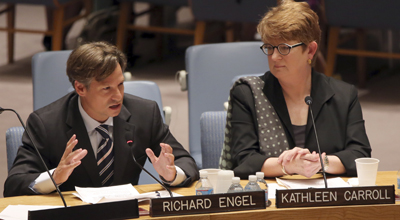
After Security Council, what next for journalist safety?
Speaking at a U.N. Security Council discussion about the protection of journalists, Associated Press Executive Editor and CPJ Vice Chair Kathleen Carroll remembered the 31 AP journalists who have died reporting the news and whose names grace the Wall of Honor that visitors pass as they enter the agency’s New York headquarters. Most were killed…
Protests in Catatumbo add to risk in Colombia
Reporting from Catatumbo, a region in northern Colombia dominated by guerrillas and drug traffickers, has always been challenging. But working conditions for journalists have seriously deteriorated amid nearly two months of anti-government protests pitting thousands of angry peasant farmers against soldiers and riot police.

Surveillance detection for journalists in the field
Much has been made recently about the digital surveillance of journalists–and rightly so–but physical surveillance remains a key tactic of security forces, law enforcement, and private entities. These operatives are monitoring journalists, gathering intelligence on them, and potentially obstructing journalists’ work or putting them at risk.
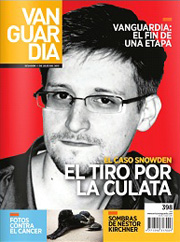
Ecuador loses investigative journal Vanguardia
Like the death of a loved one. That’s how Juan Carlos Calderón, editor of the newsmagazine Vanguardia, described the June 28 closing of the newsweekly that for eight years published hard-hitting investigations about public officials and faced frequent government harassment. Yet the final days of Vanguardia were almost as controversial as its stories.