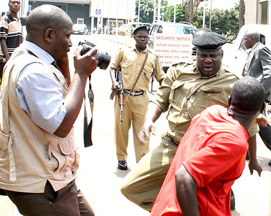
In Uganda, citizen journalists fill news gap during riots
Last week in Uganda, authorities reacted to violent anti-government demonstrations, at left, by yanking at least four radio stations off the air and banning political programming and some journalists from the airwaves. I have been covering the Ugandan blogosphere for Global Voices for more than two years. News of the violence first reached me on…
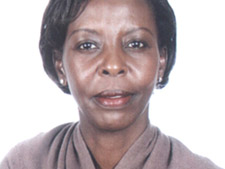
Rwandan minister: ‘It’s OK to be anti-government’
CPJ sat down recently with the Rwandan minister of information, Louise Mushikiwabo, who spoke of several media developments, including a new press law. “I am convinced the new legislation will help professionalize our media—there were many holes in the former law,” she told CPJ. Some, however, do not share her enthusiasm.
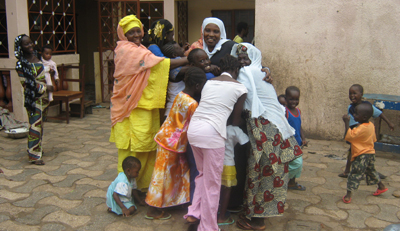
Newly freed, Gambian columnist describes jail
On an ordinary Friday, Sarata Jabbi-Dibba, a reporter in the West African nation of Gambia, publishes her weekly column on women’s issues, “She She She,” in the only independent daily newspaper here, The Point. Last Friday however, Dibba was herself a newsmaker—after recovering her freedom.
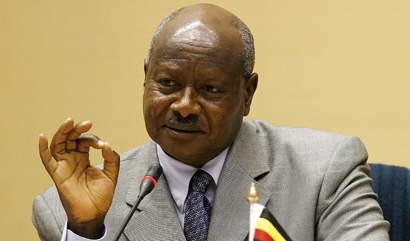
Uganda’s Museveni issues warning to news media
President Yoweri Museveni of Uganda lashed out at private broadcasters last week, accusing them of unethical reporting. The comments come in the midst of two important, ongoing developments: mounting public criticism of Museveni’s policies and the government’s criminal prosecutions of six journalists for their coverage.
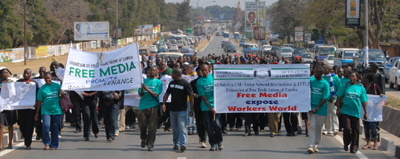
Press freedom slips in Zambia
In Zambia, the coming week will mark the anniversary of the untimely death of President Levy Patrick Mwanawasa. The late president had championed press freedom with his commitments to reform, and, with his passing, the Zambian media lost an ally. Worse, the media freedoms gained in recent years are now slipping.
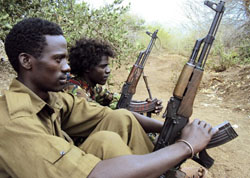
Ethiopia pushes Kenyan TV to drop report on rebels
Last week, the Ethiopian government tried to force private Kenyan broadcaster Nation Television (NTV) to drop a four-part exclusive report on separatist rebels in southern Ethiopia. NTV aired the first two parts of “Inside Rebel Territory: Rag-Tag Fighters of the Oromo Liberation Front,” which led Ethiopia’s ambassador to Kenya to accuse the Nation Media Group of giving a platform…
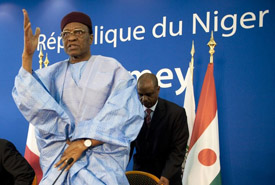
Niger president tightens grip on media with amendment
In Niger today, the government is holding a public referendum on a constitutional amendment that would pave the way for President Mamadou Tandja to run for office indefinitely. It would also further increase the former army colonel’s control over the press. Tandja, at left, has charged ahead with the referendum despite overwhelming public opposition after he…
For RFI, static in Kinshasa
Like many radio listeners in Kinshasa, the capital of the Democratic Republic of Congo, I tune to Radio France Internationale (RFI) on 93.4 FM or 105 FM. But beginning on July 24, the frequencies carried nothing but static. It was no accident. Media reports quoted government spokesman Lambert Mende as declaring a ban on RFI…

Only the Gambian president has press freedom
On July 22, Gambian President Yahya Jammeh once again went after journalists in an interview on the country’s only state-run television station. The president made a thinly veiled threat toward six independent journalists currently facing “seditious publication” and “criminal defamation” charges in the country: “So they think they can hide behind so-called press freedom and…