UNESCO must reject Obiang prize bid
The Committee to Protect Journalists joined with eight other human rights organizations today in opposing the bid for a UNESCO life sciences prize named after Equatorial Guinea President Teodoro Obiang Nguema Mbasogo. CPJ and other groups have consistently voiced their opposition to this prize, saying that Equatorial Guinea’s human rights record undercuts the UNESCO mission.…
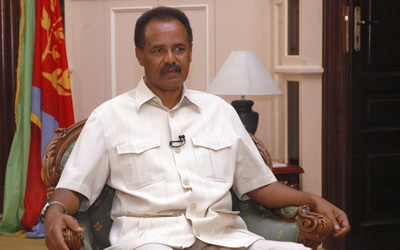
Eritrea: Let’s lift the shroud of 10 years of misery
Since Zaid Tewelde’s husband, an Eritrean freedom fighter turned playwright and journalist, was arrested in September 2001, she has spent each passing day coping with the burning questions of her two young sons, age 9 and 10, “Where is my dad? When are we going to see him?” And she is not alone. Like Zaid, the…
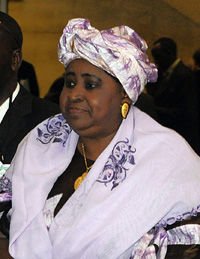
Gambia VP touts tourism, downplays human rights issues
The Gambia has an image problem: Dubbed the “Smiling Coast of Africa,” it is a tourist destination, but its government has one of the region’s worst records of human rights abuses. On Tuesday, at an African tourism promotion event in New York City, Gambian Vice-President Isatou Njie-Saidy headed a delegation working toward improving the negative…
In Ethiopia case, a response to WikiLeaks
Last week, we learned that Ethiopian journalist Argaw Ashine was facing possible arrest and needed to flee the country. During a 10-day period in September, he had been summoned three times by Ethiopian authorities and questioned about a reference to him in a cable sent by the U.S. Embassy in October 2009 and made public…
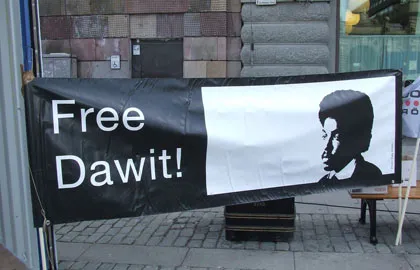
When Eritrea shut down the independent press
It was September 18, 2001. As usual, I had to do my shift as a news reader on Eritrea’s national government-controlled radio station Dimtsi Hafash. It was just minutes before 6:30 a.m. I was almost ready with all of the Tigrinya news material given to me for broadcasting and was waiting for the on-air sign…
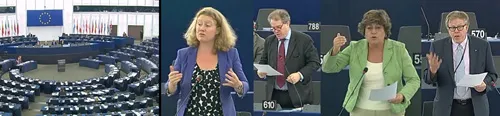
EU resolution urges Eritrea to free long-jailed journalists
Eritrea was on the hot seat Thursday in Strasbourg and Brussels. Ten years after a massive crackdown on dissent in Asmara that included the arrests of 11 independent journalists, European institutions have signalled that they are weary of President Isaias Afeworki’s repression.
A quiet victory for The Namibian
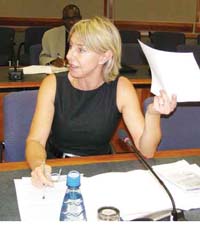
Namibia’s information minister recently announced that a decade-long state advertising boycott of The Namibian, the country’s largest daily newspaper, would finally end. An action intended to punish the paper for its independence had failed. It was back in December 2000 that former President Sam Nujoma told his cabinet to block all government advertising and purchases…
Mission Journal: South Sudan’s struggle for a free press
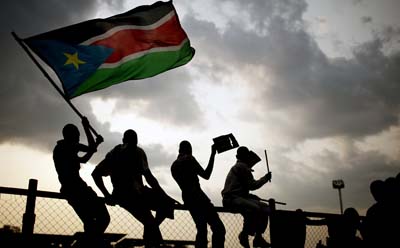
The former guerrillas of the Sudan People’s Liberation Army (SPLA) fought a 22-year civil war for greater autonomy and civil rights for the southern Sudanese people, culminating in South Sudan’s independence this July. But local journalists fear the former rebels turned government officials still harbor a war mentality that is unaccustomed to criticism, and that…
Legal protection falls short for Zimbabwe’s Insider
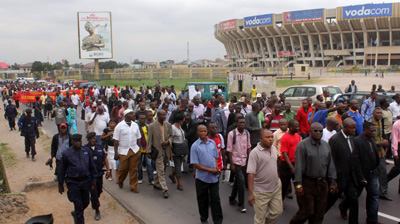
The Insider is a political newsletter about Zimbabwe, edited by veteran journalist Charles Rukuni. Founded in 1990, it was printed as a 12-page leaflet until 2003, when Zimbabwe’s hyper-inflation made it impossible to publish with annual subscriptions. Rukuni made the move to the Web, where he continued to archive and publish stories at insiderzim.com. Rukuni’s…