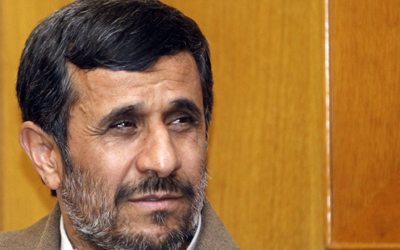
The 10 Tools of Online Oppressors
The world’s worst online oppressors are using an array of tactics, some reflecting astonishing levels of sophistication, others reminiscent of old-school techniques. From China’s high-level malware attacks to Syria’s brute-force imprisonments, this may be only the dawn of online oppression. A CPJ special report by Danny O’Brien
Audio Report: The 10 Tools of Online Oppressors
In our special report, “The 10 Tools of Online Oppressors,” CPJ examines the 10 prevailing strategies of online oppression worldwide and the countries that have taken the lead in their use. In this accompanying podcast, CPJ Deputy Director Robert Mahoney notes that these strategies range from sophisticated cyber-attacks to traditional brute-force techniques. Listen to the…

Two suspects found guilty in Baburova murder in Russia
New York, April 29, 2011–The Committee to Protect Journalists welcomes the guilty verdict in the 2009 murder of Anastasiya Baburova, freelance reporter with the independent newspaper Novaya Gazeta, who was shot and killed in Moscow along with human rights lawyer Stanislav Markelov. Markelov had represented Novaya Gazeta journalists in various legal cases.
Two newspapers threatened with closure in Belarus
New York, April 29, 2011–The Committee to Protect Journalists condemns attempts by the Belarusian Information Ministry to close down the opposition newspaper Narodnaya Volya and the independent newspaper Nasha Niva, and called on the ministry to stop its harassment of both publications.
CPJ responds to readers’ comments on Italy letter
In the past week, CPJ has received a number of emails in reaction to our April 19 letter, signed by Executive Director Joel Simon, to Italian President Giorgio Napolitano, which details cases of harassment by Perugia authorities against journalists, writers, and bloggers who have critically covered high-profile local murder cases. Some of the emails we…
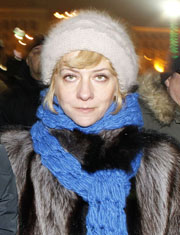
Under house arrest in Belarus for not playing by the rules
It has been four long months since security forces snatched Irina Khalip, at left, from Minsk’s Independence Square while she was reporting on a protest of the flawed December 19 Belarusian presidential vote.While Khalip was giving a live account from the square to the Russian radio station Ekho Moskvy, riot police beat her and forcibly…
After deadly metro blast, Belarus cracks down on press
New York, April 26, 2011–Belarusian authorities must immediately stop harassing independent media outlets in retaliation for their critical reporting on the recent lethal bombing on the Minsk subway, the Committee to Protect Journalists said today. Following the blast, authorities–including the Information Ministry, the general prosecutor’s office, and the Belarusian security service (KGB)–launched a campaign of…
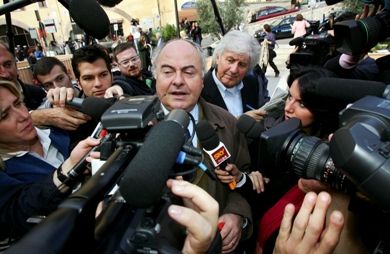
In Italy, journalists threatened for reporting on murders
President Napolitano: The Committee to Protect Journalists is deeply concerned about local authorities’ harassment of journalists and media outlets who criticize the official investigation into the November 2007 brutal murder of British exchange student Meredith Kercher in the central Italian city of Perugia. CPJ is particularly troubled by the manifest intolerance to criticism displayed by Perugia Public Prosecutor Giuliano Mignini, who has filed or threatened to file criminal lawsuits against individual reporters, writers, and press outlets, both in Italy and the United States, in connection with the Kercher murder investigation as well as the investigation into the Monster of Florence serial killings.