CPJ concerned by irregularities in Ukraine’s Gongadze case
Dear President Yanukovych: The Committee to Protect Journalists is deeply concerned by reports of irregularities in the decade-long investigation into the 2000 kidnapping and murder of Internet journalist Georgy Gongadze. Particularly, CPJ is disturbed by efforts to derail progress in the investigation and peg the ultimate responsibility for the murder on a dead suspect, while other leads in the case languish. Since assuming office in March, you have publicly stated your commitment to press freedom in Ukraine. The case of Georgy Gongadze is a litmus test for you and your administration, and we urge you to ensure that none of the perpetrators of his kidnapping and killing are allowed to walk free.
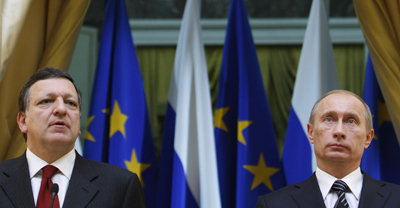
European Commission must press Russia on impunity
New York, February 23, 2011–In advance of key meetings on Thursday between the European Commission and Russian Prime Minister Vladimir Putin, the Committee to Protect Journalists urges European Commission President José Manuel Barroso to address Russia’s record of rampant impunity in resolving the killings of journalists.
Libya’s disordered Internet
Craig Labowitz at Arbor has been sifting through the evidence of how countries in the Middle East have been blocking and throttling the Internet in the last week. His analysis indicates that while both Bahrain and Yemen had periods of slowed or impaired access, only Libya seems to have taken the drastic step of shutting off the…
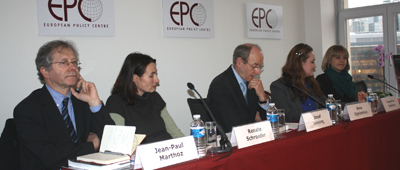
CPJ calls on EU leaders to get their house in order
The European Policy Centre (EPC), Brussels’ leading think tank, hosted CPJ for a policy dialogue marking the launch of our annual survey, Attacks on the Press, on Tuesday. CPJ’s visit to Brussels coincided with a heated debate over Hungary’s new controversial media law, which has eclipsed the country’s first months as EU’s rotating president. The…
Attacks on the Press 2010: Europe and Central Asia Analysis
On the Runet, Old-School Repression Meets New By Nina Ognianova and Danny O’Brien Russian President Dmitry Medvedev has often talked about the importance of a free press and free Internet, telling reporters before his election that the Web “guarantees the independence of mass media.” He explicitly tied the two together in his first State of…
Attacks on the Press 2010: Middle East and North Africa Analysis
Suppression Under the Cover of National Security By Mohamed Abdel Dayem Relying on an extensive network of sources in the military, government, and Islamist groups, Yemeni freelance journalist Abdulelah Shaea had become a frequent and pointed critic of the administration’s counterterrorism efforts. By July, President Ali Abdullah Saleh’s government had enough, dispatching security agents to…
Attacks on the Press 2010: Armenia
Top Developments • New broadcast law gives regulators broad powers to revoke TV licenses. • Gala TV, a rare critical broadcaster, faces array of government pressures. Key Statistic 1: Number of digital television licenses the government will grant per region. The plan will cut diversity. As his government strengthened ties with Russia, President Serzh Sargsyan…
Attacks on the Press 2010: Azerbaijan
Top Developments • European Court orders release of Eynulla Fatullayev; government still jails editor. • News sites report periodic blocking, typically when sensitive stories are posted. Key Statistic 4: Journalists interrogated by security agents after running a statement from the jailed Fatullayev The authoritarian government of President Ilham Aliyev relied on imprisonments and an atmosphere…
Attacks on the Press 2010: Belarus
Top Developments • Authorities wage post-election crackdown, raiding newsrooms and jailing reporters. • New Internet law requires registration of sites, tracking of user activity. Key Statistic 20: Journalists detained as government silences coverage of election protests. In a massive post-election crackdown, authorities raided news outlets and detained at least 20 journalists covering protests over a…
Attacks on the Press 2010: Kazakhstan
Top Developments • New laws restrict online news media, shield government officials from scrutiny. • OSCE chairman Kazakhstan undermines organization with repression at home. Key Statistic 44 Defamation complaints filed in first six months of 2010, many of them by government officials. President Nursultan Nazarbayev’s government failed to deliver the press freedom reforms it had…