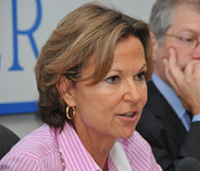
Family’s ‘truth teller’ speaks: Kati Marton at CPJ
Author and CPJ board member Kati Marton’s parents worked as foreign correspondents in Budapest during the Cold War in the 1950s, exposing Marton to the grit of living in a Communist state. She described feelings of alienation and displacement she felt as a child to an audience at CPJ’s New York offices today. “We lived…
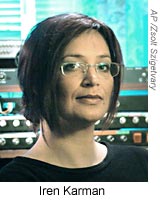
Investigative journalist severely beaten in Hungarian capital
New York, June 25, 2007—The Committee to Protect Journalists condemns Friday’s brutal attack on Iren Karman, an investigative journalist who had published a book and made a documentary film on illegal oil sales in 1990s Hungary. Unknown assailants assaulted Karman in the outskirts of the capital, Budapest, on Friday evening, pushed her into a car,…
Attacks on the Press 2004: Europe and Central Asia Analysis
Overview by Alex Lupis Authoriatarian rulers strengthened their hold on power in many former Soviet republics in 2004. Their secretive, centralized governments aggressively suppressed all forms of independent activity, from journalism and human rights monitoring to religious activism and political opposition.
Attacks on the Press 2002: The Hague
December 11 Jonathan C. Randal, The Washington Post The U.N. International War Crimes Tribunal for the Former Yugoslavia in The Hague (ICTY) ruled to limit compelled testimony from war correspondents. The decision, announced at the tribunal’s Appeals Chamber, came in response to the appeal by former Washington Post reporter Jonathan C. Randal, who had been…
Attacks on the Press 2002: Hungary
As Hungary continues its progress toward European Union (EU) membership in 2004, a change in government in April led to the appointment of new officials in charge of public television. Prime Minister Viktor Orban’s conservative government, defeated in April elections, had previously used its political influence to pressure the public broadcasting service to provide positive…
Attacks on the Press 2002: Kyrgystan
Emboldened by the growing number of U.S. troops in the country, President Askar Akayev has used the threat of international terrorism as an excuse to curb political dissent and suppress the independent and opposition media in Kyrgyzstan. Compliant courts often issue exorbitant damage awards in politically motivated libel suits, driving even the country’s most prominent…
Attacks on the Press 2002: United Kingdom
Press freedom is generally respected in the United Kingdom, but CPJ was alarmed by a legal case in which Interbrew, a Belgium-based brewing group, and the British Financial Services Authority (FSA), a banking and investment watchdog agency, demanded that several U.K. media outlets turn over documents that had been leaked to them. The case threatened…