Balancing Act
Access to information In August 2004, Belgian police raided the house and office of Hans-Martin Tillack, a Brussels-based reporter for German magazine Stern, in what his lawyer claimed was an attempt to reveal the identity of a whistleblower. This raid, although exceptional, is emblematic of challenges facing EU correspondents, who say they face hurdles in…
Balancing Act
How Turkey backtracked on accession responsibilities Press freedom was not a prominent issue during discussions on Turkey becoming a candidate country in 2005. In part, this was because reform was in the air in Ankara: Recep Tayyip Erdoğan’s Islamist Justice and Development Party (AKP) adopted a number of reforms that appeared to demonstrate its commitment…
Balancing Act
The European Union is struggling to balance its ideals as a global leader in press freedom with its member states’ criminal defamation and blasphemy laws and counterterrorism measures. Despite an outward commitment to press freedom, in many cases the EU lacks a robust mechanism to hold member states accountable when they renege on their commitments.…
Balancing Act
StoryMap: Press freedom in EU candidate countries Press freedom is a key factor for countries working toward EU membership. Currently five countries—Albania, Macedonia, Montenegro, Serbia, and Turkey— and two potential candidates—Bosnia-Herzegovina and Kosovo— are applying to become member states. This StoryMap explores the challenges journalists in those countries have faced in the past five years….
In Hungary, police beat journalists covering refugee crisis at border
New York, September 17, 2015–The Committee to Protect Journalists condemns the actions of Hungarian police who, according to reports, attacked journalists covering the arrival of refugees at the Serbian-Hungarian border. At least seven international journalists were beaten by riot police yesterday, and a video journalist from The Associated Press was ordered to delete footage on…

New hurdles for Hungary’s press as Orbán restricts FOI requests
“This is the best thing that has ever happened in Hungary.” Katalin Erdélyi, a freedom of information activist, was referring to a ground-breaking website launched in Hungary in 2012. “I was glad because I realized the potential and how it will help me get all the information I longed for,” she told me. The website,…
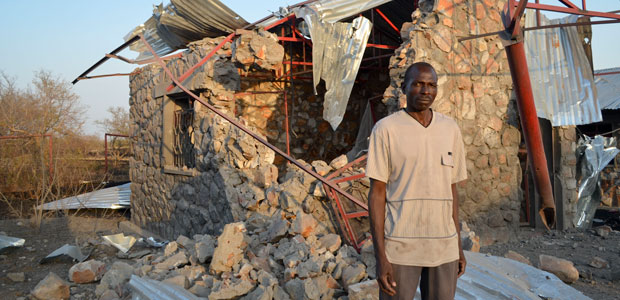
Journalists overcome obstacles through crowdfunding and determination
During South Africa’s Boer War, at the turn of the 20th century, a determined news organization relocated reporters, copy editors, and printing presses to the front line to ensure accurate reporting. In the Warsaw Ghetto, during World War II, a literal underground press, established to counter Nazi propaganda, required the nightly movement of cumbersome printing…
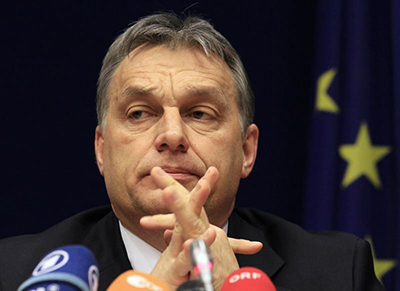
Orbán walks fine line in Brussels with Hungary’s media law
“With the Islamic state offensive, the Ebola epidemic and Ukraine, Hungary is not on anyone’s mind in Europe,” mused one of our interlocutors during the Committee to Protect Journalists’ fact-finding mission in Budapest in October. “Viktor Orbán has really nothing to fear from Brussels.”

In Hungary, an independent website defies censorship and pressure
A delegation from the Committee to Protect Journalists, led by board member Kati Marton, traveled to Hungary in October on CPJ’s first fact-finding and advocacy mission to an EU member state. We went there in response to concerning reports of deteriorating conditions for the press, and met dozens of journalists, media lawyers, managers, rights defenders,…