John Emerson
Attacks on the Press in 2013: Morocco
The Moroccan government continued its practice of targeting journalists and news outlets in connection with their critical coverage of taboo subjects, such as the health of the king or the royal family. One editor of an investigative weekly was convicted of defamation in relation to an article he wrote that said a government minister had drunk…
Attacks on the Press in 2013: Libya
As Libya’s growing media sector faced threats from state and non-state actors alike, the country continued to struggle to realize the promise of the 2011 revolution. Several journalists were physically assaulted by security guards outside the General National Congress (GNC) in February. The same month, the government confirmed the appointment of the country’s first minister…
Attacks on the Press in 2013: Sudan
Despite official promises to end the practice of pre-publication censorship, agents of the Sudanese National Intelligence and Security Services continued to intimidate journalists and censor newspapers. Security service officials routinely ordered papers to be suspended and raided printing houses to confiscate certain issues. At least 14 journalists were arrested over the year, many for their…
Attacks on the Press in 2013: Syria
For the second year in a row, CPJ ranked Syria the deadliest country in the world for journalists. Journalists also faced new threats in 2013 as radical Islamist groups strengthened their influence in rebel-held territory and rebel groups saw increased infighting. An unprecedented number of journalists were abducted during the year; many of them were…
Attacks on the Press in 2013: Tunisia
Tunisia, the country that inspired uprisings across the Middle East, continues to struggle to realize the aspirations of its own revolution, including the guarantee of press freedom. Journalists were attacked while covering protests, and several reported receiving death threats in relation to their criticism of the ruling party. The government created a draft constitution, which…
Attacks on the Press in 2013: Yemen
The state of press freedom in Yemen in 2013 reflected the overall uncertainty and insecurity of a country in transition after decades of rule under President Ali Abdullah Saleh. The press faced serious consequences for failing to navigate a complicated web of red lines from the government, tribal groups, and political factions. Many journalists received…
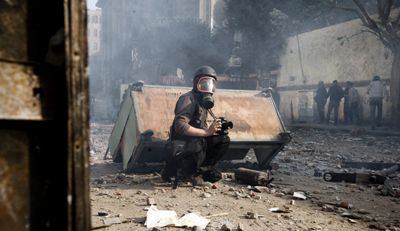
Attacks on the Press in 2012
A news crew crossing into Syria walks for three nights, legs aching and lungs burning, edging past army checkpoints to cover a war the government wants to obscure. A Liberian reporter dares to expose a dangerous ritual even as menacing strangers deliver death threats to her office. In central Mexico, a drug cartel’s vicious takeover…
Attacks on the Press in 2012: CPJ Risk List Video
CPJ’s Robert Mahoney identifies the 10 countries where press freedom suffered the most in 2012. They include Syria, the world’s deadliest country for the press; Russia, where repressive laws took effect; Brazil, where journalist murders soared; and Ethiopia, where terror laws are used to silence the press. (3:26)