Venezuela bars RCTV, 5 other stations from cable, satellite
New York, January 25, 2010—Venezuelan regulators have ordered cable and satellite operators to stop carrying one of the country’s best known broadcasters, RCTV International, along with five other stations, alleging that the broadcasters violated a requirement to air President Hugo Chávez’s speeches. The Committee to Protect Journalists urged Venezuelan authorities today to allow all of…

For Haiti’s Michele Montas, trauma and determination
Michele Montas, the Haitian journalist and former spokeswoman for U.N. Secretary- General Ban Ki-moon, has experienced a harrowing time in aftermath of the Haitian earthquake. “Haiti appears to be on doomsday,” said Montas, who said she has been shaken by the number of dead and wounded on the streets of the capital, Port-au-Prince. Her own…
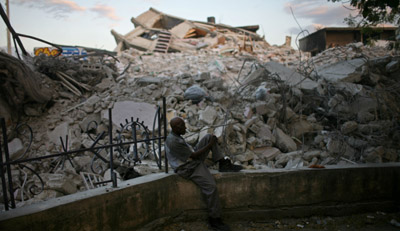
In Haiti, initial media toll is released
The Association of Haitian Journalists has recorded at least three media fatalities and one seriously wounded journalist as a preliminary toll from the earthquake that struck the Caribbean island on January 12. In an interview with CPJ from Port-au-Prince, AJH Secretary General Jacques Desrosiers identified the early victims as Wanel Fils, a reporter with Radio…

Sale of private broadcaster sparks concerns in Nicaragua
The sale of private television station Telenica Channel 8, one of Nicaragua’s most popular broadcasters, has sparked immediate controversy. Carlos Briceño, left, who previously owned the station, recently confirmed that he had sold the station but said that a confidential contract has forbid him from revealing the name of the buyers or the figures of the…
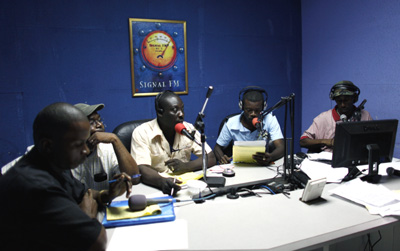
In Haiti, Signal FM staff keeps station running
Signal FM is the only Haitian radio station to continuously broadcast during and after the powerful 7.0-magnitude earthquake that ravaged the capital, Port-au-Prince, and surrounding areas on January 12. Signal’s online news service kept operating as well. The station’s equipment, located in Petionville (east of Port-au-Prince) remained in service, withstanding, remarkably, tremors to the building…
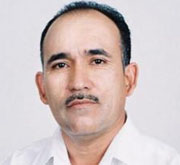
Missing reporter found dead in Mexico
New York, January 19, 2010—The Committee to Protect Journalists called on Mexican authorities today to thoroughly investigate the killing of José Luis Romero, a Mexican crime reporter who had been abducted on December 30. Romero, at left, was found dead on Saturday near the city of Los Mochis, in the state of Sinaloa, according to local…

How to help journalists in Haiti
The scenes from Port-au-Prince are horrifying, and the needs are staggering. There is no food, no water, no place to bury the dead. And there is also no information. According to CPJ’s Senior Americas Program Coordinator Carlos Lauria, who spoke with Haitian journalist Guylar Delva today, only a handful of Creole-language radio stations are operating. Journalists are unable to work…
Haitian journalist describes scenes of death and destruction
At 5 p.m. on Tuesday, prominent Haitian journalist Joseph Guyler Delva, 43, was driving his car on the streets of Port-au-Prince. Delva, the country’s leading press freedom advocate, was on his way to pick-up his 7-year-old daughter from school when he heard a loud bang. “I thought I was hit by a truck,” he said. After…
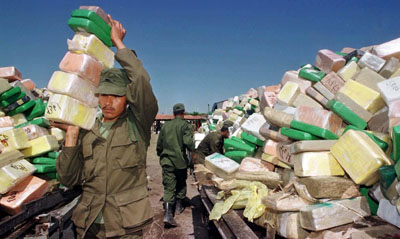
Mexican cartels blow the whistle on news coverage
On Thursday, I wrote about the murder of reporter Valentín Valdés Espinosa on January 7 and how the Mexican media has silenced its own coverage of the killing. Today, I will get into how journalists and drug cartels have entered into a dangerous, symbiotic relationship.
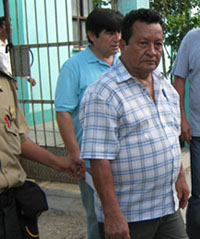
Newspaper editor jailed for defamation in Peru
New York, January 14, 2010—The editor of a Peruvian weekly newspaper in the Amazonian city of Bagua, Utcubamba province, was sentenced on Tuesday to one year in jail on defamation charges, according to local news reports. The Committee to Protect Journalists called today for his immediate release.Alejandro Carrascal Carrasco, at right, editor of the Bagua-based…