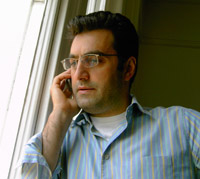
Columbia J-students learn the price of reporting in Iran
The two venues for the launch of Attacks on the Press in New York couldn’t have been more different. On Tuesday morning I was joined by Newsweek’s Maziar Bahari, and CPJ Asia Program Coordinator Bob Dietz in the hushed auditorium of the Dag Hammarskjöld Library at United Nations headquarters. The event was so well attended…
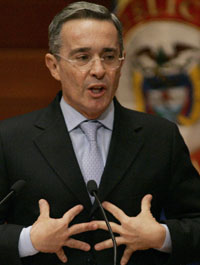
Uribe to CPJ, FLIP: ‘Illegal spies are enemies of Colombia’
Bogotá, February 17, 2010—Colombian President Alvaro Uribe Vélez said on Tuesday that those who illegally spy on the press are “enemies of his government” during a meeting with a delegation from the Committee to Protect Journalists and the Foundation for Freedom of the Press (FLIP). Uribe issued the statement at the urging of the CPJ and…
Haiti’s online news agencies barely functioning
The three main online news agencies in Port-au-Prince, the Haitian capital, are struggling in the aftermath of the quake. Clarens Renois, the founding director of Haiti Press Network, addressed the outlet’s future frankly: “In three months, I will close the agency,” he said.

Colombian government tells CPJ it ‘rejects’ illegal spying
Shortly after arriving in Bogotá to launch Attacks on the Press, I realized the Colombian government was well aware of our concerns about illegal espionage against the media. Top government officials, including President Alvaro Uribe Vélez, had confirmed meetings with a delegation from CPJ and the local press freedom group Foundation for Freedom of the…
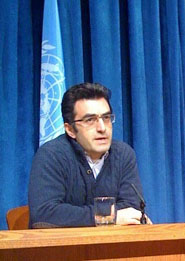
At U.N, Bahari and CPJ urge global attention
Newsweek journalist Maziar Bahari helped us launch Attacks on the Press at the United Nations in New York today. Bahari, an Iranian-Canadian citizen, was labeled an enemy of the Iranian regime and cruelly imprisoned for 118 days last year in Tehran. His very presence today, CPJ Deputy Director Robert Mahoney noted, was testament to the…
Attacks on the Press 2009: Preface
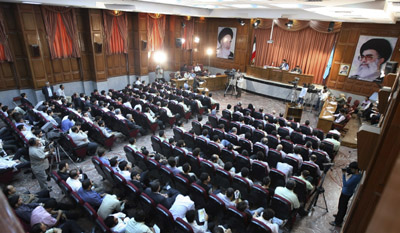
By Fareed Zakaria Toward the end of his 118-day ordeal inside Tehran’s Evin prison, Newsweek reporter Maziar Bahari had a bizarre exchange with his interrogator. Bahari had been held in solitary confinement since his arrest after Iran’s disputed presidential election in June; he had been subjected to near-daily beatings and interrogation sessions that stretched for…
Attacks on the Press 2009: Introduction
By Joel Simon Does “name and shame” still work in the Internet age? After all, the massacre of 31 journalists and media workers in the Philippines pushed the 2009 media death toll to the highest level ever recorded by CPJ. The number of journalists in prison also rose, fueled by the fierce crackdown in Iran.
In the Americas, Big Brother is watching reporters
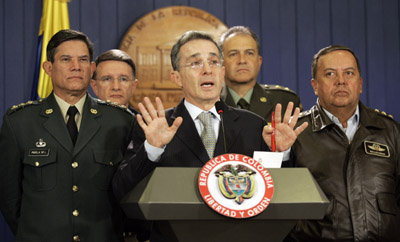
By Carlos Lauría The topic being investigated by two Colombian reporters was explosive enough that it required unusual security. Fearful that the subjects would learn prematurely of the story, the reporters took separate notes, which they did not share and which they later destroyed. They didn’t communicate by telephone or e-mail, and they met only…

As fighting surges, so does danger to press
By Bob Dietz As the United States redeploys forces to Afghanistan, and the Pakistani military moves into the country’s tribal areas, the media face enormous challenges in covering a multifaceted conflict straddling two volatile countries. Pakistani reporters cannot move freely in areas controlled by militants. International reporters in Afghanistan, at risk from kidnappers and suicide…
Attacks on the Press 2009: Argentina
Top Developments• New broadcast law sparks contentious debate, raises concerns.• In major victory, criminal defamation laws are repealed. Key Statistic 200: Tax agents who raided Clarín in apparent reprisal for the newspaper’s coverage. Press freedom advocates won two important victories as congress decriminalized defamation, and a federal court issued a ruling that, while still under appeal, could…