Threatened after posting video, Colombian journalist flees
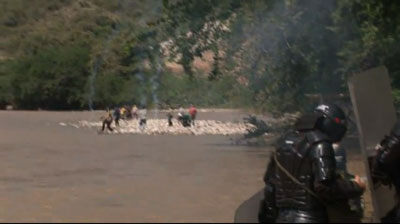
New York, February 29, 2012–Colombian freelance journalist and activist Bladimir Sánchez Espitia fled his home state today for the capital city after receiving death threats related to a video he posted on YouTube, according to the Bogotá-based Foundation for Freedom of the Press (FLIP). News reports said the video showed anti-riot police forcibly removing protesters…
Despite pardon, Correa does lasting damage to press
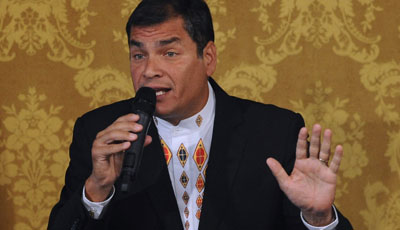
New York, February 27, 2012–Ecuadoran President Rafael Correa announced today that he would pardon several news managers and journalists he had sued for libel, but his actions in the cases have done grave damage to free expression in his country, the Committee to Protect Journalists said today. Correa had won separate libel complaints against executives of…
Was letter to Haiti website just part of Martelly’s theatrics?
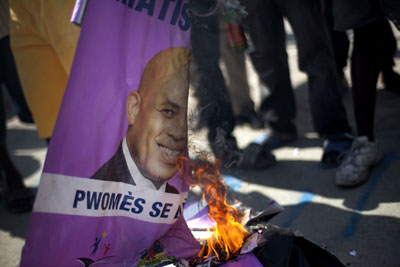
As a former entertainer better known as “Sweet Micky,” it is perhaps unsurprising that Haitian President Michel Martelly has been theatrical at times in his dealings with the press. At one media event in October, the President answered a critical question posed by a journalist by telling him, “I curse your mother,” according to press…
Recalling Marie Colvin, the ‘greatest of our generation’
In her final hours, Marie Colvin gave this damning report to CNN’s Anderson Cooper. Bravery, generosity, and commitment: These are the three characteristics of Marie Colvin that have surfaced, again and again, in the many tributes spoken and published since the veteran Sunday Times reporter was killed Wednesday in the besieged city of Homs by…
To quote Marie Colvin: ‘What is bravery, and what bravado?’
Not since the worst period of the Iraq war, or in the Balkans the decade before, have so many storied journalists been killed or seriously injured in such a short period of time. Inevitably, the spate of deaths leaves many journalists asking questions about whether and how much they are willing to risk their own…

As live streaming expands, challenges intensify
The world lost one of the only direct windows into the carnage in Homs, Syria, when Rami al-Sayed’s video live stream went dark Tuesday. A citizen journalist, al-Sayed was live streaming the Assad regime’s bombardment of Baba Amr and the brutal after-effects when he was struck by shrapnel and bled to death soon after, according…
Risk and reporting
Last night at London’s Frontline Club, CPJ launched its global survey of press freedom conditions, Attacks on the Press. The topic of discussion was the safety of journalists covering conflict and the panel consisted of journalist and documentarian Jenny Kleeman, ITN safety guru Colin Pereira, and journalist and filmmaker Maziar Bahari, who was imprisoned in…
Attacks on the Press in 2011: Abolishing Censorship
Even as trade and new systems of communication turn us into global citizens, the information we need to ensure accountability often stops at national borders. New platforms like social media are valuable tools, but the battle against censorship is hardly over. By Joel Simon
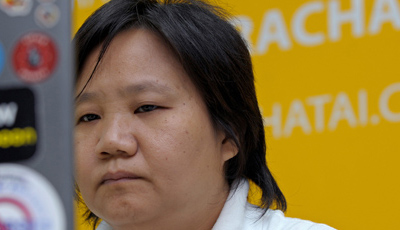
Attacks on the Press in 2011: Regulating the Internet
Legislation for Internet security can quickly turn into a weapon against the free press. Cybercrime laws are intended to extend existing penal codes to the online world, but they can easily be broadened to criminalize standard journalistic practices. By Danny O’Brien
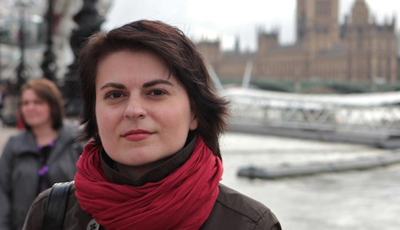
Attacks on the Press in 2011: Profiles in Freedom
How does one negotiate the choice to stay and report potentially dangerous news, rather than take a less risky assignment, leave the profession, or flee the country? The recipients of the 2011 International Press Freedom Awards explain. By Kristin Jones