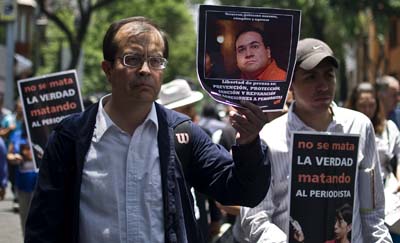
Mexican photographers murdered in Veracruz
New York, May 4, 2012–The bodies of two Mexican news photographers who specialized in the crime beat were found along with the bodies of a former photojournalist and a fourth individual in a canal in the city of Boca del Río, in Veracruz state, according to news reports.
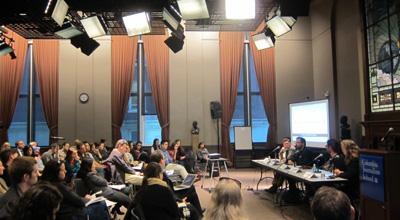
In digital security, knowledge and simplicity are keys
Governments and criminal organizations are stepping up digital surveillance of journalists, but the press is not keeping pace in meeting the challenge, a panel of experts said Wednesday at an event marking the launch of the CPJ Journalist Security Guide. Reporters are using unsecure consumer electronic products for sensitive tasks such as note-taking and source…
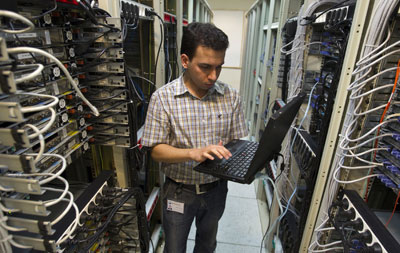
Most censored nations each distort the Net in own way
One big reason for the Internet’s success is its role as a universal standard, interoperable across the world. The data packets that leave your computer in Botswana are the same as those which arrive in Barbados. The same is increasingly true of modern mobile networks. Standards are converging: You can use your phone, access an…
China’s media conditions threaten Chen Guangcheng
The battle over blind Chinese activist Chen Guangcheng’s freedom and well-being is a battle over information. Both Chinese and U.S. officials are trying to spin the story their way. A few activists and media claim to speak for Chen, and in China’s anti-press environment they are putting themselves at risk. Direct interviews with the man…
Video: 10 Most Censored Countries
CPJ Deputy Director Robert Mahoney counts down the 10 countries where the press is most tightly restricted. How do leaders in these nations silence the media? And which country is the worst of all? (4:03) Read CPJ’s report on the 10 Most Censored countries for more detail on how censorship works, and which countries were…

Safer mobile use is key issue for journalists
As the Internet and mobile communications become more integrated into reporters’ work, the digital threats to journalists’ work and safety have increased as well. While many press reports have documented Internet surveillance and censorship–and the efforts to combat them–mobile communications are the new frontline for journalist security.

Assisting journalists forced to flee censorship
CPJ’s Journalist Assistance Program supports journalists who cannot be helped by advocacy alone. In 2011, we assisted 171 journalists worldwide. Almost a fourth came from countries that made CPJ’s Most Censored list. Eight journalists from Eritrea, five from Syria, six from Cuba, and a whopping 20 from Iran sought our help after being forced to…