
New film “High Tech, Low Life” on Chinese bloggers
“High Tech, Low Life,” a new documentary about Chinese bloggers directed by Stephen Maing, debuted at the 2012 Tribeca Film Festival in New York on April 19. It documents the lives of Zola (Zhou Shuguang) and Tiger Temple (Zhang Shihe), as they blur the lines of citizen journalism and activism though their reporting on evictions,…
CPJ calls on FARC to release French journalist
New York, May 1, 2012–The Revolutionary Armed Forces of Colombia (FARC) must immediately and unconditionally release French journalist Roméo Langlois, who was captured Saturday during a confrontation with Colombian armed forces, the Committee to Protect Journalists said today. An alleged FARC member has reportedly told Colombian journalists that the leftist rebel group is holding Langlois…
Gunmen attack Brazilian journalist’s house, car at night
New York, May 1, 2012–Brazilian authorities must immediately investigate an attack on a radio journalist’s home on Saturday and ensure the perpetrators are brought to justice, the Committee to Protect Journalists said today. Vinícius Henriques and his family were asleep during the attack, and no one was injured, according to news reports.
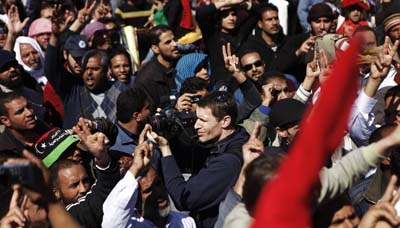
For conflict journalists, a need for first-aid training
Stop the bleeding. It’s a critical and fundamental step in aiding a journalist or anyone wounded in conflict. Hemorrhage is the number one preventable death on the battlefield. And yet large numbers of journalists covering wars and political unrest all across the world are untrained in this life-saving skill. It doesn’t need to be that…
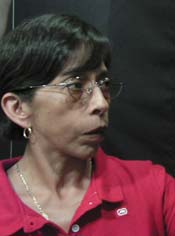
Body of Mexican journalist found beaten, strangled
New York, April 30, 2012–Authorities must immediately investigate the murder of Mexican journalist Regina Martínez Pérez, determine the motive, and ensure the perpetrators are brought to justice, the Committee to Protect Journalists said today. The body of Martínez was found in her home on Saturday evening in Xalapa, the capital of the Gulf Coast state…
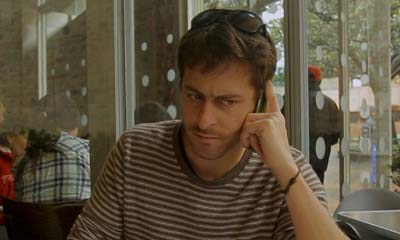
Ecuador should scrap new media bill, draft new one
Dear Mr. Cordero: The Committee to Protect Journalists is deeply concerned about a new Ecuadoran communications bill currently under debate in the National Assembly that would roll back press freedom by promoting self-censorship and restrictions on criticism of public officials.

Why journalists need new ways to stay safe
After the Salvadoran online newsmagazine El Faro exposed a secret government deal with criminal gangs last month, its staff faced repercussions that illustrate the new and complicated risks facing journalists worldwide. El Faro’s report, which said the government provided more lenient treatment of imprisoned gangsters in exchange for the groups’ agreement to slow down their…
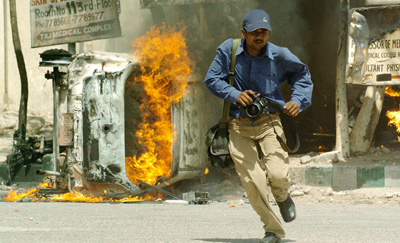
Afghan journalist’s death must lead to better combat rules
Wednesday, the Afghanistan Analysts Network (AAN) released its report, “Death of an Uruzgan Journalist: Command Errors and Collateral Damage,” by Kate Clark on the July 2011 shooting death of journalist Omaid Khpalwak. Clark’s details on how Khpalwak died corroborate and then go beyond the investigation already conducted by the U.S.-led NATO forces who were responsible.…