Swazi prince threatens journalists who ‘write bad things’
New York, July 26, 2010—The Committee to Protect Journalists condemns death threats and outrageous claims made last week by a member of Swaziland’s royal family against local journalists over their critical coverage of the country’s leadership.
Togo’s press suffers malaise 50 years after independence
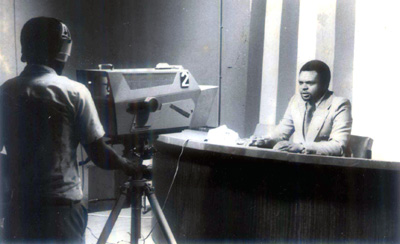
In the year marking the 50th anniversary of Togo’s independence, the Togolese press is suffering from an obvious malaise—a malaise perceived by the informed citizen and not by communications professionals themselves. This malaise transpires in the daily practice of journalism through the lack of professionalism. If elsewhere the media is stifled under the heel of…
On Gambia’s Freedom Day, CPJ joins call for human rights
Thursday was Freedom Day in the Gambia, an annual holiday unique to the West African nation marking President Yahyah Jammeh’s seizure of power in a 1994 coup. As the president used the occasion to declare a crusade against drugs and corruption, his rhetoric was undercut by the repression of the independent press under his administration.
A springtime for Burkina Faso’s press
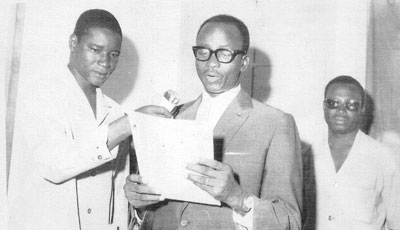
I will continue to relive for a long time August 5, 1960, the day Upper Volta, as Burkina Faso was then known, proclaimed independence from France! As a presenter of the newly founded national radio network, I was on the air, which was open to listeners all night. Some listeners, with tears of joy on…
After 50 years, journalism at a crossroads in Madagascar
Madagascar recently celebrated its 50th Independence Day, a milestone for a Malagasy press that has been documenting through difficult periods the nation’s tumultuous journey of self-rule. The funny thing is that most of our written press is in French, as in most former French colonies, and we never really question why that is or find…
Burundian online journalist faces life in prison for treason
New York, July 19, 2010—Burundian authorities’ arrest on Saturday of journalist Jean-Claude Kavumbagu on treason charges over commentary critical of the country’s security forces is alarming, the Committee to Protect Journalists said today. He is being held in Mpimba prison in the capital, Bujumbura.
Ivorian trio charged; ailing reporter on hunger strike
New York, July 16, 2010—Three journalists were formally charged today after refusing to reveal to Ivory Coast’s state prosecutor their sources for a corruption story based on a document leaked from the prosecutor’s office. The journalists could face up to 10 years in prison.

Niger’s news media: From ‘décor’ to dynamism
On August 3 1960, Niger’s Independence Day, I had no inkling that I would one day take up a career in journalism. I was only 11 years old then and my village was very far from the capital and any media outlet. It is only later, when I began attending high school in the capital…

In Guinea, media hopeful with democratic transition
Guinea’s historic presidential elections and new constitution are changing the media landscape in the West African country. Since last month, the military-led Transitional National Council has passed two new laws decriminalizing defamation and created a new media regulatory body.