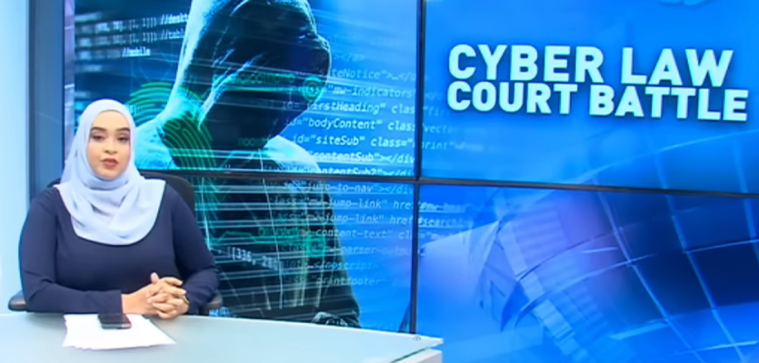
Kampala, March 6, 2026—The Committee to Protect Journalists welcomes Friday’s decision by Kenya’s Court of Appeal to strike down sections of the 2018 cybercrime law as a major victory for freedom of expression and the press.
The Bloggers Association of Kenya (BAKE) challenged 26 provisions of the Computer Misuse and Cybercrimes Act, 2018, arguing that the law was vague, lacked a clear requirement of criminal intent, and violated constitutional protections for freedom of expression, media freedom, and privacy.
“The Court of Appeal’s decision to nullify legal provisions criminalizing the publication of false news is a significant win for the media. These sections of Kenya’s cybercrime law have been widely misused by powerful individuals to gag unfavorable reporting and commentary,” said CPJ Africa Program Coordinator Muthoki Mumo. “However, significant reforms are still needed — particularly to provisions providing for lengthy prison terms for the ill-defined offense of ‘cyber harassment’ and sections that threaten citizens’ privacy rights.”
The court described Sections 22 and 23, which criminalized the publication of “false, misleading, or fictitious data,” as “so broad, wide, untargeted, akin to unguided missiles, and likely to net innocent citizens,” adding that “the offences may be difficult to prove.”
The three-judge bench upheld the rest of the law. They disagreed with arguments that it gives the state unchecked powers of surveillance and search and seizure. They also ruled that Section 27, which criminalizes “cyber harassment” and has been used multiple times to arrest journalists, had “clear” provisions and the petitioners had failed to demonstrate how it infringes on freedom of expression.
Section 27 stipulates up to 10 years in prison for sending communication that “detrimentally affects” the recipient, or which is “of an indecent or grossly offensive nature and affects the person.”
Mercy Mutemi, the lawyer who represented BAKE, described the ruling as a “vindication” but added that the “fight is not over yet” as “we strongly believe in the sanctity of the right to privacy.”
Al Shifaa Media journalist Peter Maseke Mwita, who was charged with cyber harassment in February over a mistaken WhatsApp message, is due back in court in April.