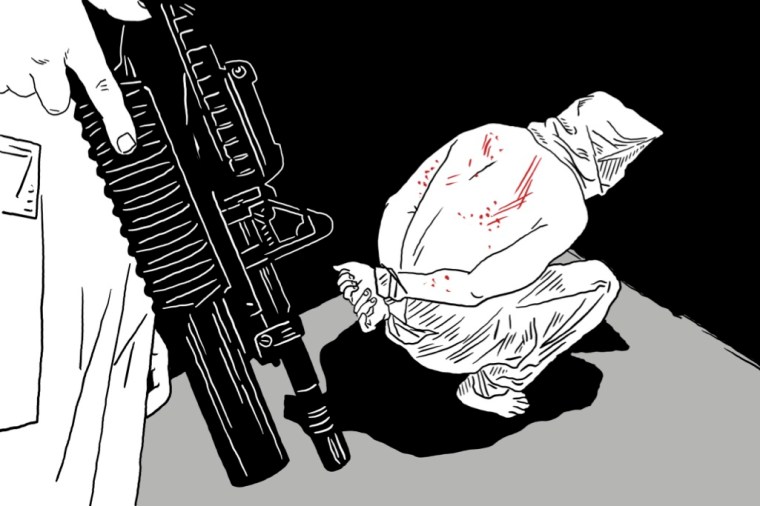
Since the start of the Israel-Gaza war, an unprecedented number of journalists and media workers have been arrested — often without charge — in what most of them and their attorneys say is retaliation for their journalism and commentary.
As of October 9, 2026, CPJ has documented 118 arrests of journalists and a media worker in Israel, the Occupied Palestinian Territories of the West Bank and Gaza, and in the city of Jerusalem since the war began on October 7, 2023. Israeli authorities carried out 112 of these arrests; and Palestinian authorities arrested six.
Seventy seven – including six held by the Palestinian authorities – have since been released, while 39 remain under arrest. One journalist and one media worker have died in Israeli custody.
As of December 1, 2025, Israel still held 31 Palestinian journalists, including one who died in Israeli custody, despite a ceasefire and prisoner exchanges. Most of them were held in arbitrary detention, without due process or legal basis for their arrests, under administrative detention— a policy under which a military commander to detain individuals without charge or trial, typically for six months, on grounds of preventing them from committing a future offense. Detention can be extended an unlimited number of times. The 1945 law is used to detain Palestinians in the West Bank and by government policy can no longer be used against Israeli settlers.
Under Israel’s Unlawful Combatants Law, used only in Gaza, detainees can be incarcerated indefinitely on the basis of secret evidence on the grounds that their release “will harm national security,” with periodic judicial reviews to renew the detention order.
(Editor’s note: These numbers are being updated regularly as more information becomes available. The tally includes all arrests documented by CPJ. As is our global practice, journalists who request anonymity out of concern for their safety are not named in the list below.)
At least seven journalists’ families have previously told CPJ that they have been unable to locate their detained relatives, despite contacting human rights groups, humanitarian organizations, and lawyers. Numerous journalists were transferred from Gaza to prisons and detention centers inside Israel and the West Bank, where they say they have been subjected to mistreatment and torture.
CPJ has routinely contacted the Israel Defense Forces’ North America Media Desk asking for comments on journalists’ arrests since the start of the war. In a September 29, 2024, response, the IDF said it “does not arrest journalists simply for being journalists” and detains only “individuals suspected of involvement in terrorist activity.” The IDF added that “relevant suspects” were brought to Israel for detention and questioning.
The IDF said it could not fully address CPJ’s inquiries on individual journalists without enough details, such as their ID numbers. CPJ had earlier advised the IDF that research limitations in Gaza prevented the provision of such information.
The IDF and the Israeli Prison Service did not respond to CPJ’s queries about the whereabouts of several journalists.
CPJ also received no responses from the Israeli Prison Service, the Palestinian General Intelligence Service about the arrests of Palestinian journalists, or Shin Bet regarding the arrest of Palestinian journalists in the West Bank.
The allegations of abuse documented by CPJ are in line with research by the Jerusalem-based human rights group B’Tselem, which interviewed 55 Palestinians taken into Israeli custody since the start of the war. Most were subsequently freed without trial. The detainees reported, “Frequent acts of severe, arbitrary violence; sexual assault; humiliation and degradation; deliberate starvation; forced unhygienic conditions; sleep deprivation; prohibition on, and punitive measures for, religious worship; confiscation of all communal and personal belongings; and denial of adequate medical treatment.”
“Since October 7, 2023, Israeli authorities have detained Palestinian journalists in record numbers — overwhelmingly without charge and often under administrative detention — as part of a pattern that suppresses reporting on the war,” said CPJ Regional Director Sara Qudah. “These arrests amount to arbitrary detention and violate international standards protecting press freedom and due process. As a party to international human rights treaties, Israel is legally obligated to protect journalists, not punish them for documenting events on the ground.”
In a recent CPJ special report based on in-depth interviews, 58 Palestinian journalists released from Israeli custody since October 7, 2023, said they were subjected to what they described as torture, abuse, or other forms of violence. Although conditions varied across detention facilities, the methods described — including physical assault, forced stress positions, sensory deprivation, sexual violence, and medical neglect — were strikingly consistent. Of those interviewed, 48 of them were never charged with any crime and were instead held under Israel’s administrative detention system.
Israel ranked as the world’s second-worst jailer of journalists in CPJ’s 2024 annual prison census, with 43 Palestinian journalists in Israeli custody on December 1, 2024. In CPJ’s 2025 prison census, Israel ranked third globally for jailing journalists in connection with their work, with 29 Palestinian journalists still behind bars as of December 1, 2025.
The true number of journalists behind bars may be higher than CPJ’s records show, as verifying arrests has become increasingly difficult. Due process is failing, with lawyers and families often unable to find out why journalists have been arrested or where they are being held..
CPJ continues to investigate, document, and verify reports about any journalists arrests in the Occupied Palestinian Territories that might not be included in this list. (Read more here about our methodology.)
CPJ maintains a regularly updated database documenting all known arrests of journalists. View the full list here.