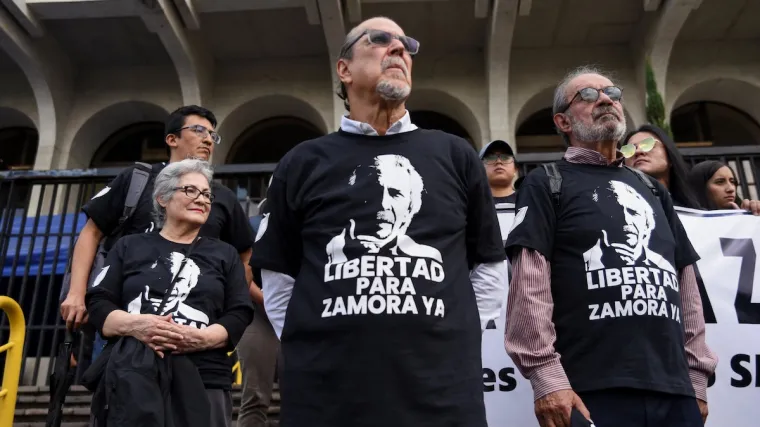
The Committee to Protect Journalists has joined the October 30 Coalition of human rights organizations in issuing a joint statement marking the International Day of Political Prisoners on October 30. The statement underscores the need for sustained international attention to individual political prisoners, for efforts to secure their release, and for accountability for abuses.
More than 300 journalists were imprisoned worldwide as of December 1, 2025, according to CPJ’s latest annual prison census, the fifth consecutive year the count has topped that mark. These persistently high numbers reflect rising authoritarianism and a growing number of armed conflicts worldwide.
China has been the world’s worst jailer of journalists for three consecutive years, holding at least 50 in 2025. Myanmar, with 30 held, rose from third place in 2024 to second; Israel, with 29 imprisoned, fell from second to third. Azerbaijan, which imprisoned 24, entered the top 10 for the first time since 2018, nearly doubling its prisoner count from the prior year. The numbers imprisoned in Russia, Belarus, Egypt, and Eritrea were consistent with those of the past five years.
Israel, the only country on the worst-jailers list that is traditionally considered a democracy, began rapidly imprisoning Palestinian journalists following the start of the Israel-Gaza war in October 2023. Many are imprisoned on undisclosed charges or held without charge in arbitrary detention, in contravention of international law. While Israeli citizens enjoy a broad array of civil rights and freedoms, legal experts identify a radically different standard of justice for Palestinians in the Occupied Palestinian Territory. Israel has arrested more than 110 Palestinian journalists over the course of the war.
Journalists are often held in cruel and life-threatening conditions that one freed Palestinian prisoner likened to “a cemetery of the living.” Many imprisoned journalists endure these dangers for years. More than one-third of the journalists counted in the 2025 census are serving sentences of more than five years. Nearly half have never been sentenced at all, and 26% of that group have languished in jail without a sentence for five years or more. Such detentions violate international law, which requires fair trials without undue delay.
To reverse the tide of imprisonments, CPJ has consistently called on governments to uphold the rule of law, stop criminalizing journalists who report factually, and hold power to account. CPJ mobilizes political pressure and international expert interventions, leads solidarity campaigns, and takes legal action. With partners, CPJ works to halt or reform legislation that hinders reporting and puts journalists in legal jeopardy.
CPJ also provides direct legal, medical, trauma, and other health-related assistance to a growing number of imprisoned and newly released journalists. Over the past five years, the number of journalists receiving both prison and post-prison support from CPJ has risen by nearly 200%.
CPJ reiterates its call on governments to release all imprisoned journalists and to rescind policies or laws that criminalize journalism. The international community must uphold the fundamental right to a free press and take the necessary steps to ensure the safety of journalists, particularly those reporting in conflict zones.
Read the joint statement here.