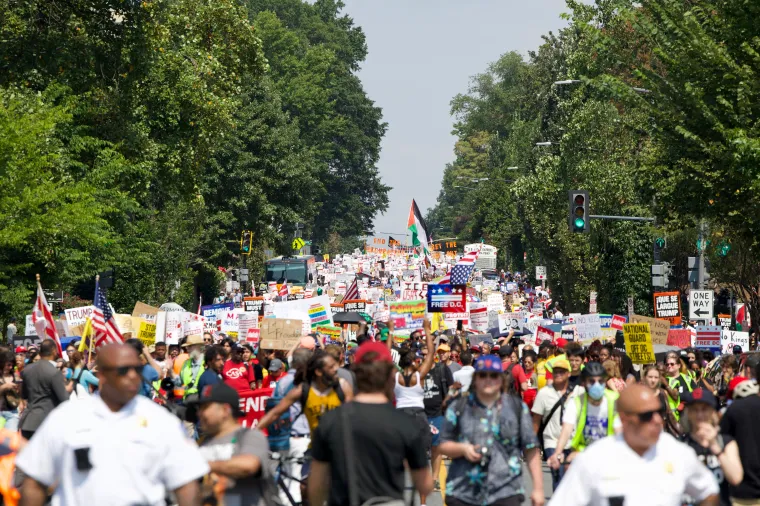
The Committee to Protect Journalists responds to the needs of journalists in the United States as they face a range of challenges, from confrontations with law enforcement at demonstrations to raids on newspaper offices, and as they learn to navigate what has become an increasingly hostile environment for many in the media.
Table of contents
I. Quick tips and recommendations
II. First Amendment rights of journalists
- Right to gather news
- Time, place and manner restrictions on demonstrations
- Dispersal orders and curfews
- Right to record
- Retaliation
- Journalist privilege
III. Fourth Amendment protections of journalists
IV. Constitutional rights of U.S. citizens versus non-U.S. citizens
V. Covering protest and political event activities by jurisdiction
The following guidance is intended to give the reader a high-level understanding of journalists’ rights when confronted by law enforcement officers while covering a protest, demonstration or other political event. Given that these incidents often quickly escalate and that some individuals — both protesters and police — do not always conform to legal requirements, it is generally prudent to comply with an officer’s commands, even if they appear unlawful, and to prioritize personal safety.
I. Quick tips and recommendations
- Carry your press credentials at all times, and ensure credentials are visible to law enforcement.
- When covering demonstrations, protests and campaign or political events, make sure you know in advance what restrictions are in place regarding the public’s right to access and whether there are any curfew or other restrictions in place.
- Do not trespass on private property to gather news; do not cross police lines at crime scenes; comply with location restrictions and barriers, absent exigent circumstances.
- You may record video or audio of public events, including of law enforcement activities at such events, as long as you are not interfering with or obstructing law enforcement activity.
- Maintain neutrality when covering events. For example, do not join crowd chants or wear clothing with slogans related to the events you are covering.
- Comply with dispersal orders or other directives issued by law enforcement. If engaged in an encounter with law enforcement, explain that you are a journalist covering the event and show your credentials. You may continue to record interactions with law enforcement.
- If law enforcement requests your audio or video recordings, camera, recording devices, equipment or notes, you may refuse and request that the official contact your media outlet or its lawyers.
- During a stop-and-frisk or arrest, make it clear to law enforcement that any equipment, memory cards, notebooks, etc. contain journalistic materials or notes.
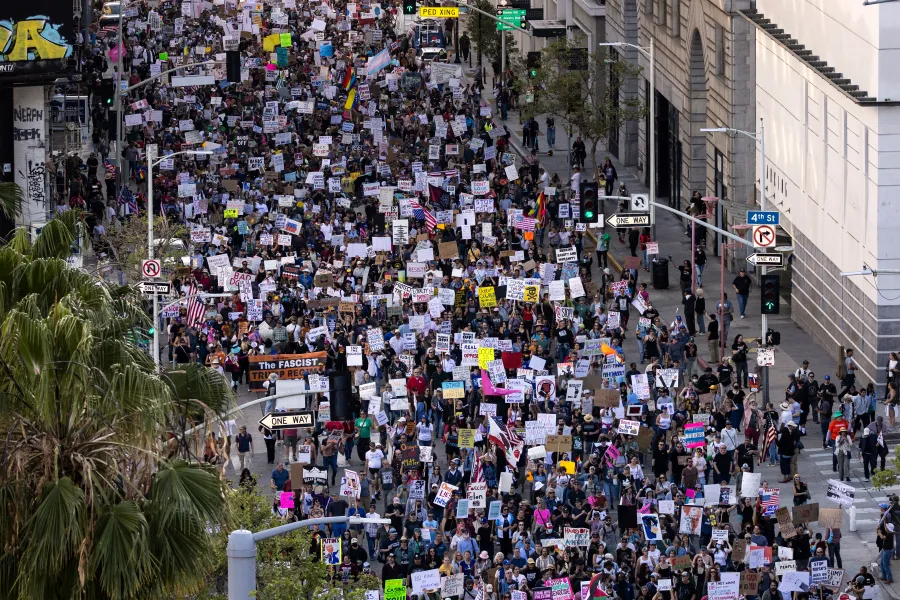
II. First Amendment rights of journalists
1. Right to gather news
The First Amendment protects both the freedom of speech and the freedom of the press. Journalists have a right to access public places to gather and disseminate news. Public places include sidewalks and public parks, but not private property. In addition, for government-owned property, even places that allow for limited access to the public, protesters, members of the public and reporters may be barred if the location is not itself public (for instance, private areas of a courthouse or jail). Relatedly, hours of access for journalists are generally limited to those when the general public is permitted access.
Private property, such as convention centers or stadiums, may be used by public entities and public property may be used for private political party conventions. In either case, journalists may be provided access similar to the general public. For example, a judge ruled that a state Democratic organization holding a convention in the city’s civic center could not discriminate among journalists by admitting some and not others. The judge said that a private body leasing a government facility had the same constitutional obligations as the government. Such access rights may vary by jurisdiction. If you expect to be covering a convention or political party gathering, you should attempt to get access or any necessary credentials in advance to allow for an opportunity for resolution of any disagreements beforehand.
2. Time, place and manner restrictions on demonstrations
The government is permitted to impose time, place and manner restrictions on speech as long as those requirements:
- Are content neutral (e.g., justified without reference to the content of the regulated speech);
- Are narrowly tailored to serve a significant governmental interest; and
- Leave open ample alternative channels for communication of the information.
These restrictions could include noise restriction ordinances, as well as a zone system in anticipation of a demonstration, such as demonstration zones, no-demonstration zones, journalist-only zones and areas for pedestrian traffic. In addition, restrictions may prohibit protesters from bringing camping material or staying overnight in public spaces. Localities typically have rules requiring protesters to obtain a permit for a protest, or for specific kinds of protesting (for instance marching in the street or using a loudspeaker). As long as the standards for granting a permit and the scope of the permit satisfy the rules governing time, place and manner restrictions, such processes are constitutionally permitted. If a member of the public or a journalist fails to comply with permit-related requirements or restrictions, public officials may lawfully deny access.
3. Dispersal orders and curfews
Even where protesters have a valid permit, or where no permit is required under local rules, police may order protesters and reporters to disperse from an area if the strictures on time, place and manner restrictions are satisfied. This may occur where protesters are on a sidewalk blocking access to a building or on a street blocking traffic. Similarly, if a reporter is in an unsafe area — for instance, stopped on a highway to record an accident or standing on a phone booth to record a protest — police could order the reporter to leave the highway or come down from the phone booth. Police are generally required to issue warnings ordering protesters and reporters to disperse before making arrests, and courts may consider whether protesters and reporters could in fact hear the warnings in determining whether the arrests were proper.
In recent years, in response to various political protests, a number of municipalities have issued curfew orders. Many of these curfew orders have exemptions for journalists, either explicitly or by permitting essential workers. Journalists should obtain as much information as possible about any applicable curfew order before reporting in an area, and they should wear large, visible media credentials so that they are clearly identifiable as members of the press.
4. Right to record
Most courts have determined that the First Amendment protects the right to make video recordings of police officers when they are in public, although this right can be subject to the time, place and manner restrictions described above. Recording or covering the demonstrations or law enforcement activity should be conducted in a manner that is not obstructing or threatening the safety of others or physically interfering with law enforcement.
This right to record has been recognized by over half of the nation’s Courts of Appeals, including those in the First, Third, Fourth, Fifth, Seventh, Ninth, Tenth and Eleventh Circuits. However, the Supreme Court and all other appellate courts have not affirmatively ruled for or against the right. In addition, some states have recently passed legislation prohibiting recording or approaching within a short distance of a police officer, regardless of whether such conduct actually interferes with the officer’s law enforcement activities.
For example:
- Arizona passed a law in 2022 prohibiting recording within 8 feet of a police officer; however, in 2023, a federal district court held this law to be unconstitutional and permanently prohibited the state from enforcing it.
- Indiana passed a law in 2023 prohibiting individuals from approaching within 25 feet of an officer after being ordered not to approach; however, in 2025, the Court of Appeals for the Seventh Circuit ultimately struck this law down.
- Louisiana passed a law in 2024 prohibiting individuals from approaching within 25 feet of an officer after being ordered not to approach; however, in 2025, a federal district court blocked the state from enforcing this law.
- Tennessee passed a law in 2025 prohibiting individuals from approaching within 25 feet of an officer after being ordered not to approach; as of the date of this guide, a media coalition is challenging the constitutionality of this law, but a federal judge has allowed the law to remain in effect during ongoing legal challenges.
Journalists should be aware of local legislation that may affect the manner in which they may record the police.
The right to record also exists at the U.S. border. In 2020, the U.S. government entered into a binding settlement that prohibits Customs and Border Patrol agents from infringing on the right to record law enforcement activity from publicly accessible outdoor areas as long as the recording does not interfere with the lawful law enforcement activity.
Many states have eavesdropping or wiretapping statutes that prohibit recording private conversations without the consent of one or both parties to the conversation, and some states have statutes that also apply to public conversations. In certain circumstances, courts have held that the application of these statutes infringes on the recorder’s First Amendment rights. Nonetheless, journalists should review applicable law and guidance in the states in which they are working.
5. Retaliation
Government officials cannot retaliate against journalists for their reporting or selectively grant access, for example, by denying a press credential. Journalists who have been unfairly denied press credentials should review the applicable law in the jurisdiction to learn how to challenge or appeal the decision. That said, there have been recent incidents (e.g., the arrest of former CNN anchor Don Lemon in early 2026) where the government has taken actions that are seemingly aimed at making an example of journalists who are covering protests.
6. Journalist privilege
Most courts have recognized that journalists have a qualified privilege under the First Amendment against compelled disclosure of materials gathered in the course of their work. Journalists can be required to hand over their work materials, but only in limited circumstances — for instance, if the government demonstrates a compelling need and shows that the information is not obtainable from another source. In addition to constitutional protection, federal and state laws provide additional legal protections. The federal Privacy Protection Act puts limits on law enforcement’s ability to search and seize journalists’ “work product” and “documentary materials” (though these limits are subject to exceptions). Many states also have “shield laws,” which generally provide journalists with protection against disclosing their materials.
These protections are not absolute, however, and journalists sometimes face challenges in protecting their sources and work product. Courts employ multifactor balancing tests to determine whether a journalist’s right against compelled disclosure can be overcome. Those tests vary depending on the court, whether the proceeding is criminal or civil and whether the information sought involves confidential sources. A court may also consider factors including the information’s relevance to an important issue in the case, whether the information is unavailable through reasonable alternative means and whether a compelling and overriding interest exists for obtaining the information.
For example, in 2024, a Fox News journalist was held in contempt of court for refusing to disclose the name of a confidential source in response to a subpoena in a civil case brought by a woman who had been the subject of one of the journalist’s investigative stories. The woman sought to determine which government official(s) had leaked records compiled about her as part of an FBI investigation. A federal appeals court recently upheld the contempt order, agreeing that the woman seeking the journalist’s testimony had exhausted alternative means by obtaining declarations from 22 government personnel and demonstrated that the testimony was of central importance to her case.
Journalists are also sometimes the subject of warrants. During the Biden administration, the U.S. Justice Department updated internal policies to prohibit the seizure of reporters’ communications for purposes of identifying confidential sources. However, the Trump administration reversed that policy in April 2025. Now, the guidelines of the Department of Justice (DOJ) contemplate “the use of subpoenas, court orders and search warrants to compel production of information and testimony by and relating to members of the news media,” as long as the subpoenas are narrowly drawn and any warrants include protocols designed to “limit the scope of intrusion into potentially protected materials or newsgathering activities.” Under these guidelines, the DOJ will consider: (1) whether there are reasonable grounds to believe that a crime has occurred and the information sought is essential to a successful prosecution (2) whether prosecutors have made all reasonable attempts to obtain the information from alternative sources; and (3) whether, absent a threat to national security, the integrity of the investigation or bodily harm, the government has pursued negotiations with the affected journalist.
Under the new DOJ guidelines, the FBI searched the home of Hannah Natanson, a Washington Post reporter, in January 2026 and seized her electronic devices on the grounds that the reporter was “obtaining and reporting classified and illegally leaked information from a Pentagon contractor.” Notably, the search warrant in Natanson’s case authorized law enforcement to compel her to unlock her devices using biometrics (e.g., fingerprint, thumbprint or facial characteristics). Afterward, the judge who originally signed the search warrant criticized the government for failing to raise the potential applicability of the Privacy Protection Act as part of its warrant application and blocked the government from reviewing the journalist’s devices. But the judge also denied the journalist’s request to return her devices. Instead, the judge ordered an independent judicial review of the seized materials. The legal battle over this search is ongoing as of the date hereof.
If a journalist’s audio or video recordings or notes are simply requested by a government official, including a law enforcement officer, the journalist may refuse. However, when confronted with a warrant for search and/or seizure, the journalist should ask to review the warrant, confirm it is signed by a judge, accurately identifies the address of the place to be searched, describes the items to be seized and identifies the legal basis for the warrant. The journalist should also seek legal counsel as soon as practicable.
III. Fourth Amendment protections of journalists
1. Search
The Fourth Amendment protects journalists from unreasonable search and seizure. As a general matter, this means that police cannot search one’s body or belongings without a warrant. But there are exceptions, including to prevent or avoid serious injury, to prevent the imminent destruction of evidence and with the consent of the person to be searched.
In addition, police may briefly detain and search a person — a “stop and frisk” — for investigative purposes based on a reasonable suspicion that an individual is armed or about to commit a crime. There must be at least some objective justification for a stop and frisk, but the officer need not believe that it is more likely than not that a crime is or is about to be underway. Therefore, this type of stop is generally limited to a pat down, bag search or vehicle search to search for weapons. Law enforcement officers generally are not permitted to search the digital contents of a journalist’s cell phone or camera based on reasonable suspicion alone.
2. Seizure
In addition to protection against an unreasonable search, the Fourth Amendment also protects against an unreasonable seizure. A seizure of property occurs when there is some meaningful interference with an individual’s possession of that property. A seizure can also be of a person, such as when an individual is stopped and then frisked (as discussed above).
Prior to an arrest, and during a temporary seizure of a person (i.e., during a stop and frisk), police may also temporarily seize property, such as journalistic equipment. Therefore, it is particularly important for a journalist to prominently display press credentials and to identify themselves as press when confronted by police to assuage any concerns police may have regarding suspected criminal activity. This will also be favorable in any subsequent analysis of whether reasonable suspicion existed at the time of the search or seizure.
To preserve the added protections this law affords to such journalistic materials, a journalist — in addition to prominently displaying press credentials — should let the officers know as soon as possible that certain materials that are or may be searched (whether notes, memory cards, etc.) are press materials related to media intended to be disseminated to the public. The Privacy Protection Act of 1980 provides for heightened standards to protect against unreasonable searches and seizures of certain materials reasonably believed to be related to media intended for dissemination to the public — including “work product materials” (e.g., notes or voice memos containing mental impressions, conclusions, opinions, etc. of the person who prepared such materials) and “documentary materials” (e.g., video tapes, audio tapes, photographs and anything else physically documenting an event).
These materials generally cannot be searched or seized unless they are reasonably believed to relate to a crime committed by the person possessing the materials. They may, however, be held for custodial storage incident to an arrest of the journalist possessing the materials, so long as the material is not searched and is returned to the arrestee intact.
3. Arrest
An arrest is essentially a seizure of the person and thus also implicates the Fourth Amendment. An officer must have probable cause to make an arrest. Probable cause requires more than a mere suspicion but less than absolute certainty that a crime has been or is being committed. The standard is intended to be practical and non-technical; as a result, it is “a fluid concept — turning on the assessment of probabilities in particular factual contexts — not readily, or even usefully, reduced to a neat set of legal rules.” It is well established that mere proximity to criminal activity does not establish probable cause to arrest, so a law-abiding journalist should not be arrested for covering a protest or demonstration even if that demonstration becomes unruly or violent.
When an officer makes a lawful arrest, the arrest impacts what qualifies as a reasonable search and seizure under the Fourth Amendment. It is considered reasonable for an officer to search an individual for weapons and evidence when making an arrest, even if the officer has no objective concern for safety or evidence preservation. This means that an officer with probable cause to arrest a journalist (for, e.g., disobeying a lawful order of dispersal, violating a curfew, trespassing or participating in other unlawful conduct) may also have legal justification to search through the belongings of the journalist. However, a search or seizure incident to an arrest is limited to the area within the immediate control or vicinity of the arrestee — i.e., anything which would be easily reachable as a potential weapon (such as, arguably, a large piece of camera equipment) or easily destroyed evidence (such as camera film or memory cards).
Often during protests, officers choose to issue citations as opposed to making arrests. The law is unsettled as to whether officers may conduct searches incident to the issuance of these citations. Some courts, including federal courts in New York, have held that a law enforcement officer need not intend to make an arrest to conduct a search incident to arrest, so long as the officer has probable cause to make an arrest and conducts the search prior to giving a citation. Federal courts in western states, including California, Oregon and Washington, have taken a different approach. There, search incident to arrest is only permissible when an arrest is actually made. Thus, if an officer seeks to conduct a search of a journalist, the journalist may want to ask whether they are being arrested, as this may affect what rights the journalist has to refuse the search. On the other hand, this may escalate the encounter and cause the officer to place the journalist under arrest when perhaps this was not the officer’s intention originally.
Importantly, a search incident to arrest likely does not extend to a search of the contents of mobile phones or cameras. The Supreme Court has held that a search of digital data on a cellphone does not implicate the risk of harm to an officer or evidence preservation and is therefore outside the scope of a lawful search incident to arrest. This holding would likely apply to digital cameras as well, as cameras contain data similar to that stored on cell phones. Seizure of these items likely is permissible, though.
IV. Constitutional rights of U.S. citizens versus non-U.S. citizens
The United States Constitution and its amendments establish a broad framework of individual rights, including those described above, and these protections are not, by their text, limited to American citizens. The Supreme Court has long recognized that the constitutional rights enshrined in the Bill of Rights and subsequent amendments generally apply to all persons within the United States, regardless of their citizenship or immigration status. For example, in Yick Wo v. Hopkins (1886), the Supreme Court held that the Fourteenth Amendment’s guarantee of equal protection applies to “all persons within the jurisdiction of the United States,” not merely to citizens, and this principle has been reaffirmed across a wide range of constitutional provisions. This means that a foreign journalist reporting from within the United States is, as a matter of constitutional law, entitled to the same freedoms and protections as an American-born counterpart — the government may not impose prior restraints on publication, conduct warrantless searches without applicable exceptions, deny due process in legal proceedings or selectively target individuals based on their nationality. The equal application of constitutional protections to citizens and non-citizens alike reflects a foundational principle: The Constitution primarily restricts the power of the government, rather than conferring privileges on a particular class of individuals, and therefore its protections generally run with the territory rather than with the passport of the person invoking them.
There is, however, a key distinction in how these protections operate depending on where a non-citizen is located. While the Constitution shields all persons on U.S. soil, its reach does not generally extend with full force to protect non-U.S. citizens who are located outside the United States. The Supreme Court’s decision in United States v. Verdugo-Urquidez (1990) held that the Fourth Amendment’s protections against unreasonable search and seizure did not apply to a non-citizen whose property was searched by U.S. agents in Mexico, and lower courts and legal scholars have debated the extent to which this reasoning limits the application of other constitutional provisions, including the First and Fifth Amendments, outside of the United States. The Supreme Court in Boumediene v. Bush (2008) later held that non-citizens detained at Guantánamo Bay had the right to habeas corpus, suggesting that the extraterritorial reach of the Constitution is determined by a functional, context-specific analysis rather than a bright-line rule. As a result, the degree to which a foreign national operating overseas may invoke the protections of the U.S. Constitution as a defense against U.S. government action remains unsettled and highly dependent on the specific right at issue, the nature of the government conduct and the individual’s connection to the United States.
Beyond this doctrinal distinction, foreign journalists face a number of practical risks that can effectively undermine the equal constitutional protections they are supposed to enjoy. Most significantly, the federal government possesses broad authority over immigration and visa policy, and this authority can be wielded in ways that chill the exercise of constitutional rights without ever directly restricting them. A foreign journalist who publishes an article that is critical of the U.S. government, or a non-citizen activist who engages in lawful protest, may find a visa renewal denied, be subjected to heightened scrutiny at the border or be denied entry altogether — actions that, while framed as exercises of immigration authority rather than as restrictions on protected activity, can have a profoundly suppressive effect. Because immigration decisions are often shielded by doctrines of national security deference and consular non-reviewability, it can be exceptionally difficult for a non-citizen to challenge such actions in court, even where the underlying motive appears to be retaliatory. Additionally, non-citizens may be more vulnerable to surveillance, investigation or prosecution under federal statutes, particularly where their activities touch on classified information or national security matters, because they may lack the political protections and public support networks that citizens typically enjoy. In the immigration enforcement context specifically, courts have afforded the government significant latitude, and non-citizens in removal proceedings who are supposed to be entitled to due process often face procedural frameworks that provide materially fewer protections than those available in criminal proceedings. Accordingly, while the Constitution draws no formal line between citizens and non-citizens with respect to most fundamental rights, the surrounding legal architecture of immigration law, national security authority and practical enforcement discretion creates a landscape in which non-U.S. citizens can face materially greater risks when exercising the very freedoms the Constitution purports to guarantee to all persons within its reach.
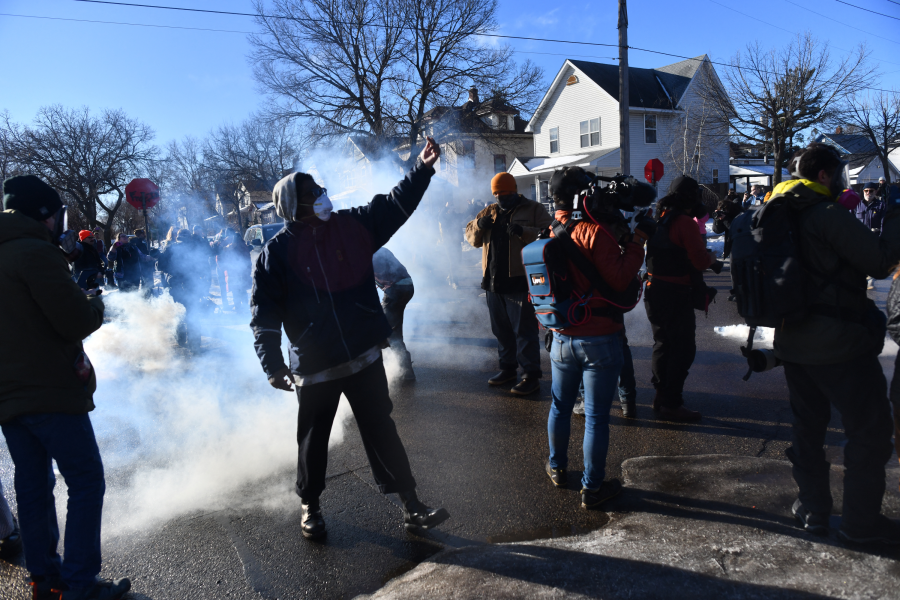
V. Covering protest and political event activities by jurisdiction
This section outlines legal considerations for journalists covering protests, demonstrations and other political events in selected U.S. jurisdictions. The jurisdictions discussed below are major metropolitan areas that have experienced significant recent protest activity and maintain state or local legal frameworks supplementing federal constitutional protections. While core newsgathering protections derive from the First Amendment to the U.S. Constitution, this section also highlights relevant state constitutional provisions, local ordinances, and law enforcement policies that may affect how journalists operate in the field. These additional legal sources can shape practical issues such as recording rights, access restrictions, dispersal orders, and interactions with law enforcement during protest coverage.
1. Atlanta, Georgia
Freedom of the press under Georgia state law mirrors federal law. The Georgia Constitution provides that no law shall be passed to curtail or restrain the freedom of speech or of the press. Georgia law also mirrors federal law with respect to Fourth Amendment matters concerning search, seizure and arrest. The following discussion covers key aspects of Georgia law relevant to journalists covering protests and demonstrations.
Arrest
Under Georgia state law, police officers may arrest individuals for disorderly conduct and obstruction of public passageways. Under Georgia law, an individual commits the offense of disorderly conduct when acting in a violent or tumultuous manner toward another person, causing reasonable fear of safety or property damage, or using fighting words. Additionally, an individual commits the offense of obstruction of public passageways when obstructing passageways purposefully or recklessly: (1) without authority of law; (2) in a manner that makes it impassable without unreasonable inconvenience or hazard; and (3) with failure to remove the obstruction after being ordered to do so by law enforcement. Georgia courts have held that the government does not have to own the blocked area for it to constitute a public passage.
A similar Atlanta city ordinance prohibits individuals within the corporate limits of Atlanta from congregating or standing on any public way so as to block the flow of vehicular or pedestrian traffic and to fail to clear after being ordered to do so by a city police officer or another lawful authority. However, there is an exception for individuals who can show that the predominant intent of such conduct was to exercise a constitutional right. Based on these state statutes and city ordinance, journalists should avoid engaging in conduct that may constitute disorderly conduct during protests and obstructing public areas, and journalists should comply with dispersal orders from law enforcement.
Also of note, in Georgia, it is a misdemeanor to cover one’s face on public property with the intent to conceal one’s identity. Accordingly, journalists should both wear clear press credentials and also avoid covering part of or all of their faces when attending protests or demonstrations.
Georgia right to record
Georgia is a one-party consent state for audio recordings (meaning that a journalist may record others without their express permission if the journalist is a party to the conversation) but is an all-party consent state for video recordings (meaning all others’ consent must be obtained in certain circumstances). However, consent is not required if the recording occurs in public where there is no reasonable expectation of privacy.
The Court of Appeals for the Eleventh Circuit, which includes Georgia, has held that there is a First Amendment right to record matters of public interest, including police conduct on public property. While federal courts in Georgia have held that a journalist has the right to record a police officer making an arrest, they have considered this right only in the context of a bystander, rather than an arrestee. Additionally, Eleventh Circuit precedent holds that law enforcement officers may not engage in retaliatory arrests to suppress recording activities protected by the First Amendment.
Lastly, under Georgia state law, police officers generally cannot seize and search a phone’s contents (such as photos) without a warrant in the absence of extenuating circumstances.
Georgia shield law
Georgia law provides for a qualified journalistic privilege with regard to maintaining confidential sources and newsgathering material as long the person asserting the privilege is not a party to the relevant litigation. Because the privilege applies to non-parties, the Supreme Court of Georgia has held that reporters may immediately appeal disclosure orders. Even if the privilege is not available because the reporter is a party to litigation, Georgia courts recognize a strong public policy interest favoring protecting the confidentiality of journalists’ sources and therefore require a balancing of interests during discovery.
The journalistic privilege may be waived through voluntary and intentional disclosure but not through publication of part of the information gathered on the same subject matter. Additionally, the privilege may be overcome if a litigant can show that the information sought is: (1) material and relevant; (2) cannot be reasonably obtained by alternative means and (3) is necessary to the proper preparation or presentation of the case of a party seeking the information, document, or item.
Recent incidents involving journalists in Georgia
Notwithstanding the laws and protections outlined above, there have been significant incursions into press freedoms in Georgia in recent years. During a number of protests, law enforcement officers have detained or arrested journalists, ordered them to disperse, and seized their source materials. Although the journalists in most of these incidents were eventually released, journalists should understand their rights and take appropriate safety precautions when covering demonstrations and protests.
Recent incidents include:
- On June 1, 2020, Sharif Hassan, a freelance photojournalist, was arrested while documenting protests and had his equipment seized (some of which was not returned).
- On September 8, 2021, Lev Omelchenko, a filmmaker, was arrested during a protest outside an Atlanta City Council member’s home, even though he was filming, rather than protesting.
- On May 14, 2022, Ryan Fatica, a freelance journalist (who was not wearing press credentials but identified himself to officers), was detained while filming during a deforestation protest in Atlanta, and his notebook was confiscated.
- On November 13, 2023, during a protest against the Atlanta Public Safety Training Center (a police training facility), law enforcement officers reportedly targeted journalists with tear gas, ordered the journalists to disperse at the threat of arrest because it was an “active crime scene,” and pushed a journalist as he attempted to comply.
- On June 14, 2025, Mario Guevara, a Spanish-language reporter who was live-streaming one of the “No Kings” protests in Chamblee, Ga., was arrested and faced several misdemeanor charges. Although the misdemeanor charges were later dropped, he was detained by U.S. Immigration and Customs Enforcement for several months before ultimately being deported.
2. Chicago, Illinois
The Illinois Constitution provides that all persons may speak, write, and publish freely. Illinois state and local law generally mirror federal First Amendment jurisprudence on rights to gather news in public forums and federal Fourth Amendment doctrine on search, seizure, and arrest.
For coverage of demonstrations and large events in Chicago, the Chicago Police Department’s (CPD) General Order G02-02, effective August 8, 2024, sets the operative framework for identifying First Amendment activity, managing assemblies and issuing and enforcing dispersal orders. Journalists should expect CPD officers to apply that directive and plan their newsgathering with the Order’s concepts and vocabulary in mind, while complying with location restrictions, barriers and lawful commands that address time, place, and manner of First Amendment activity.
Arrest
Under the Fourth Amendment, police can make arrests only with probable cause. Two common bases for arrests at protests in Illinois are failure to comply with a lawful dispersal order and disorderly conduct under state law or municipal code. In Chicago, the disorderly conduct ordinance broadly prohibits conduct that provokes or aids a breach of the peace. It also prohibits refusing to obey a lawful police order to disperse when three or more individuals in the immediate vicinity are committing acts of disorderly conduct likely to cause substantial harm.
Similarly, under Illinois state law, a person commits disorderly conduct when that person knowingly acts in an unreasonable manner that alarms or disturbs others and provokes a breach of the peace. Notably, the statute is written broadly and may apply to a range of disruptive behavior, such as fighting, creating unreasonable noise or knowingly making false reports to emergency services or police.
For journalists on scene, the practical risk centers on fast‑moving situations where officers may rely on dispersal orders, obstruction, or proximity to others’ disorderly conduct as grounds for arrest – particularly if a journalist is not readily identifiable as press or is positioned in a way that officers could view as unsafe or obstructive. As a result, journalists should maintain clearly visible press identification, heed lawful dispersal orders and move when directed, while continuing to document events from a lawful vantage point.
In October 2025, a federal court in Chicago briefly imposed limits on how federal immigration agents could interact with journalists. In particular, that order restricted certain law enforcement tactics and protected journalists covering immigration-related protests from dispersal, arrest or force absent probable cause. However, in March 2026, the order was vacated. Accordingly, journalists should not assume there is currently a court-ordered buffer or special legal protection governing federal agents’ conduct toward reporters at protests in Illinois. Instead, reporters should plan coverage based on general First Amendment protections and applicable agency policies.
Federal courts in Illinois have held that probable cause may exist for arrest when a dispersal order is given and not followed. However, if permission to march is revoked without notice, arrests for marching without permission are not justified. The message of the protest cannot justify a dispersal order, and police are expected to protect protesters even if their message provokes a hostile response from others. Additionally, under Illinois law, individuals on foot in public cannot be arrested simply for refusing to identify themselves, but providing false information to police can lead to arrest.
When covering demonstrations, journalists should note that police officers may use disorderly conduct laws as justification for detaining demonstrators and anyone in their vicinity. Journalists should avoid participating in any activities that may cause or provoke a disturbance and clearly distinguish themselves from those who may be doing so by wearing conspicuous press credentials.
Illinois right to record
Illinois generally requires the consent of all parties before recording a private conversation. However, this rule applies only when the conversation is private and participants reasonably expect privacy. Chicago law similarly restricts video recording in places where a person has a reasonable expectation of privacy.
At the same time, both federal constitutional law and Illinois statutes protect the public’s ability to record police performing their duties in public. The U.S. Court of Appeals for the Seventh Circuit — which covers Illinois — has recognized a First Amendment right to record government officials performing their duties in public places, subject to reasonable limitations, such as when the person recording is the subject of an arrest. Illinois law also expressly allows members of the public to record law enforcement officers performing official duties in public or in situations where the officer has no reasonable expectation of privacy.
In practice, this means journalists may record police officers at demonstrations or protests in public spaces while the officers are on duty. Officers may still impose reasonable, content-neutral restrictions to maintain safety, control crowds, or secure a scene, and journalists should avoid physically interfering with law enforcement activity.
If officers attempt to make a lawful arrest of a journalist, the journalist must comply with orders associated with that arrest, including an order to stop recording. Journalists should also be mindful that privacy expectations can change if events move from streets or sidewalks into semi-private or private locations, even when the situation is newsworthy.
Illinois shield law
Illinois law provides journalists with a qualified reporter’s privilege that protects confidential sources and certain newsgathering materials from compelled disclosure through subpoenas. In general, courts may not compel a reporter to reveal the source of information obtained during newsgathering unless the requesting party satisfies strict statutory requirements.
To overcome the privilege, the party seeking the information must demonstrate that the request meets a demanding standard. Courts typically require a showing that the information sought is highly relevant to the case, necessary to the claim or defense, and not reasonably obtainable from other sources despite genuine efforts. The party must also show that all alternative sources of the information have been exhausted.
Even if those conditions are met, a court will order disclosure only if it finds that the information does not involve matters required by law to remain secret and that disclosure is essential to protecting the public interest involved in the proceeding. Whether alternative sources have been exhausted is a fact-sensitive inquiry.
In practice, courts treat this privilege as a last-resort rule: Litigants must pursue other sources of evidence first and show that additional attempts to obtain the information elsewhere would likely fail. As a result, subpoenas directed at journalists may be challenged and quashed when the requesting party cannot demonstrate that alternative sources have truly been exhausted.
Illinois anti‑SLAPP statute (Citizen Participation Act)
Illinois law provides statutory protections against defamation and similar suits through the Citizen Participation Act, the state’s anti-Strategic Lawsuits Against Public Participation (SLAPP) statute. Anti-SLAPP laws are designed to allow defendants to quickly dismiss lawsuits that are primarily intended to silence critics by burdening them with the cost of legal defense.
In late 2024, a decision by the Illinois Supreme Court created uncertainty about whether the state’s Citizen Participation Act fully covered routine news reporting. The court indicated that the statute did not automatically extend to all media coverage of public issues. In response, the Illinois legislature amended the Citizen Participation Act to clarify that press activities such as reporting, investigating, or offering opinions on matters of public concern qualify as participation in government and are therefore protected under the statute. The law also directs courts to interpret the act broadly to safeguard these rights.
The amendment took effect immediately, but its procedural provisions apply primarily to lawsuits filed on or after January 1, 2026. For journalists and news organizations, this timing matters: cases filed in 2026 or later will most clearly benefit from the expanded protections, while earlier-filed cases may still be analyzed under the prior version of the law.
In practical terms, the amendment strengthens the ability of journalists and media organizations to use early motion practice to dismiss lawsuits that appear designed to punish or deter reporting on matters of public concern.
Separately, Illinois has also improved public access to court information. Beginning in spring 2025, the state enabled free remote access to appellate-court filings for cases filed after that date. Although this change does not create a new press right, it makes it easier for journalists to monitor appellate litigation and verify court filings when covering statewide legal developments.
3. Los Angeles, California
The California Constitution provides that every person may freely speak, write, and publish on all subjects, and that a law may not restrain or abridge the liberty of speech or press. California’s free speech and press protections are generally understood to be at least as broad as, and in some respects broader than, the protections afforded by the First Amendment to the U.S. Constitution. California law also mirrors federal law with respect to Fourth Amendment matters concerning search, seizure, and arrest. The following discussion covers key aspects of California law relevant to journalists covering demonstrations in Los Angeles.
Arrest
Under California law, police officers may arrest individuals for a range of offenses commonly implicated during protest activity. The California Penal Code makes it a misdemeanor to willfully resist, delay, or obstruct a peace officer in the discharge of official duties. The California Penal Code also addresses unlawful assembly and riot, and it authorizes law enforcement to close the immediate area surrounding any disaster, including civil disturbance or unrest, to all unauthorized persons. Additionally, the California Penal Code provides that when two or more persons assemble for the purpose of disturbing the public peace, or committing an unlawful act, and do not disperse upon being ordered to do so by a public officer, they are each guilty of a misdemeanor and may face arrest.
Police officers in California are generally required to issue dispersal orders before making arrests during protests, and those orders must provide demonstrators and journalists with a reasonable opportunity to comply, including by identifying a clear exit route. Journalists covering protests in Los Angeles should avoid engaging in conduct that may be characterized as disorderly or obstructive, and they should comply with dispersal orders from law enforcement. As with other jurisdictions, journalists should maintain clearly visible press credentials at all times and clearly distinguish themselves from demonstrators. Notably, federal courts in western states, including California, have held that a search incident to arrest is only permissible when an arrest is actually made. This means that if an officer issues a citation rather than placing a journalist under arrest, then the officer may not conduct a search incident to that citation. Journalists who are stopped but not arrested may wish to ask whether they are being placed under arrest, as the answer may affect the scope of any permissible search, though journalists should be mindful that such a question could escalate the encounter.
California right to record
California is an all-party consent state for the recording of confidential communications under the California Penal Code, which prohibits the recording of a confidential communication without the consent of all parties to that communication. However, the statute applies only to communications that are confidential in nature; conversations occurring in public places where the parties have no reasonable expectation of privacy are generally not considered confidential and may be recorded without consent.
The U.S. Court of Appeals for the Ninth Circuit, which includes California, has recognized a First Amendment right to record law enforcement officers performing their duties in public. This right is subject to reasonable time, place, and manner restrictions. Recording should be conducted in a manner that does not obstruct or physically interfere with law enforcement activity. Journalists should also be aware that the Supreme Court has held that a search of digital data on a cell phone does not fall within the scope of a lawful search incident to arrest, and this protection likely extends to digital cameras as well. Accordingly, even if a journalist is lawfully arrested, officers generally may not search the contents of the journalist’s phone or camera without a warrant.
Journalists should be aware of any local legislation or law enforcement directives in the Los Angeles area that may affect the manner in which they may record police activity. In all cases, journalists may continue to record interactions with law enforcement so long as they are not physically interfering with officers or obstructing those officers’ duties.
California shield law
California has one of the strongest shield law protections in the United States, providing both constitutional and statutory safeguards for journalists. The California Constitution provides that a publisher, editor, reporter, or other person connected with or employed upon a newspaper, magazine, or other periodical publication, or by a press association or wire service, shall not be found in contempt of a subpoena for refusing to disclose the source of any information procured while connected with or employed by such publication. The California Evidence Code mirrors this constitutional provision and extends the protection to unpublished information, as well as the identity of confidential sources.
These protections are among the most robust in the nation and reflect California’s strong public policy interest in safeguarding the free flow of information. Unlike some states, where the journalist’s privilege is qualified and may be overcome upon a sufficient showing by the party seeking disclosure, the California shield law is considered virtually absolute, and courts have interpreted it broadly to protect journalists from compelled disclosure in most circumstances. Journalists operating in California should be aware, however, that the shield law may not apply in all federal proceedings, and that the scope of protection can depend on the specific circumstances of the case.
If a journalist’s audio or video recordings or notes are requested by a government official, including a police officer, the journalist may refuse the request. When confronted with a warrant for search or seizure, the journalist should ask to review the warrant and confirm that it is signed by a judge, accurately identifies the address of the place to be searched, describes the items to be seized, and identifies the legal basis for the warrant. The journalist should also seek legal counsel as soon as practicable.
California anti-SLAPP statute
California’s anti-SLAPP statute provides a powerful procedural mechanism for the early dismissal of meritless lawsuits that target the exercise of free speech and petition rights. Under this statute, a defendant may file a special motion to strike a cause of action that arises from any act in furtherance of the defendant’s right of petition or free speech in connection with a public issue. If the defendant demonstrates that the challenged claim arises from protected activity, the burden shifts to the plaintiff to establish a probability of prevailing on the claim. If the plaintiff cannot meet this burden, the claim is dismissed, and the defendant may recover attorney’s fees and costs.
California’s anti-SLAPP statute is considered one of the broadest and most protective in the country. It has been used successfully by journalists and media organizations to defeat defamation and other claims arising from their reporting on matters of public concern. Journalists operating in Los Angeles should be aware that this statute provides an important safeguard against litigation that is intended to chill or punish protected speech and newsgathering activity.
Recent incidents involving journalists in California
Notwithstanding the strong legal protections available under California law, there have been notable incidents involving journalists covering protests in the Los Angeles area in recent years. During the widespread protests following the killing of George Floyd in the summer of 2020, multiple journalists reported being struck by rubber bullets, detained, or ordered to disperse by Los Angeles Police Department officers while covering demonstrations, even after identifying themselves as members of the press. In several instances, journalists had their equipment seized or damaged during these encounters.
More recently, journalists covering immigration-related protests in Los Angeles have reported confrontations with both local and federal law enforcement. As noted elsewhere in this guide, there have been recent incidents where the government has taken actions seemingly aimed at making an example of journalists covering protests, including the arrest and detention of reporters. These incidents underscore the importance of journalists being well-versed in both their rights and practical safety precautions before covering any demonstration or protest activity in the Los Angeles area.
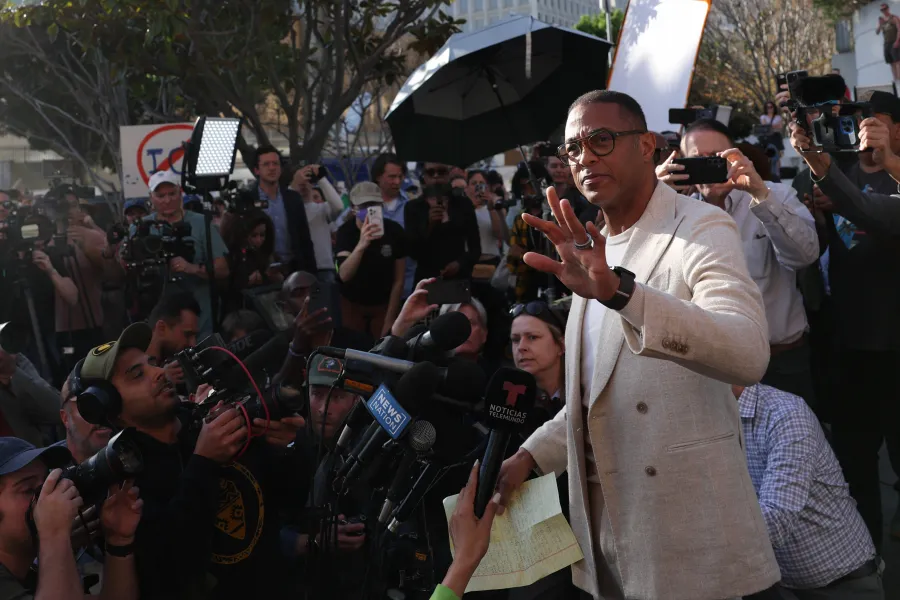
4. Minneapolis, Minnesota
Arrest
In the wake of the protests over the murder of George Floyd in 2020, Minnesota State Patrol has been prohibited from arresting, threatening to arrest, or using physical force or chemical agents against journalists. Officers are also prohibited from ordering journalists to stop photographing or recording a protest, from forcing journalists to disperse, or from seizing or intentionally damaging journalists’ equipment.
Although these regulations apply to state law enforcement, they do not necessarily extend to federal agents. In addition, journalists should be aware of and comply with other applicable laws to avoid attracting unwanted attention. For example, in the Twin Cities, “excessive or disturbing noise” as part of a protest is considered a public nuisance and can be grounds for dispersal or arrest. Similarly, Minnesota law prohibits wearing a mask or disguise to conceal one’s identity at a protest unless the face covering is for health, religious, or entertainment purposes.
Minnesota right to record
Minnesota law generally permits recording an in-person conversation that takes place in a location where the parties to the conversation do not have a reasonable expectation of privacy. Under these circumstances, no consent is required. However, if the in-person conversation takes place in a location where the parties do have a reasonable expectation of privacy, the consent of at least one of the parties must be obtained to legally record. If a journalist is a party to the conversation, the journalist does not need anyone else’s consent, provided that the journalist does not have a criminal or tortious intent when making a recording.
Similar to in-person conversations, the consent of at least one party is required to record a phone or other electronic conversation (unless a journalist is participating, provided again that the journalist does not have criminal or tortious intent). The same applies to the disclosure of texts, emails, or other electronic messages.
Illegally recording a conversation or disclosing a recording that you should know was made illegally can result in a fine or jail time. In addition, a party to an illegally obtained recording can bring a civil lawsuit for an injunction or monetary damages. However, journalists may be protected under the First Amendment if they receive and disclose an illegally obtained recording and were not involved in the illegal conduct, provided the recording is truthful and relevant to the public.
The Eighth Circuit, where Minnesota is located, has not yet addressed whether the First Amendment recognizes the right to record government officials, including law enforcement, in public without their consent. Courts have, however, favorably cited other federal courts that have recognized this right.
Minnesota shield law
Minnesota’s Free Flow of Information Act states that “the freedom of the press requires protection of the confidential relationship between the news gatherer and the source of information.” The statute prohibits anyone who is “directly engaged in the gathering, procuring, compiling, editing, or publishing of information for the purpose of transmission, dissemination, or publication to the public” from being compelled to disclose sources, as well as non-published information.
There are two important exceptions to this statute. First, the Free Flow of Information Act does not apply to defamation cases under specific circumstances. Under Minnesota law, defamation claims have three elements: (1) a false statement; (2) is made to someone other than the person it is about; and (3) is harmful to the person’s reputation. Public figures are also required to show that the statement was made with “actual malice,” which means that the person making the statement either knew it was false or acted with reckless disregard for whether it was false. If a person bringing a defamation claim shows that the identity of a journalist’s source will provide evidence of actual malice, the journalist can be compelled to reveal the source’s identity. Even in this situation, however, the person seeking the identity of the source must show both that there is probable cause that the source has relevant information and there are no other ways to obtain the evidence of actual malice.
The second exception to the Free Flow of Information Act applies in criminal cases where three conditions are met. First, there must be probable cause to believe that the information is either clearly relevant to a felony or gross misdemeanor, or relevant to a misdemeanor without revealing the source or means through which the information was obtained. Second, there must be no other ways to obtain this information. Third, there must be a compelling and overriding interest to compel disclosure of the information in order to prevent an injustice.
Recent incidents involving journalists in Minnesota
In the wake of Operation Metro Surge’s targeting of Minneapolis, as well as the resulting protests, there has been an increase in arrests, assaults, and other incidents involving journalists. As can be seen from the following examples, these incidents demonstrate that it is crucial to take practical steps to protect one’s safety when covering protests in Minnesota, particularly when protests are being broken up and the separation between protesters and press becomes less clear. Journalists should also be well aware of their legal rights, as well as the fact that law enforcement has arrested journalists in connection with coverage in Minnesota, even once those journalists have left the state.
- On March 1, 2026, independent journalist Adriano Kalin was pushed by a sheriff’s deputy while covering a protest in Fort Snelling, just outside of Minneapolis. Even though Kalin was wearing his press badge, Kalin stated that law enforcement did not discriminate between press and protesters when aggressively dispersing a protest they deemed unlawful.
- On February 27, 2026, independent photographer Junn Bollmann was indicted in Los Angeles and subsequently arrested by federal agents for his coverage of a protest that interrupted a church service in St. Paul. Bollmann had been indicted on charges of conspiracy and obstruction — the same charges as the protesters. His phone, camera, and laptop were seized during his arrest.
- On January 30, 2026, independent journalist Georgia Fort was arrested and charged with conspiracy and obstruction for covering the same St. Paul church protest as Bollmann. Fort livestreamed federal Drug Enforcement Administration agents showing up outside her home with an arrest warrant. Like Bollmann, she was charged with conspiracy and obstruction, the same charges as the protesters.
- On January 29, 2026, independent journalist Don Lemon was arrested in Beverly Hills for conspiracy and obstruction for covering a protest that interrupted a church service in St. Paul. At his arraignment on February 13, 2026, in St. Paul, it was revealed that his phone was taken by officers during his arrest.
- On January 28, 2026, video journalist for The Associated Press, Mark Vancleave, was pushed by a federal officer and threatened with arrest while reporting on Immigration and Customs Enforcement (ICE) actions in Minneapolis. Vancleave’s vehicle was boxed in by unmarked vehicles, at which point Vancleave and his associate got out of the car and began recording. Agents from the Federal Bureau of Prisons got out of one of the vehicles and threatened to arrest Vancleave and his associate if they did not get back in their car, even after they identified themselves as journalists.
- On January 25, 2026, journalist Tina-Desiree Berg with Status Coup was shoved to the ground by law enforcement while covering a protest in Minneapolis. Berg’s colleague caught the incident on video, and the footage shows an agent pointing his weapon at a group of journalists. Later, more agents arrived and directed the journalists to step back while throwing tear gas at them. When one officer saw Berg, he grabbed her from behind and pushed her to the ground. Similar incidents were reported against an independent journalist, a journalist from Folhetim Carambola, and a journalist from KARE on January 24, 2026.
5. New York, New York
The Constitution of the State of New York provides that all citizens may speak, write, and publish freely. New York state and city law generally mirror federal First Amendment law concerning rights to gather and publish news, and federal Fourth Amendment law concerning searches and arrests.
Arrest
Under New York law, police officers can briefly detain you if they have reasonable suspicion that you are engaged in criminal activity. Officers can stop and frisk you if they have an objective, reasonable belief that you are armed and dangerous, and they can arrest you if they have probable cause that you are committing a crime. Police are also permitted to search and seize any personal property on or immediately near you incident to an arrest. While police cannot search the contents of your phone without a warrant if it is protected by a password, they can seize it and examine it during an arrest.
Even so, the New York Police Department (NYPD) has entered into a settlement agreement that prohibits the NYPD from arresting, restricting, or interfering with journalists for merely observing or recording police activity in public places. It also requires the NYPD to allow journalists to access locations where the public is permitted, barring the NYPD from cordoning off areas typically open to the public to prevent journalists from viewing or recording events in those areas. Regardless, as a practical matter, journalists should exercise caution when engaging with police, should clearly state and make visible that they are members of the press, and should follow police orders in order to avoid even unconstitutional arrests.
The NYPD has also enacted a policy that exempts credentialed journalists from dispersal orders when police are breaking up or responding to protests. Even so, as a practical matter, journalists should avoid engaging in any conduct that could be characterized (or mischaracterized) as disorderly, obstructive, or as engaging in the protest activity, rather than purely journalistic activity. As with other jurisdictions, journalists should maintain clearly visible press credentials at all times and visibly distinguish themselves from demonstrators.
New York right to record
New York is a “one-party consent” state for audio recordings, meaning that a conversation may be recorded by a party to the conversation or if at least one party to the conversation has consented to the recording of the conversation. However, consent for recording a conversation is not required if the individuals participating have no reasonable expectation of privacy, such that a non-party to the conversation may freely overhear it.
If a conversation takes place in public and the individuals participating have no reasonable expectation of privacy, a journalist does not need consent from a participant to record the conversation. However, if the parties to the conversation are behaving such that there is a reasonable expectation of privacy — e.g., whispering, attempting not to be overheard, or conversing in a private space — then a journalist will need consent from one party to the conversation to record it.
With respect to telephone and other electronic communications, consent is required from one party to the conversation, whether it is a phone, text, or email conversation, for the conversation to be recorded.
New York allows for filming or photography in areas where the public has access or where there is no reasonable expectation of privacy (such as a hotel lobby or a public sidewalk). However, it is a felony to secretly record or photograph individuals undressing, engaged in intimate activities, or if there is a reasonable expectation of privacy in private or even public spaces, such as in public bathrooms or changing rooms.
New York law protects the right to record law enforcement officers, as long as the person recording is not under arrest, is not otherwise in the custody of the police, and is not undertaking any actions that physically interfere with law enforcement activity or constitute a crime. If a police officer interferes with this right to record, a journalist may bring a civil lawsuit to subsequently remedy the violation of their rights.
Police officers may not confiscate or demand to see a journalist’s photographs or recordings without a warrant, or delete any data. In addition, if arrested, the U.S. Supreme Court has held that a search of digital data on a cell phone does not fall within the scope of a lawful search incident to arrest, and this protection would likely extend to digital cameras as well. Accordingly, even if a journalist is lawfully arrested, officers generally may not search the contents of the journalist’s phone or camera without a warrant. However, it is best practice to have a strong password on any devices used to record police activity, and individuals cannot be required to disclose a password to an electronic device.
New York Shield Law
New York has a strong public policy and historical tradition of “providing the utmost protection of freedom of the press.” New York’s Shield Law provides professional journalists with an absolute privilege that protects against the compelled disclosure of certain newsgathering materials and sources through a subpoena. Under the law, a professional journalist is anyone involved in newsgathering intended for dissemination to the public, and the protection covers both journalists working for traditional news media (such as newspapers, magazines, or broadcast media) and journalists working for an organization that “has as one of its regular functions the processing and researching of news intended for dissemination to the public.” While the Shield Law absolutely protects against disclosure of confidential information, it also includes a lesser degree of protection over certain information that was not obtained confidentially.
As a general matter, when asserting privilege under New York’s Shield Law to protect against disclosure of information, the burden of proof is on the journalist to demonstrate that the information gathered was meant to be confidential. That is, there must be an express or implied agreement that the information or source is confidential.
Otherwise, when non-confidential information or sources are at issue, courts may compel disclosure of the information if the party seeking the information demonstrates that the information: (1) is highly material and relevant; (2) is critical or necessary to a claim, defense, or proof of an issue in the case; and (3) is not available through alternative means. While the Shield Law applies to both civil and criminal cases, courts have held that in criminal cases, a criminal defendant’s right to a fair trial and right to obtain relevant evidence generally outweigh a journalist’s privilege over non-confidential materials. Courts will balance a criminal defendant’s need for the information sought against the journalist’s right to protect newsgathering information or sources.
New York anti‑SLAPP law
New York’s anti-SLAPP law protects against defamation and similar lawsuits by allowing defendants to quickly dismiss frivolous lawsuits that are primarily intended to silence critics or those participating in public activities by burdening them with the cost and effort of legal defense. The law broadly covers cases involving communications in public or conduct in furtherance of free speech, as long as it is connected to an issue in the public interest. Further, “public interest” is broadly construed to mean anything other than a “purely private matter.”
If a lawsuit is filed intending to silence journalists or news organizations via defamation or similar claims, the law follows a burden-shifting framework to allow journalists to use early motion practice to dismiss the lawsuit. First, a defendant may file a motion to dismiss the lawsuit by demonstrating that the lawsuit involves “public petition and participation.” The burden then shifts to the plaintiff to show that the lawsuit “has a substantial basis in law or is supported by a substantial argument for an extension, modification, or reversal of existing law.” If the plaintiff fails to carry this burden, the court must dismiss the case. In the meantime, discovery is paused.
If a defendant prevails on an anti-SLAPP motion, they are entitled to receive attorney’s fees and costs in defending against the lawsuit. A defendant may also obtain other compensatory damages or punitive damages if the defendant can show the lawsuit was brought solely to harass or intimidate them or inhibit their right to free speech.
Recent incidents involving journalists in New York
Notwithstanding New York’s policy favoring and commitment towards freedom of the press, there have been several incidents involving journalists covering protests having their rights violated in New York in recent years. These have included encounters with both federal and NYPD law enforcement officers. While in most cases the journalists in these incidents have subsequently been released, journalists should be aware of their rights and exercise precaution for their safety when covering any demonstrations or protests, particularly immigration-related protests.
In 2024, in at least two separate incidents, the NYPD arrested journalists covering pro-Palestine protests or encampments. In one incident, the NYPD arrested a journalist covering a pro-Palestine protest for a podcast and ultimately charged him with resisting arrest. In another incident later that year, NYPD officers tackled and arrested two credentialled photojournalists covering an NYPD sweep and clearing of a university pro-Palestine encampment in midtown Manhattan.
In 2025, federal agents shoved and pushed several journalists in a hallway in a New York City immigration court, resulting in one journalist being hospitalized. In another incident soon thereafter, NYPD arrested a photojournalist covering immigration protests in lower Manhattan for obstruction, although he was subsequently released with no charges brought.
6. Washington, D.C.
Washington, D.C. is a federal district that does not have its own constitution. However, under the District of Columbia Home Rule Act of 1973, D.C.’s local government has authority to pass and enforce local laws. The following discussion covers key aspects of federal and local law relevant to journalists covering demonstrations in D.C.
Arrest
Because of its unique status as a federal district, D.C. is home to a mix of local and federal law enforcement entities. The Metropolitan Police Department (MPD) and the Metro Transit Police are municipal police forces controlled by the D.C. city government. These local police forces have jurisdiction over metro stations, streets and most sidewalks. The U.S. Park Police, the U.S. Capitol Police, and the U.S. Secret Service, among others, are federal law enforcement agencies that also maintain a presence in D.C. These federal agencies have jurisdiction over parks, the National Mall, and federal buildings and monuments (including nearby sidewalks). In D.C., the U.S. president (rather than a state governor) has control over the D.C. National Guard.
Individuals, including journalists, have a constitutional right to attend peaceful demonstrations and protests. This right is strongest in traditional “public forums” like streets, sidewalks, and parks. However, many protests and demonstrations require permits. Planned protests on D.C. streets or sidewalks that will block pedestrians or that will have more than 50 people in attendance require permits from the D.C. city government. With a few exceptions, demonstrations on federal land (e.g., D.C. parks and federal buildings and monuments) with more than 25 people require a permit from the National Park Service. Also, there are certain locations in D.C. where protests are not allowed. For example, it is against federal law to protest on Supreme Court grounds, and protests on the grounds of the U.S. Capitol require a permit and are restricted to certain areas. Other laws limit protests at or near private residences.
MPD officers are not supposed to break up a demonstration without issuing at least one dispersal order and providing a reasonable opportunity to comply, including by providing a clear, unobstructed exit path. In many cases, MPD must issue three such dispersal orders. Police are not supposed to detain someone unless they have reasonable suspicion that the individual has or is about to commit a crime or is in the process of doing so. Arrests require probable cause. Justifications for arrest can include failing to comply with a dispersal order or disorderly conduct. In D.C., disorderly conduct includes: (1) acting in a way that causes another person to reasonably fear that they will be harmed or their property taken; (2) inciting or provoking violence; (3) using loud, threatening, or abusive language or disruptive conduct; or (4) directing abusive or offensive language or gestures at another person in a manner likely to provoke immediate physical retaliation or violence.
Journalists covering protests in D.C. should avoid participating in activities that may cause or provoke a disturbance. They should also clearly distinguish themselves from individuals who may be doing so by wearing conspicuous press credentials. Journalists should also comply with dispersal orders. Even so, law enforcement officers may use the laws mentioned above as justification for detaining demonstrators and those in their vicinity, even including journalists who identify themselves as journalists.
D.C. right to record
D.C. is a one-party consent jurisdiction, which means that a journalist may record an in-person or telephone conversation if the journalist is a party to that conversation (and consents to the recording) or, if the journalist is not a party to the conversation, one of the parties has given prior consent. There is likely a First Amendment right to record police officers who are performing official duties in public, although courts in D.C. have yet to formally recognize that right. Journalists may video record, photograph, or audio record police officers performing their official duties in public unless doing so interferes with the police activity. D.C. law prohibits occupying “a hidden observation post” or installing an electronic device to secretly or surreptitiously observe individuals in restrooms, changing rooms, or when engaged in sexual activity.
D.C. shield law
Under D.C.’s Free Flow of Information Act, journalists enjoy absolute privilege against compelled testimony regarding their sources, whether or not those sources are confidential. This means that journalists can neverbe compelled to provide testimony about their sources if the sources were contacted while the journalists were “acting in an official news gathering capacity.”
The law also provides journalists with a qualified privilege against disclosure of other news gathering material. A journalist will be forced to comply with a subpoena for that material only if a court finds that: (1) the news or information is “relevant to a significant legal issue” that is before a judicial, legislative, administrative, or other body that has the power to issue a subpoena; (2) the news or information could not be obtained via alternative means; and (3) there is an “overriding public interest” in disclosure of that news or material.
However, D.C.’s Free Flow of Information Act does not apply when a journalist is subpoenaed in federal proceedings. The D.C. Circuit (the federal appellate court in D.C.) recognizes a “qualified reporter’s privilege” under the First Amendment that permits journalists to resist civil discovery into the identity of their confidential sources. This privilege can be overcome if the court finds that the information is “crucial” to the case and the party seeking to compel disclosure has “exhausted every reasonable alternative source of information.” Courts have found that a party seeking to compel disclosure satisfies this burden of showing exhaustion by deposing numerous witnesses before seeking to compel a reporter’s testimony, for example.
This guide was prepared for the Committee to Protect Journalists with pro bono legal support facilitated through TrustLaw, the Thomson Reuters Foundation’s global pro bono legal network.
Thomson Reuters Foundation
The Thomson Reuters Foundation is a global non-profit organisation advancing democratic and institutional resilience and social cohesion. It is the corporate foundation of Thomson Reuters and an independent charity, registered in the UK and the USA, with an entity registered in Europe. Through a strategic combination of media, legal, data-intelligence and AI initiatives, the Foundation strengthens information integrity, protects civil society and advances responsible business practices, providing tangible solutions to foster free, fair and informed societies.
TrustLaw, an initiative of the Thomson Reuters Foundation, is the world’s largest pro bono legal network. Working with leading law firms and corporate legal teams, TrustLaw facilitates free legal support, research and resources for civil society organisations, social enterprises and non-profit independent media in over 190 countries. By spreading the practice of pro bono worldwide, TrustLaw works to strengthen civil society and drive change.
If you are a civil society or media organisation in need of legal support, you can join TrustLaw for free.
Disclaimer
This guide is provided for informational purposes only and does not constitute legal advice. Readers should seek qualified legal counsel regarding their specific circumstances.
While we intend the contents to be correct and up to date at the time of publication, we do not guarantee their accuracy or completeness, particularly as circumstances may change after publication. The incidents referenced in this guide are based on publicly available information and reports correct as of July 2026, and may be subject to ongoing legal proceedings, dispute or further developments. The examples are included for illustrative purposes. The Committee to Protect Journalists and the Thomson Reuters Foundation, accept no liability or responsibility for actions taken or not taken or any losses arising from reliance on this report or any inaccuracies herein.
The contents of this report should not be taken to reflect the views of the legal teams who contributed.