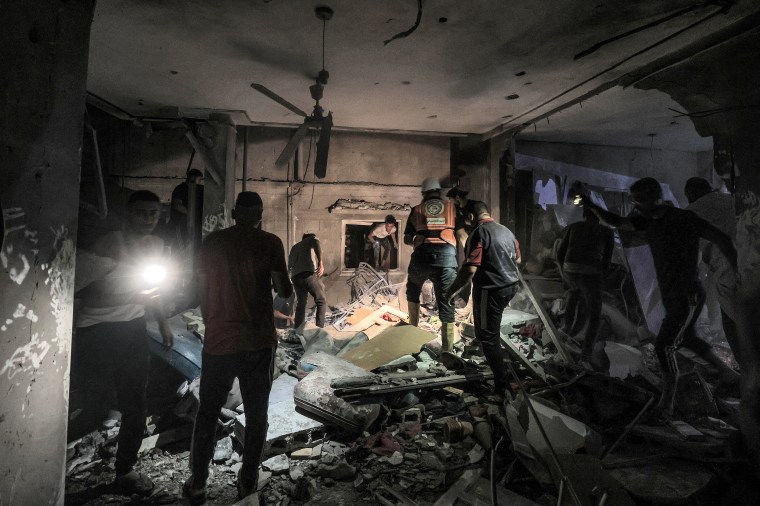
In accordance with its longstanding methodology, CPJ has tracked and documented the cases of members of the press killed in relation to their work since 1992. This includes each journalist and media worker killed since the Israel-Gaza war began on October 7, 2023. CPJ’s rigorous methodology has been widely cited by United Nations bodies, government officials, and human rights organizations.
CPJ’s role is to ensure that every journalist and media worker killed in connection with their work is named, recorded, and thoroughly investigated so this information can stand against any efforts to erase, deny, or politically instrumentalize their killings.
As a press freedom organization, CPJ is specifically focused on documenting journalists and media workers killed in relation to their work. Our database, therefore, does not include those who have died due to illness, disease, or starvation, unless as a result of imprisonment for their work. However, we have reported on how Israel’s blockade and restrictions on food, water, fuel, cooking gas, medical supplies, and emergency aid have ravaged Palestinian journalists and impaired their ability to bear witness.
Each case in our database is independently confirmed through information from at least two credible sources — such as family members, colleagues, eyewitnesses, legal representatives, media reports, local and regional press freedom group information, and official or third-party investigations. CPJ never relies on a single unverified account. All cases must align with our definition of who is a journalist or media worker, as well as our full methodology.
CPJ does not include any journalists in its database found to be acting as combatants (see How does CPJ define a journalist? What if the journalist was part of a military or militant group? below). CPJ has defaulted to classifying all Gazan journalists — whose deaths and journalistic credentials we are able to verify — as killed in connection to their work, and therefore included in CPJ’s database, unless it can be definitively proven otherwise. This is regardless of whether they were at home or in the field — an assumption based on the fact that technological advances allow them to work from anywhere. CPJ has followed this same process in the Russia-Ukraine War.
Our database and documentation are dynamic and are continually updated as investigations continue and new evidence is discovered.
The Israel-Gaza war is the deadliest war on record for journalists since CPJ began collecting records in 1992, with Israel responsible for killing journalists at an unprecedented rate and scale. Utilizing external sources, CPJ has found that more press members were killed by Israel in the Israel-Gaza war than died in any major conflict in the last 100 years. For the latest casualty information collected by CPJ see journalist casualties in the Israel-Gaza war.
Following CPJ’s longstanding methodology, CPJ records a journalist’s killing in its database if it has reasonable grounds to believe they have been or may have been killed in relation to their work, whether in in combat zones or crossfire, on dangerous assignment or in targeted killings where a journalist is killed deliberately for their work (which CPJ classifies as “Murder”).
Our documentation process is dynamic, and the database, including classifications of killings, is continuously updated as investigations continue and new evidence is discovered.
CPJ classifies a killing as “Murder” if we are able to establish with reasonable certainty that the journalist was killed in direct reprisal for their work. The killing could be spontaneous or premeditated. It could be either because of specific reporting or simply because they are working as a journalist. In the context of Gaza, one of our key considerations is whether the attackers singled out someone they knew, or should have known, was a journalist; for instance, if they had “Press” insignia on their clothing or a vehicle. We consider all of the evidence in each individual case before designating a killing as a murder, including whether a journalist had previously been threatened for their work.
The Israel Defense Forces has committed more targeted killings of journalists — murders — than any other government’s military since CPJ began documentation in 1992. Under international law, such targeted killings of journalists — who are protected as civilians — are considered war crimes when they are conducted during an armed conflict.
Cases CPJ classifies as “Murder” are always unlawful. However, this classification does not mean that the other killings in our database are considered lawful, but rather that CPJ has not been able to determine whether that individual was killed specifically because of their journalism. For example, a deliberate or reckless attack on a housing complex, killing hundreds of civilians, including a journalist, would be an apparent war crime under international law. Disproportionate or indiscriminate attacks on civilians are also war crimes. However, for CPJ to classify such cases as “Murder” would require determining that such attacks were conducted in direct reprisal for the journalist’s work.
In the absence of immediate, definitive evidence of a journalist being targeted in direct reprisal for their work (“Murder”) or being killed amidst an active, two-way battlefield exchange (“Crossfire”), CPJ defaults journalist killings in Gaza to the classification of “Dangerous Assignment.” Given the difficulties of confirming information when a war is raging and because journalists in Gaza are effectively trapped within the Strip, CPJ applies a presumption of duty: that any journalist killed was involved in trying to provide some form of coverage. CPJ researchers then continue investigating whether specific evidence — such as drone footage, eyewitness accounts, or ballistic analysis — warrants a reclassification to “Murder.” CPJ followed this same process in the Russia-Ukraine War.
Regardless of classification, CPJ actively advocates for all apparent war crimes committed against journalists to be investigated and for the perpetrators of all unlawfully killed journalists to be held to account.
For more information, see our full methodology.
CPJ has confirmed that the Israel military has committed more targeted killings of journalists than any other government since we began documentation in 1992. As journalists are civilians under international law, every deliberate and targeted killing of a journalist is a war crime. CPJ has called on international authorities to ensure that all cases of targeted killings of the press are independently and impartially investigated as war crimes, given Israel’s longstanding unwillingness to prosecute international crimes committed by its military against journalists. The perpetrators — from the individuals in IDF units through to the highest level of the command chain — must be held to account.
However, CPJ’s database of killed journalists is not a comprehensive real-time tracker of war crimes committed by Israel against journalists:
- Our database is limited to tracking one subset of the possible war crimes that may be committed against journalists: Our database tracks cases of “Murder” — journalists intentionally killed in direct reprisal for their work. Under international law, such killings, when conducted during armed conflict, are apparent war crimes. However, there are many other types of war crimes that can be committed against civilians, including journalists. For example, a deliberate or reckless attack on a housing complex, killing hundreds of civilians including a journalist, would be an apparent war crime under international law. Disproportionate or indiscriminate attacks on civilians are also war crimes. However, for CPJ to classify such cases as murder would require determining that such attacks were conducted in direct reprisal for the journalist’s work.
- Verification processes and the obstacles to investigation imposed by Israel mean the true number of targeted killings may be far higher: CPJ’s longstanding methodology requires that CPJ researchers independently investigate and verify the circumstances behind each death. CPJ requires a minimum of at least two sources of information for any case we publish. Amid the extreme constraints imposed on Gaza — including Israel’s ban on foreign press access, destroyed communications infrastructure, mass displacement, and widespread loss of life — verifying information is extraordinarily difficult. To this end, we recognize the total number of targeted killings may be far higher. While CPJ continues to investigate many other cases of suspected targeted killings — and individual classifications will change as more information becomes available — with much contemporaneous evidence now destroyed, the true number of Palestinian journalists in Gaza who were deliberately targeted by Israel may never be known.
As a press freedom organization, CPJ focuses on documenting and advocating for journalists killed in relation to their work. For this reason, CPJ classifies killings as “Murder” only if the killing was deliberate and in direct reprisal for the journalist’s work (see How does CPJ classify journalist killings? above).
The Israel Defense Forces has committed more targeted killings of journalists–murders–than any other government’s military since CPJ began documentation in 1992. (However, see Could any of these deaths be considered war crimes? Does CPJ have a real-time tracker of the war crimes that Israel is suspected to have committed against journalists? for an explanation of why the true number of Palestinian journalists in Gaza who were deliberately targeted by Israel may never be known). Under international law, such targeted killings of journalists — who are protected as civilians — are considered war crimes when they are conducted during an armed conflict.
Cases CPJ classifies as “Murder” are always unlawful. However, this classification should not be taken to suggest that the other killings in our database are considered lawful, but rather that CPJ has not been able to determine whether that individual was killed specifically because of their journalism. For example, a deliberate or reckless attack on a housing complex, killing hundreds of civilians including a journalist, would be an apparent war crime under international law. Disproportionate or indiscriminate attacks on civilians are also war crimes. However, for CPJ to classify such cases as murder would require determining that such attacks were conducted in direct reprisal for the journalist’s work.
Regardless of classification, CPJ actively advocates for all apparent war crimes committed against journalists to be investigated and for the perpetrators of all unlawfully killed journalists to be held to account.
For more information see our full methodology.
The organizations tracking the violations and atrocities against journalists in Gaza each have different methodologies and definitions. CPJ is applying its longstanding and rigorous methodology, which for decades has been widely cited by United Nations bodies, government officials, and human rights organizations. We recognize that different approaches produce different numbers.
CPJ’s numbers may be lower than other organizations because:
- Journalist definition: Some organizations consider individuals who studied journalism or are members of a professional journalism association to be journalists even if they are no longer practicing. By comparison, CPJ defines journalists as people who regularly cover news or comment on public affairs through any medium to report or share fact-based information with an audience. We take up cases involving staff journalists and freelancers. CPJ does not include journalists if there is evidence that they were inciting violence with imminent effect or directly participating as a combatant in armed conflict at the time of their deaths. Consistent with international humanitarian law, journalists affiliated with an armed non-state actor–even one that may be classified as a terrorist group by certain countries–are considered civilians, not combatants, unless they are directly participating in the hostilities.
- Connection to work: We only count journalists who we have reasonable grounds to believe were killed in connection to their work.
- Verification process: Our methodology requires verification from at least two different sources, and conditions in wartime can make verification extraordinarily difficult. To this end, we recognize that our numbers may rise over time, and in particular that the total number of journalists deliberately targeted for being journalists is likely an undercount in our database.
An airstrike is defined as an attack by military airplanes dropping bombs or other ordnance. Drone strikes are launched from remote-controlled aircraft. Missile strikes originate from vehicles or soldiers on the ground. In wartime, it’s not always immediately clear whether an attack was the result of an airstrike, drone strike, or ground-launched weapons. As the Israeli military controls the airspace over Israel-Palestinian territory, CPJ lists cause of death as an Israeli airstrike, drone strike, or missile strike when we have determined the source of the attack based on available information — typically from at least two independent sources. If we do not have this information, we initially describe the cause of death as a strike. If additional details — such as crater analysis showing the origin of the ordnance — become available, we update our database accordingly.
CPJ defines journalists as people who regularly cover news or comment on public affairs through any medium to report or share fact-based information with an audience. We take up cases involving staff journalists and freelancers.
CPJ also documents the deaths of media support workers in recognition of their essential role in the news gathering process. These include translators, drivers, guards, fixers, and administrative workers.
CPJ does not include journalists if there is evidence that they were inciting violence with imminent effect or directly participating as a combatant in armed conflict at the time of their deaths. Consistent with international humanitarian law, journalists affiliated with an armed non-state actor–even one that may be classified as a terrorist group by certain countries — are considered civilians, not combatants, unless they are directly participating in the hostilities In every case included in CPJ’s database, CPJ has determined — based on multiple independent sources — that there is no evidence to date that any journalist or media worker was engaged in such militant activity. Should credible evidence later emerge indicating such involvement, CPJ revises its findings and removes the individual from its database.