Afghan Journalists Steadfast as International Withdrawal Approaches
As they look toward the next era of uncertainty, reporters in Afghanistan express a sense of determination to build on what they have achieved. By Bob Dietz An Afghan man marks his application for voter registration in Kabul, Afghanistan, on September 16, 2013. Journalists’ future may hinge on the presidential election scheduled for April 2014.…

Bulgarian journalists are under attack
This summer, for good reason, the world’s attention was focused on Turkey. Anti-government protests over plans to destroy a park in downtown Istanbul attracted global attention. Ankara’s strategic importance in Syria and the Middle East, as well as being a member of NATO, makes what happens in Turkey important.
Hamid Karzai goes conservative on media
As if a faltering media industry and rising risks to endangered journalists as NATO reduces its forces in 2014 aren’t bad enough, add in a president pandering to religious conservatives in a pre-presidential election run-up. Reporting from Kabul, Reuters said Wednesday:
Getting ready for contingencies in Afghanistan
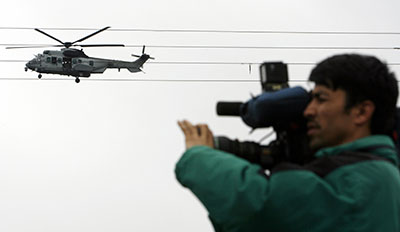
Considering the worst-case scenarios for post-2014 Afghanistan, international news agencies should start planning a range of assistance responses for locally hired journalists and media staff. By the end of 2014, NATO troops will have largely withdrawn and the Karzai government will make way for a new administration. If the situation becomes chaotic, Afghans working for…
For Turkey, world’s leading jailer, a path forward
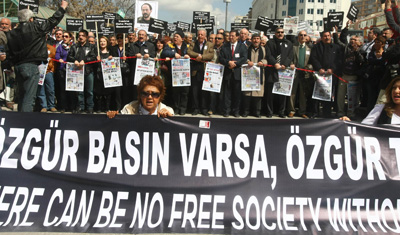
Turkey has no business being the world’s leading jailer of journalists. But the numbers don’t lie. With 49 journalists imprisoned for their work, according to CPJ’s annual worldwide prison census, released today, Turkey holds more individuals behind bars than Iran (45), China (32), or Eritrea (28). How did Turkey find itself in this situation? Unlike…
Afghan journalist’s death must lead to better combat rules
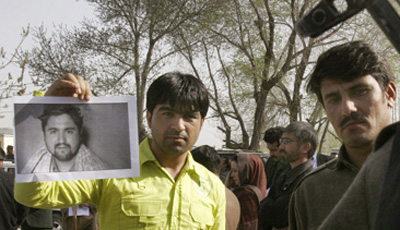
Wednesday, the Afghanistan Analysts Network (AAN) released its report, “Death of an Uruzgan Journalist: Command Errors and Collateral Damage,” by Kate Clark on the July 2011 shooting death of journalist Omaid Khpalwak. Clark’s details on how Khpalwak died corroborate and then go beyond the investigation already conducted by the U.S.-led NATO forces who were responsible.…
NATO responds to CPJ, but questions remain unanswered
On August 4, CPJ wrote to NATO Secretary General Anders Fogh Rasmussen requesting information about the July 30 attacks on broadcast facilities in Libya in which NATO aircraft destroyed three broadcast dishes. As we noted in our letter, CPJ is concerned any time a media outlet faces a military attack. Such attacks can only be…
Request to NATO for clarification on Libya TV attack
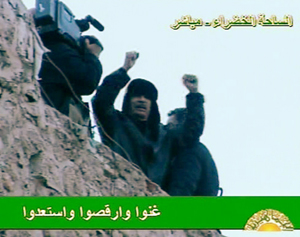
On July 30, NATO warplanes attacked three transmission towers in Libya. The goal apparently was to knock Libyan state television off the air because, NATO alleged, “it was being used as an integral component of the regime apparatus designed to systematically oppress and threaten civilians and to incite attacks against them.”