Go »
  Go »

Turkmenistan


10 Worst Countries to be a Blogger

Reuters
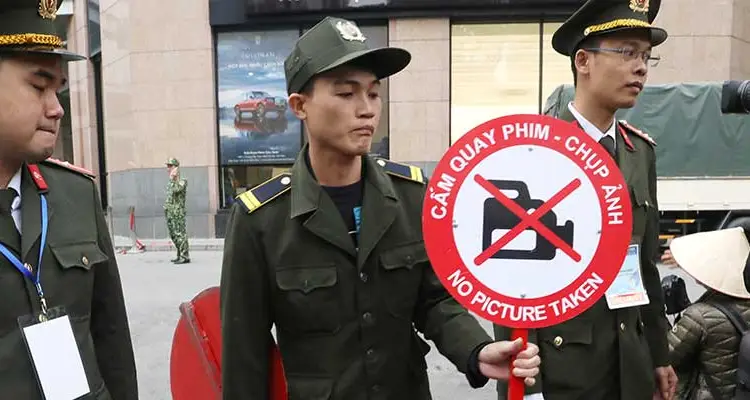
Burma leads the dishonor roll as CPJ names the worst online oppressors. CPJ's "10 Worst Countries to be a Blogger" spotlights nations from Cuba to Turkmenistan, left, where soldiers guard an Internet café. Our report marks World Press Freedom Day, May 3.
Audio: CPJ's Robert Mahoney
العربية Français Español
Bloggers React: Posts on China, Burma, Tunisia, Cuba, Turkmenistan, Vietnam

Even though Turkmen President Gurbanguly Berdymuhammedov announced two years ago the necessity of universal Internet access, the Web is more than restricted in the country. This is connected to cruel official censorship, the serious limitation of the availability and speed of Internet connections in cities, and its total absence in villages. I haven't even mentioned the high price of going online, the strict state monitoring of the few public Internet cafes in the cities, and the widespread practice of opening and inspecting instant messages and e-mails.

CPJ names the worst online oppressors. Booming online cultures in many Asian and Middle Eastern nations have led to aggressive government repression. Burma leads the dishonor roll.


In our special report, “10 Worst Countries to be a Blogger,” CPJ names the world’s leading online oppressors. Here, Deputy Director Robert Mahoney explains why CPJ undertook this report and how it arrived at its conclusions. Listen to the mp3 on the player above, or right click here to download. (5:34)  
In the second year of his presidency, Gurbanguly Berdymukhammedov relaxed some cultural restrictions but took no significant steps to improve press conditions. The strange and repressive legacy of his predecessor, Saparmurat Niyazov, who died in late 2006, continued to dominate this gas-rich Central Asian nation. Despite Berdymukhammedov's promises to open his long-isolated country to the world, access to critical news Web sites was blocked by the dominant, state-owned Internet service provider, and authorities dismantled residential satellite dishes in the capital, Ashgabat, on presidential orders. The government waged an aggressive campaign of harassment against journalists working for the U.S. government-funded Radio Free Europe/Radio Liberty, even as it continued to stonewall questions about the 2006 death of an RFE/RL correspondent in state custody.

TURKMENISTAN:

New York, July 11, 2008—A contributing reporter for the Turkmen Service of the U.S.-funded Radio Free Europe/Radio Liberty (RFE/RL) who was forcibly held for two weeks in two different psychiatric facilities has now had his phone disabled, according to RFE/RL.

Bowing to international pressure, authorities freed Sazak Durdymuradov on July 3. A security officer warned him to “go and tell the truth” about his treatment in detention, and not to “slander” in his broadcasts, he said. Reports of Durdymuradov’s unlawful detention and alleged torture had outraged the international community, which called for his immediate release. CPJ attempted to interview Durdymuradov today, but was unable to get through to him.

TURKMENISTAN:

New York, June 26, 2008—The Committee to Protect Journalists condemns the abduction, torture, and forcible psychiatric hospitalization of Sazak Durdymuradov, a contributing reporter for the Turkmen Service of the U.S.-funded Radio Free Europe/Radio Liberty (RFE/RL), in the Western city of Bakhaden.

According to RFE/RL, Durdymuradov was seized by agents of the secret police (MNB) from his Bakhaden home on June 20 and forcibly taken to a local psychiatric clinic, then shuttled to an MNB station where he was severely beaten, tortured with electroshock, and pressured to sign a letter that said he agreed to stop reporting for RFE/RL. Colleagues say they believe that Durdymuradov was then transferred to a psychiatric hospital in the eastern Lebap region, notorious for “admitting” critics of the Turkmen regime, RFE/RL Turkmen Service Director Oguljamal Yazliyeva told CPJ. However, Durdymuradov’s whereabouts have yet to be confirmed. When RFE/RL contacted MNB authorities to find out where Durdymuradov was, they told the outlet that they were unfamiliar with the case.

TURKMENISTAN

The sudden death of President-for-Life Saparmurat Niyazov in December 2006 marked an end to an eccentric and authoritarian rule, raising modest hopes for social, economic, and political reform. Gurbanguly Berdymukhammedov, a deputy prime minister and Niyazov loyalist, was named interim leader and then became president in a government-orchestrated “election” in February.

Dear Secretary Rice: In advance of your meeting in New York with Turkmen President Gurbanguly Berdymukhammedov during the 62nd session of the General Assembly of the United Nations, the Committee to Protect Journalists draws your attention to the unexplained death of an independent journalist in Turkmenistan.

April 2007 News from the Committee to Protect Journalists...

New York, February 9, 2007—The Committee to Protect Journalists condemns restrictions on the foreign and domestic journalists covering the Turkmen presidential election on February 11. While voters will cast their ballots for a president for the first time since 1992 on Sunday, CPJ said the outcome is all but assured....

  Go »
Text Size
A   A   A
Killed in Turkmenistan

1 journalist killed since 1992

1 journalist murdered

1 murdered with impunity

Contact

Europe and Central Asia

Program Coordinator:
Nina Ognianova

Research Associate:
Muzaffar Suleymanov

nognianova@cpj.org
msuleymanov@cpj.org

Tel: 212-465-1004
ext 106, 101
Fax: 212-465-9568

330 7th Avenue, 11th Floor
New York, NY, 10001 USA


Video: Lara Logan

Why CPJ matters Join Us

International Press
Freedom Awards

Save the date: Tuesday, November 24. CPJ will honor top global journalists at its 19th annual benefit. Christiane Amanpour hosts.

Anatomy of Injustice

Unsolved murders in Russia
Anatomy of Injustice

Pakistani reporters
face grave risks

CPJ’s Bob Dietz
examines the challenges on the CPJ Blog