Thailand aims to hollow out foreign press with new visa restrictions
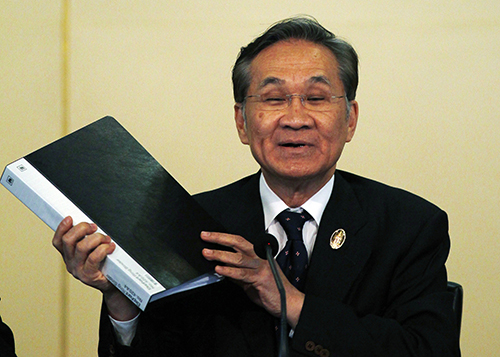
Senior Southeast Asia representative Shawn Crispin this week presented CPJ’s concerns about new media visa restrictions for foreign reporters based in Thailand to a group of Bangkok-based ambassadors. The controversial measures, announced last month by the Ministry of Foreign Affairs, are scheduled to come into force on March 21. The text of Crispin’s speech follows:
No press freedom without Internet freedom
Four years ago, when CPJ launched its Internet Advocacy program, we were met with lots of encouragement, but also some skepticism. “Why do you need a program to defend the Internet?” one supporter asked. “You don’t have a special program to defend television, or radio, or newspapers.” But the Internet is different. Increasingly, when it…

Thai laws on body armor put journalists at risk
For the past several weeks journalists and media organizations in Thailand have been preparing for a fresh round of confrontation between anti-government protesters and government security forces. An attempt to paralyze the nation’s capital through a protester-led, month-long shutdown began today.
First step to justice in Fabio Polenghi’s killing
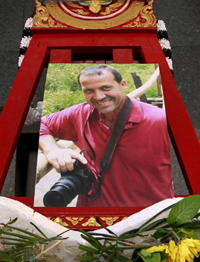
EDITOR’S NOTE: A court in Thailand ruled today that Italian photojournalist Fabio Polenghi was shot and killed by a bullet fired by a soldier during a government crackdown on street protesters on May 19, 2010. The inquest ruling established the circumstances surrounding his death but failed to apportion blame to any individual military commanders or…
Small attack on Thai newspaper has large implications
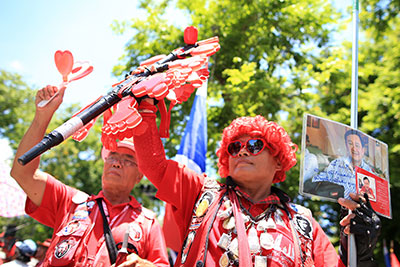
To head off rising tensions between supporters of Prime Minister Yingluck Shinawatra and cartoonist Somchai Katanyutanan, who faces possible criminal defamation charges for critical comments he posted on his personal Facebook page, Thailand’s government has to make sure police fully investigate this weekend’s attack on Thai Rath, the country’s largest circulation daily newspaper. The government’s…
Computer crime laws belie Thai claim to modern society
At online discussion sites all over the world, comments are posted on the Web as soon as they are written. People argue, inform, express anger, and voice fears. Some say things in the heat of the moment that they might go on to regret. Others are elliptical and obscure. The enabling of such conversations is…
Verdict postponed in landmark Thai Internet freedom case
Earlier today, press and human rights groups from around the world heard that the decision in the case of Chiranuch “Jiew” Premchaiporn, the manager of Thai online news site Prachatai, was being delayed yet another month. Chiranuch is charged under Thailand’s Computer Crime Act for 10 counts of not deleting apparently anti-monarchy comments on Prachatai’s…
Holding intermediaries liable for users’ content
Earlier this month, I spoke as an expert witness in the ongoing trial of Chiranuch Premchaiporn, the editor of Thailand’s Prachatai.com website, who is being criminally prosecuted under that country’s Computer Crime Act and Lesé Majesté laws. The crime involves online posts allegedly disrespectful to Thailand’s monarchy, but Chiranuch herself is not accused of originating…

Press freedom heroes in Southeast Asia
Three Southeast Asian journalists–Cambodia’s Hang Chakra, Malaysia’s Zulkiflee Anwar Ul Haque, or Zunar, and Thailand’s Chiranuch Premchaiporn–were among the 48 awardees of the Hellman/Hammett grant, given to writers targeted with political persecution, who were recognized today by Human Rights Watch for their commitment to press freedom.