China
2010
Protecting yourself from denial-of-service attacks
It’s my second link to a report by Hal Roberts (and others at the Berkman Center) in as many days, but I worry that this this detailed document on denial-of-service (DOS) and hacking attacks on independent media and human rights groups might get missed in the holiday season. The news headlines in the last few…
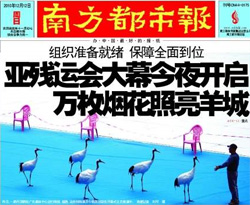
How to show support for Liu Xiaobo…in China
Although China continues to censor references to imprisoned writer Liu Xiaobo’s Nobel peace prize in the news and online, some have been finding creative ways to express support for him. An outspoken newspaper published a front-page picture featuring empty chairs on Sunday, in what appears to be a covert reference to the seat left vacant…

An empty chair in Oslo shows China is empty of media ideas
It was more than Liu Xiaobo’s chair that was empty at Thursday’s Nobel Peace Prize ceremony. What was also on display to the world was China’s lack of a new approach to media that goes beyond its decades-old approach of controlling through denial and suppression.

With 145 journalists behind bars, what’s in a number?
Today we released our annual census of imprisoned journalists around the world, citing 145 reporters, editors, and photojournalists behind bars on December 1, an increase of nine from 2009 figures. The tally begs the question, What’s in a number?
Fighting bogus piracy raids, Microsoft issues new licenses
CPJ has documented for several years the use of spurious anti-piracy raids to shut down and intimidate media organizations in Russia and the former Soviet republics. Offices have been shut down, and computers seized. Often, security agents make bogus claims to be representing or acting on behalf of the U.S. software company Microsoft.
Chinese hackers targeting human rights news sites
Nart Villeneuve has published a detailed summary of recent malware attacks on media and human rights groups who work on Chinese issues. He highlights a disturbing new trend. On Wednesday, Amnesty Hong Kong’s website was repurposed by hackers to infect visitors with a wide variety of nasty malware. The Nobel Prize’s website was also defaced earlier…
Internet Blotter
Microsoft allows users to turn on https by default in Hotmail, but it’s still couched in warnings. Meanwhile, Access starts its own global campaign for https to be turned on for the most visited websites. Thai censorship, originally aimed at a few hundred domains, now covers over 250,000 websites. China “unpublishes” previously approved online articles…
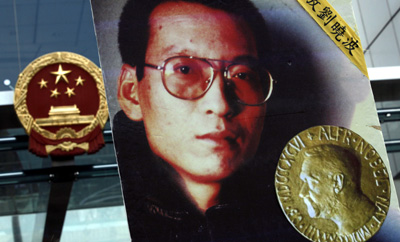
That Nobel invite? Mr. Malware sent it
This weekend, staff at CPJ received a personal invitation to attend the Oslo awards ceremony for Nobel Peace Prize winner Liu Xiaobo. The invite, curiously, was in the form of an Adobe PDF document. We didn’t accept. We didn’t even open the e-mail. We did, however, begin analyzing the document to see was really inside…
Internet Blotter
Turkey lifted its ban on YouTube and then re-asserted it within the same week. Digital technology is helping get news out of North Korea. Small digital cameras and tiny SD memory cards make it easier to smuggle images out. In China, meanwhile, Amazon’s Kindle 3G e-reader is reportedly being used to get the news in.…
Internet Blotter
A powerful advocate for press and Internet freedom, Persephone Miel sadly passed away in June. The Pulitzer Center, in partnership with Internews, has launched a memorial fellowship in her name. How the Great Firewall of China breaks the global Internet: stories of Chinese re-routing and censorship affecting services in Chile, the US, and even the…