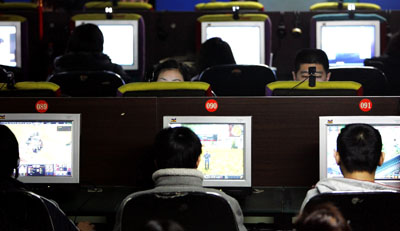
The regulations are not aimed at stifling China’s Internet growth: It’s worth noting that there are more online users in China than there are Americans—the government estimate is 348 million people—with more coming online every day. The penetration rate—the percentage of people online—is about 30 percent (in Hong Kong, it’s closer to 70 percent) which gives the industry plenty of room for growth. The aim, the State Council’s paper said, is to get that rate up to 45 percent within five years.
Those sorts of figures are the best indicator that the value of the Internet is not lost on the government, as the report points out in its opening paragraph: “A crystallization of human wisdom, the Internet is a significant technological invention of the 20th century and a major symbol of contemporary advanced productive force. The Internet has brought about profound impacts on the world economy, politics, culture and social progress, and promoted the transformation of social production, daily life and information dissemination.”
How is China going to generate such growth while monitoring the content it deems might subvert state power, undermine unity or infringe on national honor and interests? The approach in China involves much more than the use of technology in what the government calls the Golden Shield Project, which a lot of people call the “Great Firewall.” As we said in our report on media in China, Falling Short: Olympic Promises Go Unfulfilled As China Falters on Press Freedom, “technology’s partner in Internet censorship is an old-fashioned one—regulations, strict and thick, imposed on service providers. In the five years after China first allowed private Internet accounts, in 1995, the government issued more than 60 sets of regulations to tighten its control of online content” and those regulation shave not stopped.
And when laws fail, the system of self-censorship is the backbone of the government’s control of Web-based information. The government relies on service providers to filter searches, block critical Web sites, delete objectionable content, and monitor e-mail traffic. ISPs and Web site operators answer directly to government censors if a posting is deemed offensive. Too many warnings and the host is in trouble. All providers understand their responsibility and monitor their sites daily.
The State Council knows that controlling dynamic online content requires a dynamic response: “Internet administration is a process of continuous practice, and the Chinese government is determined to improve its Internet administration work.”
Last year, CPJ’s Shawn Crispin and I wrote about China’s influence on Internet policies in other parts of Asia in our year-end essay, “Media Freedom Stalls as China Sets the Course.” Prior to the 2008 Beijing Olympics, a chapter called “Online Rules: A study in Paradox” in Falling Short contained a lengthy section on China’s Internet policies. As we’ve pointed out, you can expect China’s attitude to expand through the rest of Asia and around the world in the coming years.