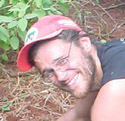
For those following the case of Bradley Roland Will, left, a U.S. activist-journalist killed while reporting on a protest movement in the southern Mexican state of Oaxaca in 2006, a long wait ended on February 18. After 16 months in prison, Juan Manuel Martínez, a grassroots activist from an impoverished neighborhood in Oaxaca, left his cell after a federal appeals tribunal exonerated him of murdering Will.
Speaking on the phone from his home in Oaxaca, Martínez said: “It was easier to implicate somebody like me than the real killers.”
Many agree. Will, 36, was shot to death on October 27, 2006, as he rushed with other journalists to record a street battle pitting rock-hurling protesters against a group of armed men supporting Oaxaca’s governor, Ulises Ruiz, who the protesters wanted to oust because of electoral fraud and neglect of the poor (Oaxaca is one of Mexico’s poorest states).
Video, photographic, and ballistic evidence strongly implicated the armed men in the murder. They were seen firing high-powered weapons at the protesters and in Will’s direction. Minutes before two bullets fatally hit Will, a Mexican journalist near him was shot in the leg. Other journalists recalled bullets whizzing by them during the clash.
Despite the evidence, the Mexican authorities did not thoroughly investigate the armed men, who included a police officer (in plainclothes during the street battle) and a municipal official. Critics add that such pro-government groups were also behind the murders of at least 17 other individuals during the 2006 conflict—and that investigating them would open a Pandora’s box into these deaths and expose possible ties to Gov. Ruiz, who remains in power and belongs to Mexico’s old-guard Institutional Revolutionary Party.
When arrested, Martínez earned about $12 a day running a small bakery with his brother. He lived in a small house off an unpaved street with his wife and three young children. As the anti-government movement gained traction in 2006, Martínez became more involved in the main protest coalition, the Popular Assembly of the People of Oaxaca (APPO). He joined its anti-government marches, along with thousands of others in Oaxaca.
In their case against Martínez, government investigators argued that the bullets that hit Will came from a close range and alleged that Martínez stood with the protesters during the street clash. These conclusions defy forensic studies by Oaxaca state’s chief coroner and independent groups such as the Boston-based Physicians for Human Rights. Those reviews found that the bullets had not likely been shot at close range.
Will’s own family, along with human rights and press freedom groups, including CPJ, consistently denounced Martínez’s imprisonment. They argued that local prosecutors had failed to produce direct eyewitness testimony placing Martínez at the crime scene or that he had a motive for the killing, particularly as Martínez supported the protest movement that Will was documenting.
“The government faced pressure to solve Brad’s murder and figured it was convenient to blame it on the protesters,” said Martínez. “So they grabbed me, as someone belonging to the APPO. It was ridiculous and baseless.”
Mexico’s attorney general’s office has yet to specify whether it will take further action in the murder case, but Will’s mother told CPJ she is dismayed that there is so little movement. “Reams of material exist that implicate other people in this murder, including the people photographed shooting at Brad,” Kathy Will said. “I can’t believe they jailed an innocent man given all that we know. It so upsetting to see people with integrity treated this way. It’s a sign of frightful intimidation.”
In jail, Martínez said that he resisted signing a blank statement of confession under duress several times. He added that strangers would visit him in jail and threaten that they knew the whereabouts of his wife and three young children. “It was terrible,” Martínez said. “The worst period of my life.”
His family also alleges that they faced scare tactics. Liliana Tejada, Martínez’s wife, told CPJ that she received several death threats over the phone while Martínez was in jail. “They told me to shut up or else,” she said. In the weeks leading up to Martínez’s release, the couple’s young children reported that men were photographing them from cars as they exited school. The children have since stopped going to school.
The family remains on alert and has requested official protection from Mexico’s National Human Rights Commission. They are also in contact with Amnesty International, which has urged Mexican authorities to commit to the Will case and the other 2006 murders in Oaxaca.
“We’re not sure who else to turn to for help,” said Martínez. “It’s not like we can go to the state authorities. They are the same ones who put me in jail. My main wish is to return to a normal life. But I’m also scared to be on the street. I’m afraid of groups of men, thinking that they might come after me. The psychological fear is intense. This is what political prisoners suffer.”
Monica Campbell, CPJ’s former Mexico representative, is a 2009-10 fellow at the Nieman Foundation for Journalism at Harvard.