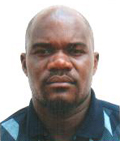
On Thursday, the U.S.-based National Association of Black Journalists announced the winner of its 2009 Percy Qoboza Foreign Journalists Award: Zimbabwean journalist Anderson Shadreck Manyere. Half a world away, however, Manyere, left, lingered in a hospital in the capital, Harare, traumatized by nearly four months of imprisonment, according to his lawyer.
A freelance photojournalist, Manyere was snatched by security agents in December, held incommunicado for 11 days amid allegations of torture, and imprisoned in a maximum security prison until April. He was among more than 30 people swept up in a string of extrajudicial arrests that also included former news anchor Jestina Mukoko. In February, CPJ raised Manyere’s case with Prime Minister Morgan Tsvangiraï and called on him to lead the unity government in addressing Zimbabwe’s long-standing press freedom woes.
In a statement, NABJ President Barbara Ciara said this year’s prize recognized the “bravery and courage” of Manyere while “calling attention to the plight of many imprisoned journalists across Africa and the world.”
“It’s the best news I’ve heard this year,” Manyere’s lawyer, Alec Muchadehama, told me on Thursday. The journalist has been hospitalized since his release on bail from prison on April 17, he said. While the journalist had no visible physical injuries, Muchadehama said, he looked depressed from abuse he suffered in custody.
In fact, in an interview earlier this month with the U.N.-sponsored IRIN news service, Manyere said he was held in solitary confinement and given only “two liters of water a week.” Muchadehama said Manyere was physically assaulted, blindfolded, interrogated for hours, and waterboarded. In January, Justice Gloria Takundwa of the High Court of Zimbabwe ordered police to investigate allegations of abuse and present a report. “He needs psychological treatment so he can become a normal person. It’s going to be difficult,” Muchadehama said. “If he was free of court allegations, I think his recovery would be quicker,” he said.
In fact, Manyere still faces vague and unsubstantiated charges of banditry, sabotage, insurgency, and terrorism (a capital offense in Zimbabwe)–charges he denies. Muchadehama said Manyere’s arrest could have been linked to suspicions that he was the author of photographs of torture victims in Zimbabwe that have appeared on the Internet.
Despite his condition however, state prosecutors have not relented in ongoing efforts to send him back to prison. They appealed the ruling granting Manyere bail and applied today for an arrest warrant against the journalist on the grounds that he was on the run. Calling Manyere a “victim of criminal kidnapping and enforced disappearance,” Muchadehama said the defense is taking the state before the Zimbabwe Supreme Court, arguing that it could not prosecute a defendant whose due process rights had been violated.
As stated by NABJ’s World Affairs Task Force Co-Chairman John Yearwood, we, too, hope that with the award, “we can see some positive change in Zimbabwe, positive change that has been way too long overdue.”