Go »
  Go »

Equatorial Guinea


President Obiang's administration has indefinitely suspended a radio program after it aired commentary critical of an official. (Reuters/Amr Abdallah Dalsh)

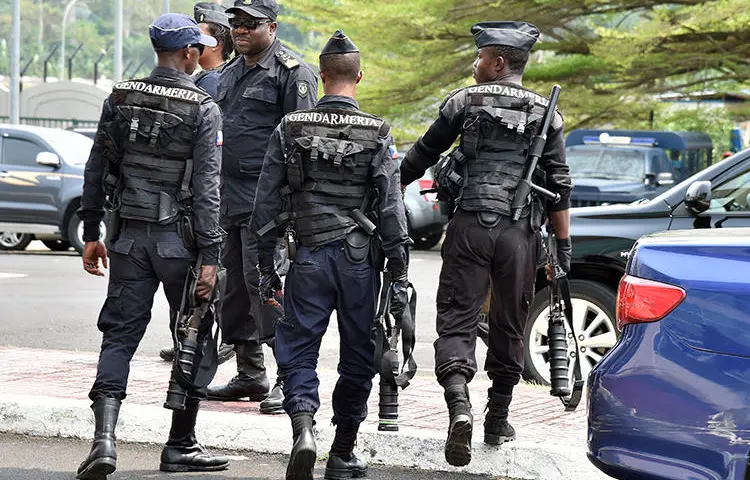
New York, October 23, 2012--Authorities in Equatorial Guinea indefinitely suspended a radio program on a government-controlled outlet during a broadcast on Friday that included criticism of the president of the Supreme Court, according to local journalists and news reports.

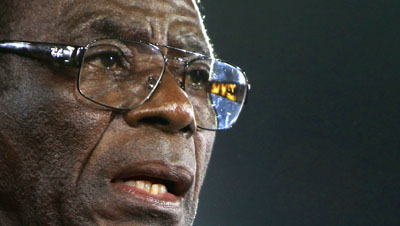
Equatorial Guinea President
Teodoro Obiang (Reuters/James Akena)

To commemorate World Press Freedom Day on May 3, CPJ published a list of the 10 most censored countries, citing Equatorial Guinea as the fifth worst offender. In response, the Minister of Information and government spokesperson, Jerónimo Osa Osa Ecoro, dismissed the analysis of the country's press situation as biased.

"We are going to communicate with those international media organizations who are out to destroy the image of the country," Ecoro told me last week. "They have a biased opinion of the situation in the country."

Iran has invested in technology with the explicit intent of restricting
Internet access. (Reuters/Caren Firouz)

One big reason for the Internet's success is its role as a universal standard, interoperable across the world. The data packets that leave your computer in Botswana are the same as those which arrive in Barbados. The same is increasingly true of modern mobile networks. Standards are converging: You can use your phone, access an app, or send a text, wherever you are.

CPJ's new analysis identifies Eritrea, North Korea, Syria, Iran as worst

CPJ Deputy Director Robert Mahoney counts down the 10 countries where the press is most tightly restricted. How do leaders in these nations silence the media? And which country is the worst of all? (4:03)

Read CPJ's report on the 10 Most Censored countries for more detail on how censorship works, and which countries were the runners-up.

Chinese official Jia Qinglin, fifth from left, hands over keys to the China-built African Union headquarters to AU Chairman and Equatorial Guinea President Theodoro Obiang. (AFP/Tony Karumba)

China didn't make the cut for our 10 most censored countries. While the Chinese Communist Party's censorship apparatus is notorious, journalists and Internet users work hard to overcome the restrictions. Nations like Eritrea and North Korea lack that dynamism.

People walk near a portrait of Equatorial Guinea's President Teodoro Obiang along a street in Malabo. (Reuters/Luc Gnago)

While Mali remains in global headlines with a March 22 military coup and rebel claims of an independent state, citizens in Equatorial Guinea are kept in the dark about the crisis unless they have access to international media, CPJ has gathered from interviews with journalists and a government spokesman.

Obiang (AP)

New York, March 8, 2012--A vote by a commission of UNESCO's executive board to rename the discredited Obiang prize is a blow to the credibility of the organization, the Committee to Protect Journalists said today. Meeting in Paris, the commission voted to change the name of the prize to "International UNESCO-Equatorial Guinea Prize" and for UNESCO to move ahead with the implementation.

Civil unrest grips downtown Kampala. Ugandan President Yoweri Museveni said journalists who covered the protests were 'enemies' of the country's development. (AP/Stephen Wandera)

Many African leaders continue to offer a false choice between stability and press freedom. Taking a cue from China, a key investor and model, they stress social stability and development over openness and reform. By Mohamed Keita

News and information was tightly controlled in Equatorial Guinea, which CPJ identified as one of the world’s most censored nations. Nearly all news media were owned and run by the government or its allies. One independently owned newspaper circulated in the country, but had to practice self-censorship; no independent broadcasters operated domestically. Even in this rigid environment, authorities fearful of the implications of Arab unrest censored news coverage of the protests. President Teodoro Obiang continued efforts to alter his international image, assuming presidency of the African Union and reviving his effort to establish an “Obiang Prize” in life sciences under the auspices of UNESCO. For the second time, UNESCO suspended consideration of the prize after a global campaign by human rights and freedom of expression groups. As he marked his 32 years in power, Obiang declared there were “no” human rights violations in his country. But his administration suspended a state radio presenter for a mere reference to a “leader of the Libyan revolution.” Authorities also urged the owners of television sets in public places not to show international satellite channels covering the Arab unrest, according to local journalists. Security agents detained a German TV crew and deleted footage of an interview with an opposition leader and pictures of children playing in slums.

  Go »
Text Size
A   A   A
Contact

Africa

Program Coordinator:
Sue Valentine

Advocacy Coordinator:
Mohamed Keita

East Africa Consultant:
Tom Rhodes

West Africa Consultant:
Peter Nkanga

svalentine@cpj.org
mkeita@cpj.org
trhodes@cpj.org
pnkanga@cpj.org

Tel: 212-465-1004
ext. 117
Fax: 212-465-9568

330 7th Avenue, 11th Floor
New York, NY, 10001 USA

Twitter: @africamedia_CPJ

Blog: Mohamed Keita
Blog: Tom Rhodes
Blog: Peter Nkanga