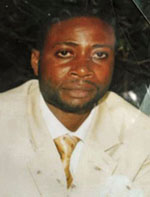
New York, April 6, 2010—Following Monday’s murder of freelance cameraman Patient Chebeya in the Democratic Republic of Congo, the Committee to Protect Journalists called for a renewed commitment from the government to solidly investigate and prosecute those who kill journalists.
Armed men in military uniforms jumped Chebeya, at left, around 10 p.m. as his wife let him in his house in the volatile eastern city of Beni, according to local press freedom group Journaliste En Danger (JED).
JED quoted Chebeya’s wife as saying that the gunmen seized her husband’s valuables, including mobile phones, videotapes, and money, and told him they had come to kill him. Several bullets, fired at blank-point range, killed the journalist.
The Associated Press, citing a senior police officer in Beni, today reported the arrest of two soldiers. The local press decreed two days of a media blackout to protest the killing, journalists told CPJ, adding that the motive behind the murder remained unclear. CPJ is investigating unconfirmed reports that Chebeya had reported receiving threats from a group of soldiers, while determining whether his assassination was related to his journalism.
Chebeya was the fifth journalist CPJ has recorded killed since 1992 in the eastern Democratic Republic of Congo, where the absence of effective law enforcement has led to flawed investigations and prosecutions of journalists’ murders, according to CPJ research.
“We are shocked by the brutal killing of Patient Chebeya and offer our condolences to his family, friends, and colleagues,” said CPJ Africa Program Coordinator
The mayor of Beni announced that a military tribunal would try the suspects within 48 hours, according to local journalists. Military tribunals have asserted authority over such cases on the basis that there were either soldiers involved in the murders or crimes had been committed with so-called “weapons of war,” but that authority has been challenged by human rights lawyers who say journalist murder cases should be tried by civilian, independent courts. The trial in Beni would overlap with the proceedings of another military tribunal in Bukavu trying soldiers and civilians charged in connection with the 2008 murder of reporter Didace Namujimbo.
Jacques Kikuni, a local journalist who spoke to CPJ, was among dozens of people who packed a cemetery in Beni today for the funeral of Chebeya, 35, who was a father of four. Kikuni, who knew Chebeya since 1998, said the late cameraman excelled in filming and reporting, and covered municipal and provincial officials. He was on his way home after he had finished editing footage from the weekend visit of a customs official when he was killed, Kikuni said.