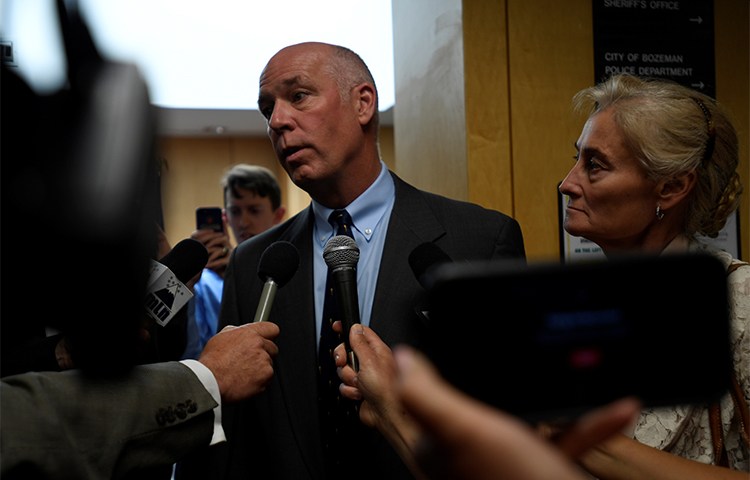
CPJ to use $50,000 Gianforte donated as part of body slam settlement to track other assaults on press
When the news came that Greg Gianforte was making a $50,000 donation to the Committee to Protect Journalists it was 10 p.m. on the East Coast, but 8:30 a.m. in Naypyidaw, Myanmar’s Disney-like capital city, where members of our CPJ team were meeting officials to discuss that country’s punitive press laws.
CPJ calls for OSCE to swiftly fill press freedom representative vacancy
The Committee to Protect Journalists today joined seven other press freedom organizations in calling on the Permanent Council of the Organization for Security and Co-operation in Europe (OSCE) to swiftly appoint a new representative on Freedom of the Media. The incumbent representative, Dunja Mijatović, has been an outspoken defender of press freedom, but she is…

Press freedom on OGP agenda as authoritarianism rises
There was poignancy to the Paris summit of the Open Government Partnership, as leaders from government and civil society took the stage to defend a political ideology under siege: liberal democracy. French President François Hollande, who amid weak public support announced he will not seek re-election in 2017, called democracy “so fragile and so precious.”…
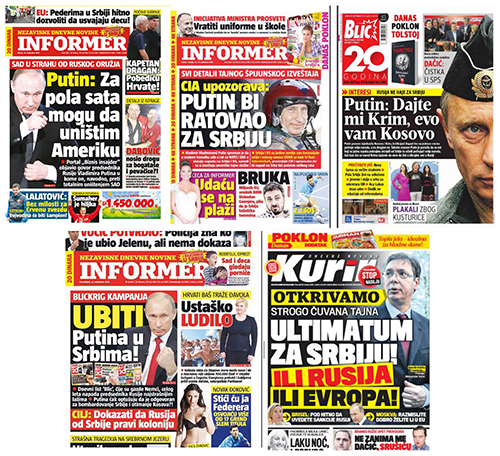
How influence of Russian media risks making Serbia a Moscow bureau
For a couple of days last month, uninformed tourists visiting Serbia could easily have believed that the country is a Russian outpost. With large photos of Vladimir Putin on their covers, Serbian tabloids–by far the biggest source of print information in the country–were engaged in a discussion over whether the Russian President would defend Serbia…
CPJ joins call for World Bank to adopt human rights policy
The Committee to Protect Journalists has joined Social Justice Connection and other press freedom and human rights groups in calling on the World Bank to adopt a human rights policy at its annual spring meeting in Washington D.C. In a letter to the president of World Bank, Jim Yong Kim, the groups urged the bank…
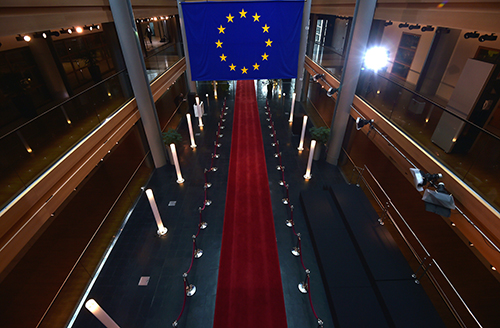
EU rulings on whistleblowers and right-to-be-forgotten laws puts press freedom at risk
European journalists were reminded today that their freedom to report is not only determined by national laws, but increasingly by European institutions. Today, after years of political battle, the European Parliament adopted the Passenger Name Record directive, the Data Protection Package, and the Trade Secrets Protection Act. The stakes were immense and the debates long…
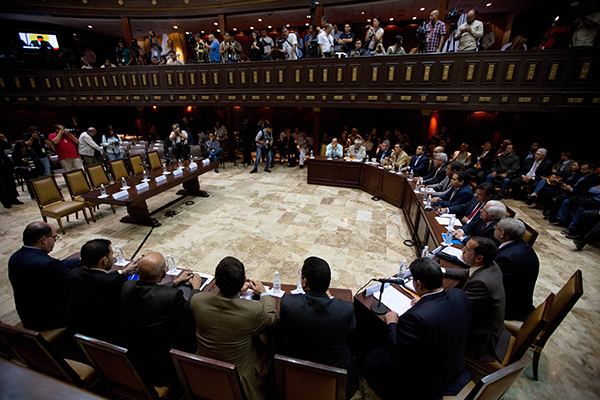
Venezuela’s national assembly reopens to the press after five-year ban
When security guards opened the doors to Venezuela’s colonial-era National Assembly building last Wednesday, I was among the dozens of reporters who swarmed inside. Even though the day’s legislative session would not be called to order for another three hours, every seat in the press galley, located on the second-floor balcony overlooking the chamber, was…
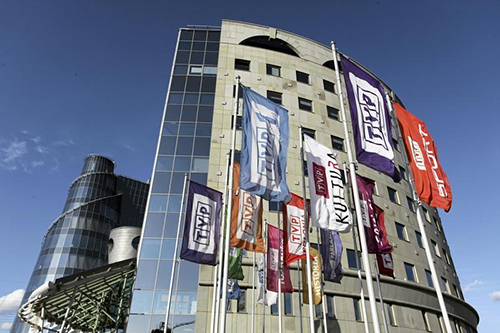
Will the EU’s actions speak louder than its words on Poland’s new media law?
On January 13, the European Commission–the so-called guardian of EU treaties–will meet in Brussels to debate a troubling law passed in Poland today that, according to reports, paves the way for the government to take control of public service TV and radio.
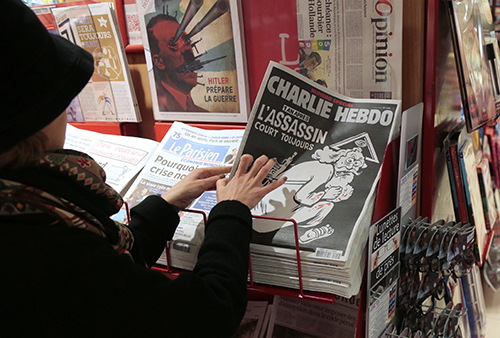
One year after Charlie Hebdo, will press freedom become victim of war on terror?
Who would have thought that France would top the list of most deadly countries for the press in 2015, second only to Syria? The massacre of eight cartoonists and journalists by Islamic militants at the Paris office of the satirical magazine Charlie Hebdo last January was one of the deadliest attacks against the press since…