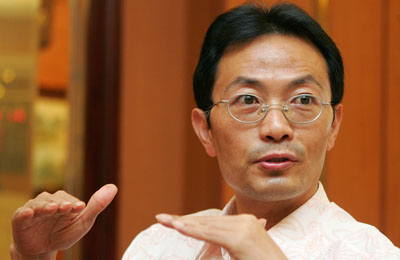
Chinese Internet writer detained after posting on Diaoyu
New York, September 18, 2012–Chinese authorities should release a well-known academic and Internet writer detained last week in connection with his published articles, the Committee to Protect Journalists said today. Jiao Guobiao has been targeted in the past for his articles criticizing the Chinese government.
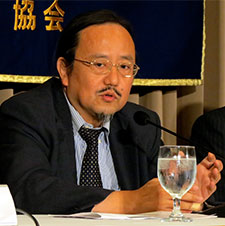
Japan’s independent journalism on trial with Tanaka
It doesn’t take a baseball bat to silence a reporter in Japan–increasingly the blunt weapon being wielded by corporations, power brokers, and politicians is the court gavel. In May of this year, a writer for the weekly magazine Shukan Kinyobi was sued by one of Japan’s most powerful nuclear industry figures, for a total of…
Lebanon must free a journalist detained without charge
New York, September 14, 2012–Authorities must immediately release journalist Rami Aysha who has been detained without charge and abused since being seized more than two weeks ago while investigating alleged arms smuggling in the southern suburbs of Beirut, the Committee to Protect Journalists said today.
The Gambia orders BBC journalist to leave country
Gambian authorities detained Thomas Fessy, the West Africa correspondent of BBC World News, for several hours at the capital’s international airport on September 5, 2012, and ordered him to leave the country within 48 hours, the BBC reported. Fessy returned to Senegal on September 7, 2012.
Critical Bahraini journalist detained for four months
New York, September 13, 2012–The Committee to Protect Journalists is concerned about the ongoing imprisonment of Ahmed Radhi, a freelance journalist who was first detained four months ago after making critical comments about Bahraini-Saudi relations. Radhi now faces terrorism and other anti-state charges which he says were lodged after he was abused and forced into…
Iran persists in its crackdown against journalists
New York, September 12, 2012–Continuing their three-year-long clampdown on journalists covering human rights, minority groups, and political reform, Iranian authorities have summoned two journalists to begin prison terms and are bringing two others to trial.
Thorning’s chance to press China for media freedom
Denmark’s Prime Minister Helle Thorning-Schmidt is in China this week to meet with top leaders, according to international news reports. CPJ’s Advocacy and Communications Associate Magnus Ag and Senior Asia Program Researcher Madeline Earp co-wrote an op-ed calling on Thorning–as she is called in the Danish press–to raise the issue of press freedom. An edited…
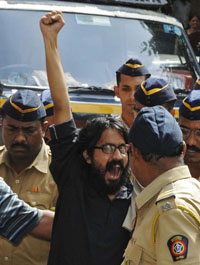
Indian cartoonist jailed for images criticizing government
New York, September 10, 2012–Indian authorities should immediately drop all of the charges against cartoonist Aseem Trivedi and release him from detention, the Committee to Protect Journalists said today.Police in Maharashtra state arrested Trivedi, a 25-year-old freelancer from India’s central Uttar Pradesh state, on Saturday, according to news reports. The cartoonist faces charges of sedition,…
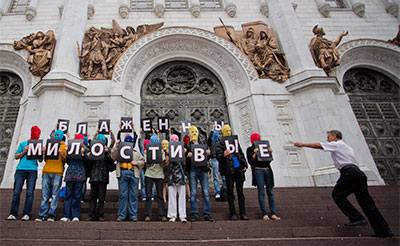
Mission Journal: Putin imposes harsh climate on Russia
Record-high temperatures swept most of Europe this summer, but in Moscow the weather, much like the political climate, was chilly. I spent three months in the capital at the invitation of the Russian Union of Journalists, and witnessed how Vladimir Putin’s third term in office kicked off with the passage of restrictive laws, harassment and…