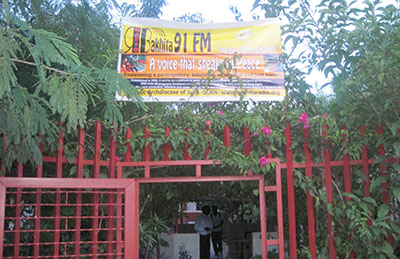
South Sudan closes radio station, arrests editor
Nairobi, August 18, 2014–The Committee to Protect Journalists condemns South Sudanese authorities’ shutdown of the popular Catholic-run Bakhita Radio station in Juba, the capital, on Saturday and the ongoing detention of the station’s news editor. Security agents raided the outlet in the morning and arrested four staff members, according to the station’s managing director and…
CPJ concerned by arrests, harassment of reporters covering unrest in Ferguson, Missouri
New York, August 14, 2014–The Committee to Protect Journalists is alarmed by the attacks on and brief detentions of journalists covering protests in Ferguson, Missouri, over the past week in reaction to the killing of teenager Michael Brown by the police. Two journalists were briefly detained on Wednesday and released without charge. Journalists have reported…
French news site Rue89 suffers cyberattacks, staffers harassed
Brussels, August 13, 2014–The Committee to Protect Journalists condemns repeated cyberattacks on Paris-based news website Rue89 and the harassment of members of its staff and their families since the site published a profile of an Internet hacker last month.
As elections approach, fear of more attacks on Congolese press
Map by Rachael Levy. Sources: Congolese organizations, news reports, and CPJ research. Not all data has been independently verified by CPJ. Tensions are rising in the Democratic Republic of the Congo after a government official announced recently he would support a change in the constitution to allow President Joseph Kabila, who has been in power…
In Azerbaijan, media watchdog raided, equipment confiscated
New York, August 8, 2014–The Committee to Protect Journalists calls on Azerbaijani authorities to stop harassing the Baku-based media freedom group Institute for Reporters’ Freedom and Safety. Detectives with Azerbaijan’s Prosecutor General’s Office raided the IRFS premises today, the local press reported. A journalist who was at the raid told CPJ that the detectives confiscated…
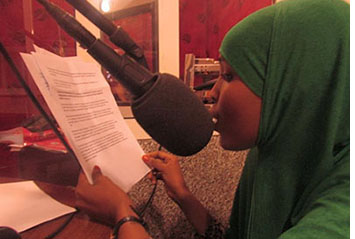
In Somalia, Puntland authorities detain radio journalist
On August 6, 2014, police in the semi-autonomous region of Puntland detained Fatima Yusuf, a reporter for the private broadcaster Radio Daljir, according to local journalists and news reports. Police raided Fatima’s hotel room in Puntland’s capital, Garowe, and also arrested two other journalists, Puntland TV reporter Khadro Mohamed and Kalsan TV reporter Abdinasir Da’ad.…
Freelance journalist in hiding over reports on South Sudan
Nairobi, August 6, 2014–The Committee to Protect Journalists calls on authorities in South Sudan to ensure the safety of a freelance journalist who has been in hiding since late July. Abraham Agoth told CPJ that he fled his home in the northern state of Bahr el Ghazal on July 28, fearing arrest.
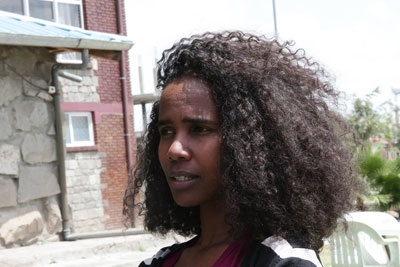
Ethiopian photojournalist Aziza Mohamed held without charge
Nairobi, July 31, 2014–CPJ is alarmed by the detention of Addis Guday (“Addis Affairs”) photojournalist Aziza Mohamed, who has been in custody for two weeks without charge. Police arrested Aziza on July 18 while she was covering Muslim protests near Anwar Mosque in the capital Addis Ababa, local journalists told CPJ. She is being held…
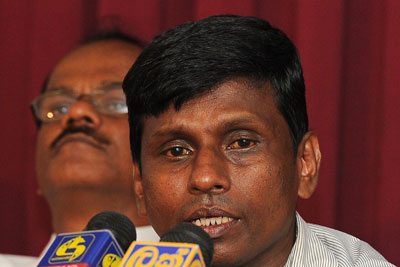
In Sri Lanka crackdown, mobs and death threats turned on journalists
There is genuine cause for alarm about the anonymous death threats going to Sunil Jayasekara’s phone. They started streaming to Jayasekara, the convener of Sri Lanka’s Free Media Movement, an umbrella group (hence calling the leader a convener) of journalists’ organization in Sri Lanka, just before an FMM press conference on Saturday in Colombo.
Mission Journal: Attacks on journalists in Ukraine lead to information vacuum
“There are no [independent] Ukrainian journalists left in Donetsk,” said Aleksei Matsuka, chief editor of the regional news website Novosti Donbassa (News of Donbass). “They have fled the region since pro-Russia separatists started targeting and kidnapping reporters,” Matsuka told CPJ during our brief meeting in Kiev.