Conditions increasingly restrictive for foreign correspondents in China
When China hosted the summer Olympics in 2008 it promised greater press freedom, but six years later conditions for international journalists are increasingly more restrictive, as evidenced by a report released today by the Foreign Correspondents’ Club of China.
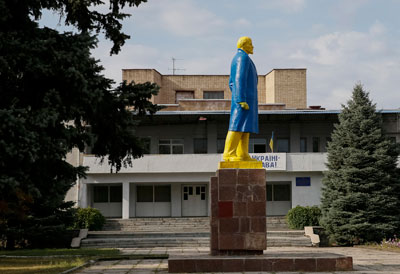
Ukrainian authorities raid newsroom, bar entry to Russian journalists
New York, September 11, 2014–The Committee to Protect Journalists condemns today’s raid by Ukrainian security agents on the independent newspaper Vesti as well as moves by Ukrainian authorities to bar entry to dozens of Russian journalists and media workers.
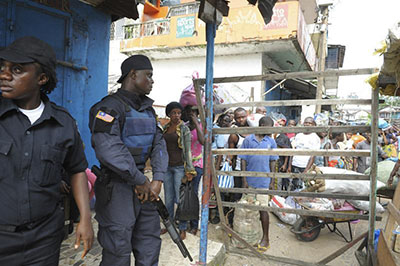
In attempts to contain Ebola, Liberia censors its press
With the Ebola epidemic predicted to get worse, the Liberian government has taken action to silence news outlets critical of its handling of the health crisis which, according to Liberia’s Information Ministry, has claimed more than 1,000 lives in the country since March. Publishers have been harassed and forced to cease printing, and journalists were…
Crimean journalist forced into exile after interrogation
New York, September 9, 2014–Independent reporter and blogger Elizaveta Bogutskaya has fled Crimea after authorities in the peninsula raided her home on Monday, confiscated notebooks and other reporting equipment, and detained Bogutskaya for six hours over allegations of extremist activity, according to news reports.
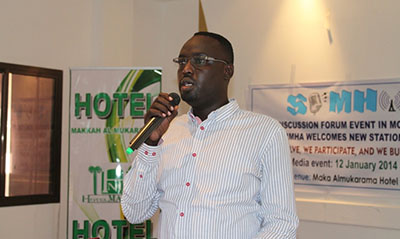
Somali journalist arrested after speaking out against censorship
Nairobi, September 3, 2014–Somali journalist Hassan Gessey, a radio director at the independent Dalsan Radio, is being held without charge by the National Intelligence and Security Agency after criticizing a directive to restrict reporting on military operations, according to news reports and local journalists.
Several journalists attacked while covering ‘Freedom March’ in Pakistan
New York, August 25, 2014–The Committee to Protect Journalists calls on all sides to respect the role of journalists and media workers covering an anti-government demonstration in Pakistan. Journalists from various news outlets have been attacked while covering the “Freedom March”, according to news reports.
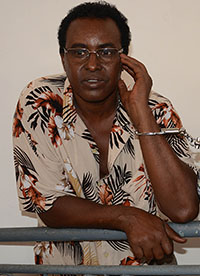
Somali authorities detain three journalists and shutter radio station
Nairobi, August 21, 2014 — The Committee to Protect Journalists is gravely concerned about the detention of three Shabelle Media Network journalists and the closure of their station. Security agents arrested 19 individuals at the network’s offices in the capital Mogadishu on August 15, and removed the transmitters of Radio Shabelle and Sky FM, two…

New charges against Ethiopian publications further diminish critical voices
Five independent magazines and a weekly newspaper have been charged by Ethiopia’s Justice Ministry, a move that may add to the long lists of shuttered publications and Ethiopian journalists in exile. In a press release issued August 4, the ministry accused the journals of publishing false information, inciting violence, and undermining public confidence in the…
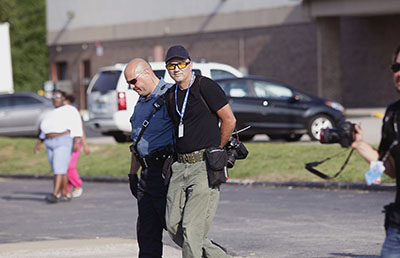
CPJ condemns ongoing harassment, arrests of reporters in Ferguson
New York, August 19, 2014–The Committee to Protect Journalists is alarmed by the continued harassment and detentions of journalists covering the unrest in Ferguson, Missouri, sparked by the police killing of unarmed teenager Michael Brown. At least nine journalists have been detained and released without charge since Saturday, according to CNN. Two others were briefly…